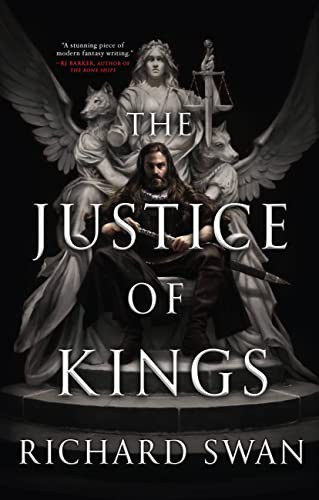
The Justice of Kings is a legal procedural in armor. Sir Konrad Vonvalt is an Emperor's Justice — judge, investigator and executioner in one office, backed by both common law and unsettling magic — and Richard Swan builds the novel around the question of what happens when the law he serves is quietly running out of time.
The story is narrated in retrospect by Helena, Vonvalt's young clerk, and that framing is the book's smartest choice. She tells us early that things end badly, so a provincial murder inquiry in Galen's Vale reads with mounting dread, each procedural step shadowed by the political and religious collapse we know is coming.
It is a slow burn, and readers who want their fantasy to move quickly may find the first half deliberate. The reward is a world whose institutions feel real enough to mourn: the Sovan Empire's tolerant legalism is genuinely admirable and genuinely doomed, and Vonvalt's own methods carry the coercion he claims to be above.
Swan resists the easy win. The murderer can be judged, but the conspiracy joining zealotry, noble ambition and anti-imperial resentment cannot be, and the trial that should feel like a victory instead exposes how little a lawful record can hold back. It is an unusually thoughtful series opener about order and its price.