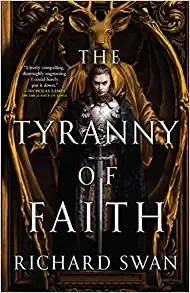
The Tyranny of Faith expands Richard Swan’s legal-investigation series into imperial horror without discarding the procedure — and makes its hero the most frightening thing in it. Sir Konrad Vonvalt still believes law is the best defense against chaos; the institutions that give his judgments force are already rotting under him.
Helena Sedanka’s narration remains the series’ greatest strength. The older Helena knows which convictions will fail; the younger one still wants Vonvalt’s certainty — and the gap between them makes every investigation read as both evidence and elegy.
Swan shows how a principled man can begin treating his own judgment as a substitute for procedure when procedure seems too slow.
The abduction at the center of the plot gives the book a clean mystery, but the inquiry keeps touching the empire’s instability and the supernatural machinery behind the priest Claver — interviews, archives and jurisdictional fights matter as much as swordplay. And Vonvalt grows more frightening as his powers do: Swan shows how a principled man can begin treating his own judgment as a substitute for procedure when procedure seems too slow.
The middle is denser than The Justice of Kings — court factions, religious history and metaphysics arrive fast, and some investigative turns are swallowed by the larger conspiracy. Readers who came for village-mystery scale will feel the shift.
The risk pays off. The collapse feels systemic rather than accidental, and by the end it is Helena — not Vonvalt — who must decide what justice can survive after authority fails.