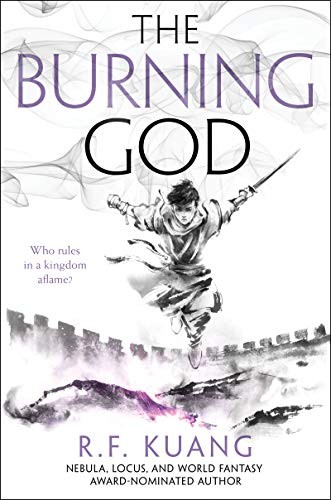
The Burning God is a deliberately punishing conclusion: it hands Rin the command and power she spent two books seeking, then asks whether a revolutionary trained only for war can build anything after the enemy falls.
Kuang refuses the comforting idea that righteous anger produces good government.
The military movement is relentless, but the real argument is about famine, administration and foreign leverage. Kuang refuses the comforting idea that righteous anger produces good government — Rin’s victories keep destroying exactly the resources and relationships she would need for peace.
The southern campaign, the alliance with Daji and the hunt for the remaining Trifecta at Mount Tianshan all sharpen the same point: the old shamans cannot simply restore Nikara, and each new patron is another cage. Taking Arlong exposes the deepest crisis — governing is harder than conquest, and Venka’s death leaves Rin more isolated and more suspicious with every win.
Some late alliances move quickly, and the campaign’s scale flattens a few secondary characters into positions on a map.
But the ending follows the trilogy’s logic with unusual discipline. On Speer, Nezha offers a truce; Rin destroys the Hesperian fleet instead and knocks him senseless, Kitay severs the anchor bond, and she stabs herself with Nezha’s unconscious hands on the blade — staging her death as his kill so that he inherits the leverage. Escape, sacrifice and one last attempt to control the future at once, with Kitay’s life the final cost of the bond that powered her.