Published: 2025
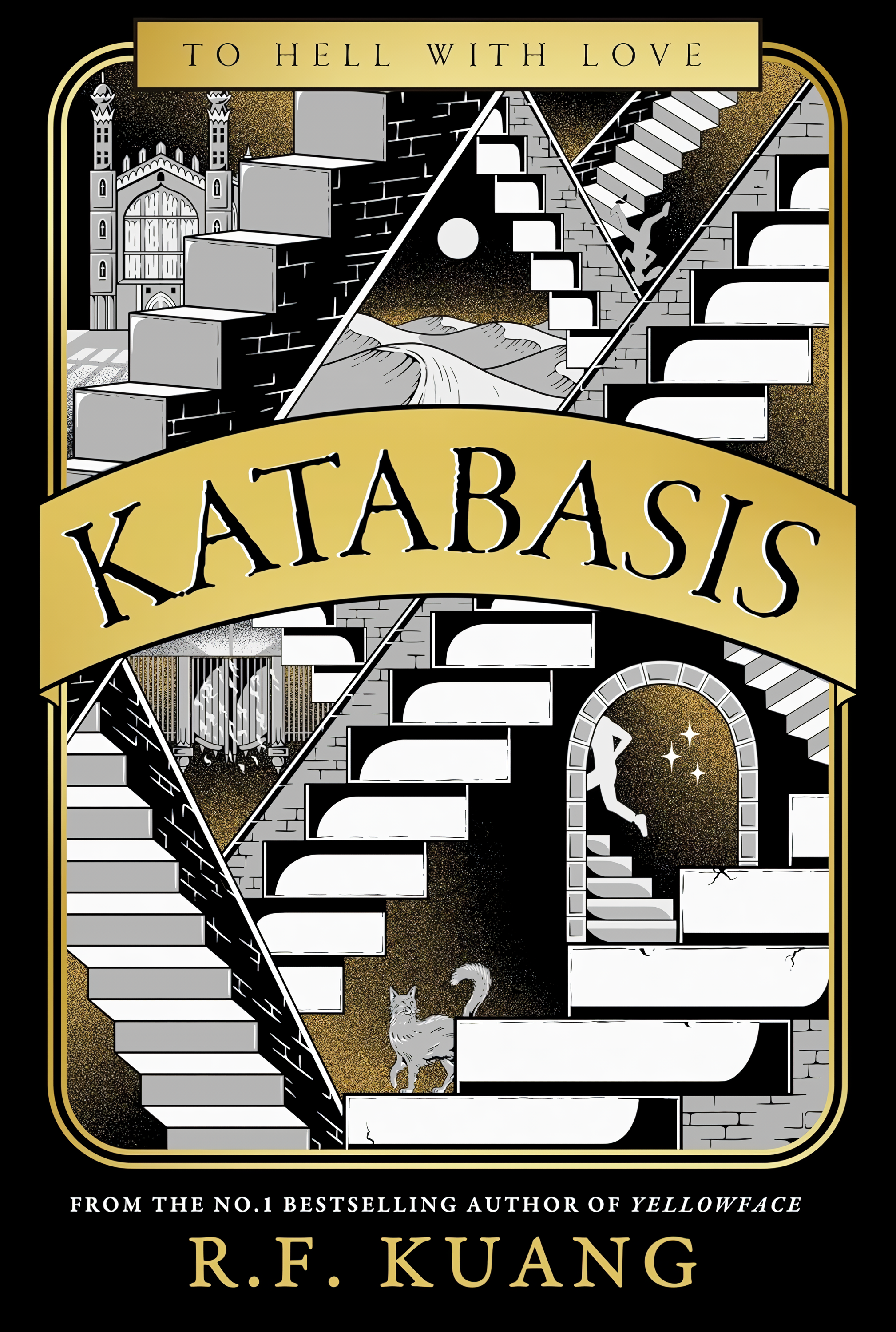
In Katabasis, R. F. Kuang turns graduate school into a literal journey through Hell. Alice Law and Peter Murdoch are rival Cambridge doctoral students in analytic magick whose adviser, Professor Jacob Grimes, has died in a laboratory accident. Both believe their careers depend on recovering him. They therefore surrender half their remaining lifespans and descend into the underworld, armed with chalk, logical paradoxes, and the certainty that academic brilliance can solve almost anything.
The premise is funny, bleak, and immediately recognizable. Alice and Peter are not trying to rescue a beloved mentor. Grimes is vain, exploitative, predatory, and perfectly willing to take credit for his students' work. What they want is his approval, his recommendation, and proof that the suffering required to reach Cambridge meant something. Kuang's sharpest insight is that an abusive system can remain seductive even after its victims understand how it has harmed them.
Hell is the novel's grand intellectual playground. Kuang combines Greek and Roman myth, Dante, Chinese traditions of the afterlife, modern philosophy, mathematical puzzles, and academic politics. The dead pass through eight courts shaped by their sins, but the punishments often resemble distorted university life: endless examinations, dissertation workshops, impossible revisions, administrative hierarchies, and scholars who have forgotten why they began thinking in the first place.
The magic system is both a strength and a barrier. Analytic magick works by making logical contradictions temporarily real. A well-constructed paradox can suspend motion, divide an object, bind a soul, or open a route through impossible space. The ideas are inventive and frequently delightful, especially when Alice and Peter must turn abstract philosophy into survival tools. At the same time, the novel often stops to explain the theory behind each solution. Readers who enjoy arguments, footnotes, and conceptual puzzles will find much to admire; readers looking for a swift underworld adventure may find the pace heavy — I did, in stretches.
Alice is a difficult but compelling protagonist. She is ambitious, defensive, jealous, capable of betrayal, and frighteningly skilled at explaining away her own choices. Her perfect memory makes her unable to soften or forget humiliation, while Grimes's grooming has taught her to interpret endurance as proof of worth. Her journey is not a simple awakening from delusion. She repeatedly recognizes the truth about Grimes and then retreats into the belief that his genius justifies what he did.
Peter initially appears to be the effortlessly favored male rival, but the novel gradually reveals the pain beneath that image. His charm and unreliability conceal chronic illness, shame, and a lifelong refusal to be pitied. Alice and Peter have both been manipulated into seeing the other as Grimes's chosen student. Their slow movement from rivalry to trust gives the novel its emotional center, even when the final romantic turn feels more conventional than the strange, abrasive relationship that precedes it.
Kuang is particularly effective when showing how institutions protect celebrated men. Grimes does not control Alice and Peter through cruelty alone. He praises them, gives them access, makes their work feel important, and convinces each that suffering is the entrance fee for intellectual greatness. The novel understands why victims may defend an abuser long after outsiders can see him clearly. It also shows how competition prevents students from comparing experiences and recognizing the pattern.
The middle of the book is deliberately meandering. Alice and Peter debate maps, theories, moral systems, and the nature of identity while Hell rearranges around them. Some encounters---the court of Pride, the Weaver Girl's loyalty test, Elspeth's boat, and the Escher trap---combine theme and action beautifully. Others feel like extended philosophical demonstrations. The Kripkes and their bone creatures provide physical danger, but their grotesque family story is less developed than the conflict with Grimes.
The final third gains urgency when the descent turns sharply personal and Alice must decide whether survival has value apart from achievement. Her confrontation with Grimes works because it is not a victory over a more powerful magician. It is a refusal to keep accepting his version of her life. The ending is hopeful, perhaps surprisingly so, but its emphasis on grace and continued living provides a meaningful answer to a novel filled with people who treat self-destruction as proof of seriousness.
Katabasis is ambitious, clever, angry, and intentionally excessive. Its intellectual digressions will divide readers, but they are inseparable from what the book is trying to dramatize: the exhilaration of thought and the danger of confusing a love of ideas with loyalty to the institutions and people who claim to own them.