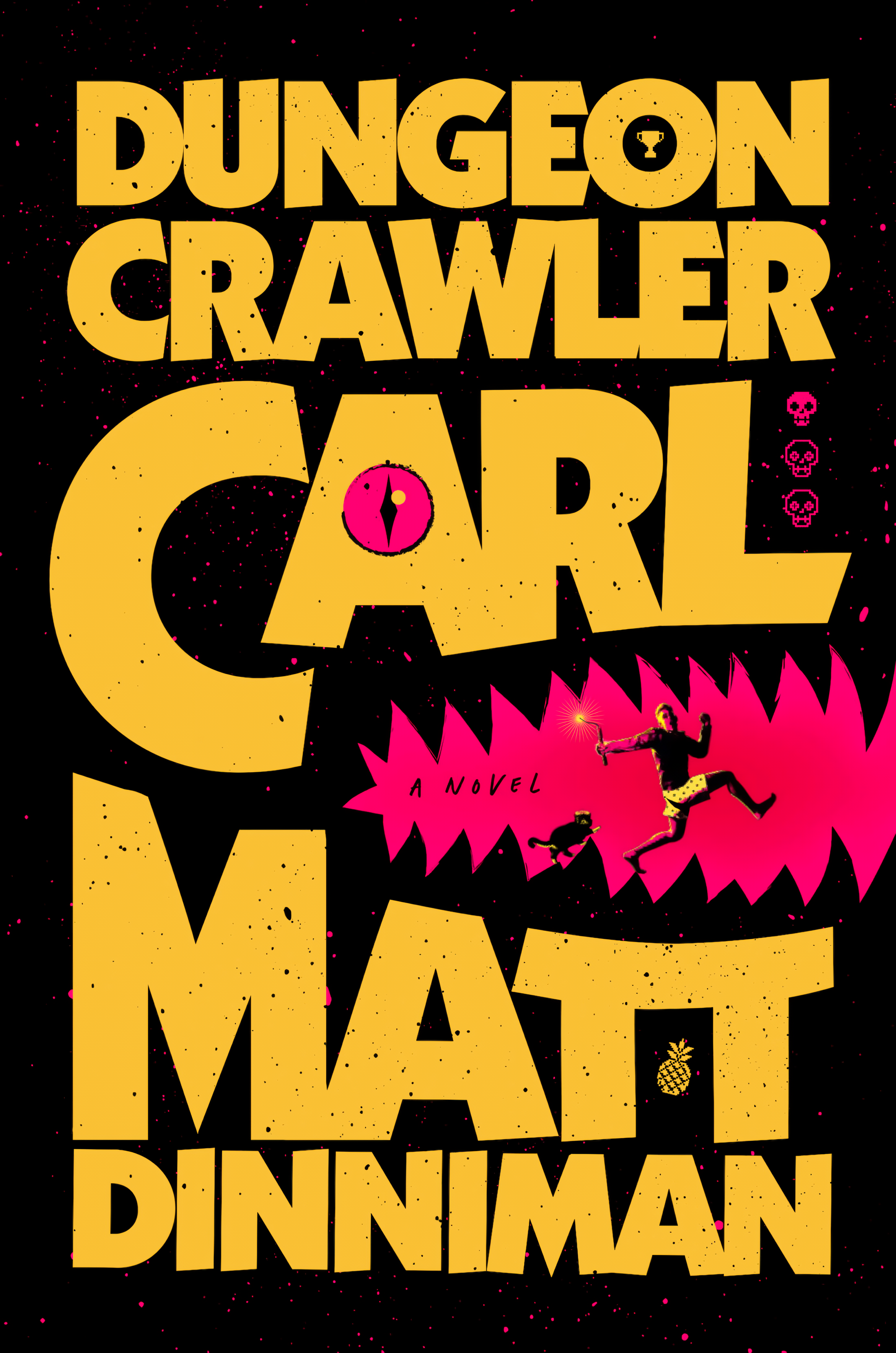
The end of the world arrives while Carl is outside in his underwear, trying to rescue his ex-girlfriend's prize-winning cat. In an instant, every human-made structure collapses into the ground. The survivors are invited into an eighteen-level dungeon, where they can fight monsters for the entertainment of an alien audience. It is a ridiculous opening, but Matt Dinniman commits to it so completely that the absurdity quickly becomes convincing.
The central idea combines a dungeon-crawling game with a cruel reality television programme. Carl and Princess Donut receive classes, statistics, achievements and loot boxes, but these familiar gaming devices are controlled by corporations that regard human suffering as inexpensive content. The cheerful announcements and gaudy prizes make the violence more disturbing rather than less. Every death can become a ratings opportunity, and every apparent gift may contain another way for the producers to manipulate the contestants.
Carl and Donut are, for me, the reason the novel works. Carl is practical, stubborn and far more compassionate than he likes to admit. He understands that the dungeon wants him angry, frightened and isolated, so protecting other people becomes a form of resistance. Donut is vain, theatrical and frequently exasperating, but she is also intelligent, loyal and surprisingly observant. Their arguments provide much of the comedy, while their dependence on one another gives the story its emotional weight.
Dinniman handles the LitRPG elements with unusual clarity. New abilities normally appear because Carl needs to solve an immediate problem, and the best battles are won through improvisation rather than superior numbers. Explosives, environmental traps and loopholes in the rules matter more than endless statistics. Readers who do not usually enjoy game menus may still find the system accessible because the mechanics remain tied to physical danger.
The action is fast, inventive and often extremely violent. Goblin vehicles, drug-fuelled llamas, grotesque bosses and an artificial intelligence with an increasingly obvious foot obsession create a tone unlike conventional fantasy. The comedy can be crude, but it rarely erases the horror. The dungeon's monsters may be absurd; the exploitation of the crawlers is not.
The satire becomes stronger as the novel expands beyond the dungeon. Recap programmes edit events into convenient stories, talk-show hosts cultivate contestants, and viewers send money or gifts to their favourites. Even sympathetic outsiders participate in a system built on mass murder. Carl gradually recognises that survival depends not only on fighting well but on controlling the story being told about him.
The first half can occasionally feel repetitive. Carl and Donut enter a room, test an enemy, collect rewards and repeat the process with a larger threat. Some jokes are deliberately juvenile, and readers who dislike skill descriptions or achievement notifications will encounter plenty of both. The supporting cast is also introduced in broad strokes because the book rarely pauses long enough to explore anyone outside the central partnership.
The novel does not provide a conventional ending. Carl and Donut clear the opening floors, gain a new companion and become increasingly valuable to the programme, but the larger crawl has barely begun. It feels more like the end of a particularly eventful first stage than the completion of a self-contained story.
Even so, Dungeon Crawler Carl is an exceptionally entertaining series opener. Beneath the explosions and talking-cat jokes is a furious story about people being reduced to products. Its real appeal lies in watching Carl and Donut refuse that reduction: they remain funny, loyal and recognisably human even when the entire galaxy is waiting for them to break.