The Book in Brief
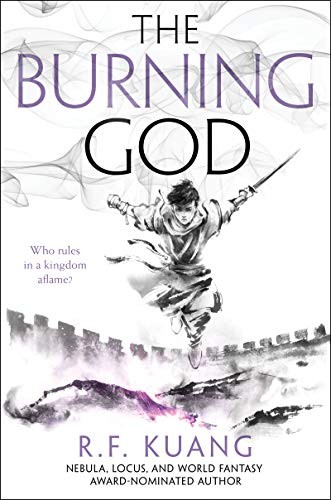
After escaping Vaisra, Rin and Kitay join the southern resistance, building a coalition around shared hatred of the Republic. Rin allies with the deposed Empress Daji and seeks the remaining Trifecta at Mount Tianshan, but the reunion of Jiang and Riga becomes another contest for power, ended by a Hesperian strike. Rin captures Arlong and breaks Nezha’s military position — only to inherit famine, exhausted provinces, ethnic division and Hesperian pressure. On Speer, Nezha offers a truce; Rin destroys the Hesperian fleet instead. Kitay severs the anchor bond, and with his assent Rin stabs herself using Nezha's unconscious hands — staging her death as his kill so he inherits the leverage. Kitay dies with her.
Important Characters
Rin: The southern coalition’s shamanic commander, increasingly unable to distinguish necessary resistance from total war.
Kitay: Rin’s strategist and bonded life-partner, who bears the physical cost of her choices.
Nezha: Leader of the Republic after Vaisra, wounded by Rin and trapped between Hesperian power and national survival.
Daji: The former Empress, temporarily allied with Rin against their common enemies.
Jiang and Riga: The other members of the Trifecta, awakened into a conflict that reveals how destructive their old ambitions remain.
Souji: A southern commander whose local authority and rivalry with Rin test the coalition.
Venka: Rin’s ally and adviser, whose death removes one of the few people willing to challenge her honestly.
What to Remember from the Previous Book
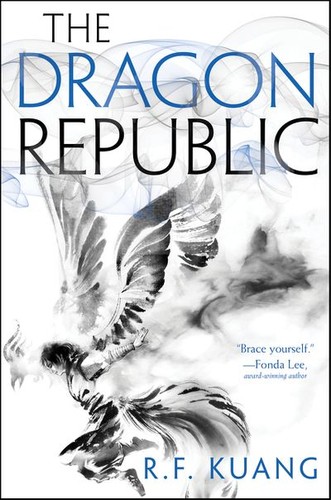
The Dragon Republic ended with Vaisra’s victory at Arlong and his immediate betrayal of Rin to the Hesperians. Nezha chose his father’s Republic over her. Kitay used their magical life bond to help Rin escape, and the survivors fled south with Rin determined to destroy the regime she had helped create.
Prologue
A vision of conquest and ruin establishes that Rin’s final campaign will be measured not by whether she wins, but by what remains after victory.
Part I — The Southern Coalition
Chapter 1
Rin and Kitay reach the south, where refugees and local militias expect the Speerly shaman to turn defeat into victory.
Chapter 2
Souji offers troops and territory but resists Rin’s assumption that divine power gives her unquestioned command.
Chapter 3
The coalition raids Republican positions and gains confidence from victories that do not solve its supply crisis.
Chapter 4
Rin uses the Phoenix despite Kitay’s shared pain, treating the bond as a resource rather than a warning.
Chapter 5
Southern leaders debate whether they are building a government or only coordinating revenge against the north.
Chapter 6
A campaign against Mugenese remnants gives Rin an enemy she understands and reinforces her most destructive habits.
Chapter 7
The coalition takes Khudla, and the treatment of prisoners reveals divisions over what liberation should permit.
Chapter 8
Leiyang becomes a test of whether Rin can combine popular support, logistics, and shamanic force.
Chapter 9
Souji’s maneuvering exposes how quickly revolutionary alliances become contests over credit and command.
Chapter 10
Rin secures control but leaves the south more dependent on her personal power and less capable of surviving her.
Part II — The Trifecta
Chapter 11
Rin accepts Daji as a temporary ally because both understand that the Hesperian-backed Republic threatens Nikara’s autonomy.
Chapter 12
The march toward Tianshan forces former enemies to cooperate while each plans for the alliance’s end.
Chapter 13
At the mountain, Rin confronts the history of the Trifecta and the ambitions that shaped the empire before her birth.
Chapter 14
Jiang awakens changed by imprisonment but still able to recognize what the Phoenix is doing to Rin.
Chapter 15
Riga returns with his appetite for domination intact, making reunion with Daji and Jiang impossible.
Chapter 16
The Trifecta turns on itself, proving that legendary power cannot repair the relationships destroyed by its pursuit.
Chapter 17
Jiang sacrifices himself to stop Riga, choosing an end that protects Rin from the man who once controlled him.
Chapter 18
Hesperian aircraft attack Tianshan and demonstrate that modern imperial warfare can annihilate even the oldest shamans.
Chapter 19
Rin survives the destruction with fewer allies and a clearer understanding of the foreign threat behind Nezha.
Chapter 20
She redirects the remnants of her coalition toward Arlong and treats the city as the decisive proof of legitimacy.
Chapter 21
Kitay warns that taking a capital will not create food, institutions, or consent, but Rin cannot abandon the campaign.
Part III — Victory Without Peace
Chapter 22
Rin attacks Arlong and uses overwhelming force to break the Republic’s immediate defense.
Chapter 23
Nezha’s connection to the Dragon complicates the battle, but Rin finds a way to neutralize rather than simply outburn him.
Chapter 24
The coalition claims victory while famine and displacement reveal that the conquered state cannot feed itself.
Chapter 25
Rin struggles with administration and interprets criticism as evidence of conspiracy or insufficient loyalty.
Chapter 26
Venka is killed while protecting Rin, and the loss drives Rin further toward paranoia and solitary decision-making.
Chapter 27
Hesperian terms make clear that aid will come only with occupation, religious control, and Rin’s removal.
Chapter 28
Rin meets Nezha on Speer and offers a final alliance against the foreign power using both of them.
Chapter 29
When Nezha cannot accept her terms, Rin forces him to kill her; Kitay dies with her, leaving Nezha the burden of survival.
Epilogue
Nezha survives to inherit a broken nation and the unbearable knowledge that Rin made him responsible for whatever future Nikara can still build.
Ending Explained
Rin’s suicide-by-Nezha is not a simple redemption: she recognizes that her power, her addiction to war and her inability to govern have become threats — and she still arranges the scene so Nezha must carry her political message and her memory. Kitay’s death completes the cost of the bond; he spent the trilogy trying to make Rin see consequences beyond victory, and her final choice remains inseparable from his life. Nezha survives as the bleak opening toward the future: Hesperian aid and political legitimacy, both compromised, and no clean path — only responsibility for a country every major power helped destroy.
Themes and Analysis
Winning and governing. The skills that make Rin effective in war—certainty, escalation, and personal command—make durable peace harder.
Colonial leverage. Hesperian aid turns famine and technological dependence into instruments of political control.
Trauma as destiny. Rin understands how violence formed her but cannot consistently imagine an identity beyond it.
Sacrifice and control. Her last choice relinquishes life while still attempting to dictate how others will interpret and continue her struggle.
Content Notes
This book contains extreme war violence and civilian death, suicide and linked death, famine, addiction, psychological deterioration, colonial racism and religious persecution.