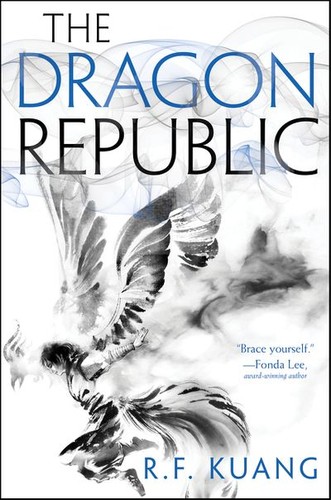
The Dragon Republic widens The Poppy War’s tragedy into a civil-war novel about compromised resistance: every apparent solution contains the next disaster. Rin begins the book shattered by addiction and guilt, and the prospect of killing the Empress gives her a purpose that is politically useful to people who do not respect her.
Vaisra offers strategy, modern weapons and an alternative to the Empress — and his dependence on Hesperian power turns liberation into a new form of submission.
Kuang’s strongest choice is making the Republic attractive and repellent at once. Vaisra offers strategy, modern weapons and an alternative to the Empress — and his dependence on Hesperian power turns liberation into a new form of submission. The Hesperians see Rin’s shamanism not as a military asset but as spiritual corruption to be cured.
The middle campaign can feel repetitive, because military reversals arrive faster than emotional recovery. But Rin’s bond with Kitay, the painful reunion with Nezha and the collapse of the Cike give the book a sharper human center than its scale suggests.
The Sorqan Sira’s solution to Rin’s blocked fire — binding her life to Kitay’s — is the novel’s best invention, restoring her power at a price the rest of the trilogy will keep collecting.
And the ending lands like a trap closing: Arlong held, the Empress repelled, and Rin sold to the Hesperians by the man she fought for — with Nezha standing on the wrong side of the glass. It is a middle book that turns betrayal into structure, and it leaves the trilogy exactly one war from the truth.