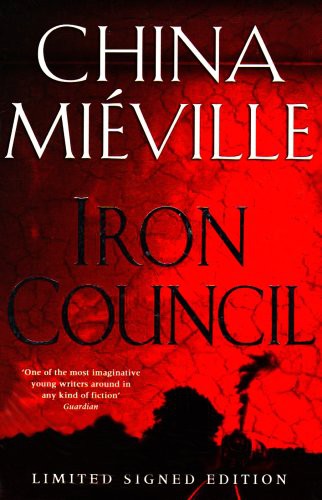
Iron Council is Bas-Lag’s most openly political novel: a revolutionary city story, a western about a stolen train, and a meditation on when symbols help movements — and when they consume them. New Crobuzon is at war with Tesh, the Collective is rising in the streets, and somewhere in the wilderness the legendary Iron Council still runs on rails it lays ahead of itself and tears up behind.
Workers steal the train and build track in front of themselves while removing it behind — exploitation’s machinery remade into a moving society.
The nonlinear middle — Judah Low’s history with the railway — initially interrupts Cutter’s pursuit, but it is the book’s foundation. Workers, Remade laborers and sex workers revolt against the company, steal the train and build track in front of themselves while removing it behind: exploitation’s machinery remade into a moving society. It is Miéville’s most sustained image, and he knows it.
The city thread is angrier and messier. Ori abandons cautious organizing for Toro’s militant cell, only to learn the raid runs on a private vendetta against the Magister who had her Remade; the Collective’s rise and crushing carry the taste of every failed revolution Miéville has read about.
The golem-craft escalates wonderfully — Judah working matter, sound and finally time — and Qurabin, the monk who pays for secrets with pieces of themself, is a quietly devastating invention. The pace, though, is the roughest in Bas-Lag, and the book’s reputation as the trilogy’s hardest sell is earned.
The ending justifies it. Judah freezes the returning Council in a time golem to save it from annihilation — visionary and paternalistic in the same gesture — and Ann-Hari kills him for stealing the Council’s choice. The perpetual train becomes a monument: arrival deferred forever, able to inspire and unable to participate. No fantasy novel has ever ended a revolution more honestly.