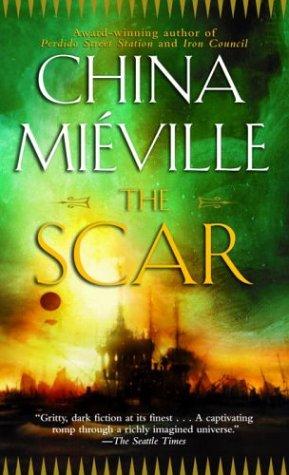
The Scar is both an adventure novel and a refusal of adventure’s usual promise: Bellis Coldwine wants to go home, while everyone around her treats motion as reinvention, conquest or escape. Fleeing New Crobuzon by sea, she is captured by pirates and pressed into citizenship in the strangest city in modern fantasy.
Armada is a floating city built from captured ships — competing ridings, remade bodies, languages and political systems lashed hull to hull.
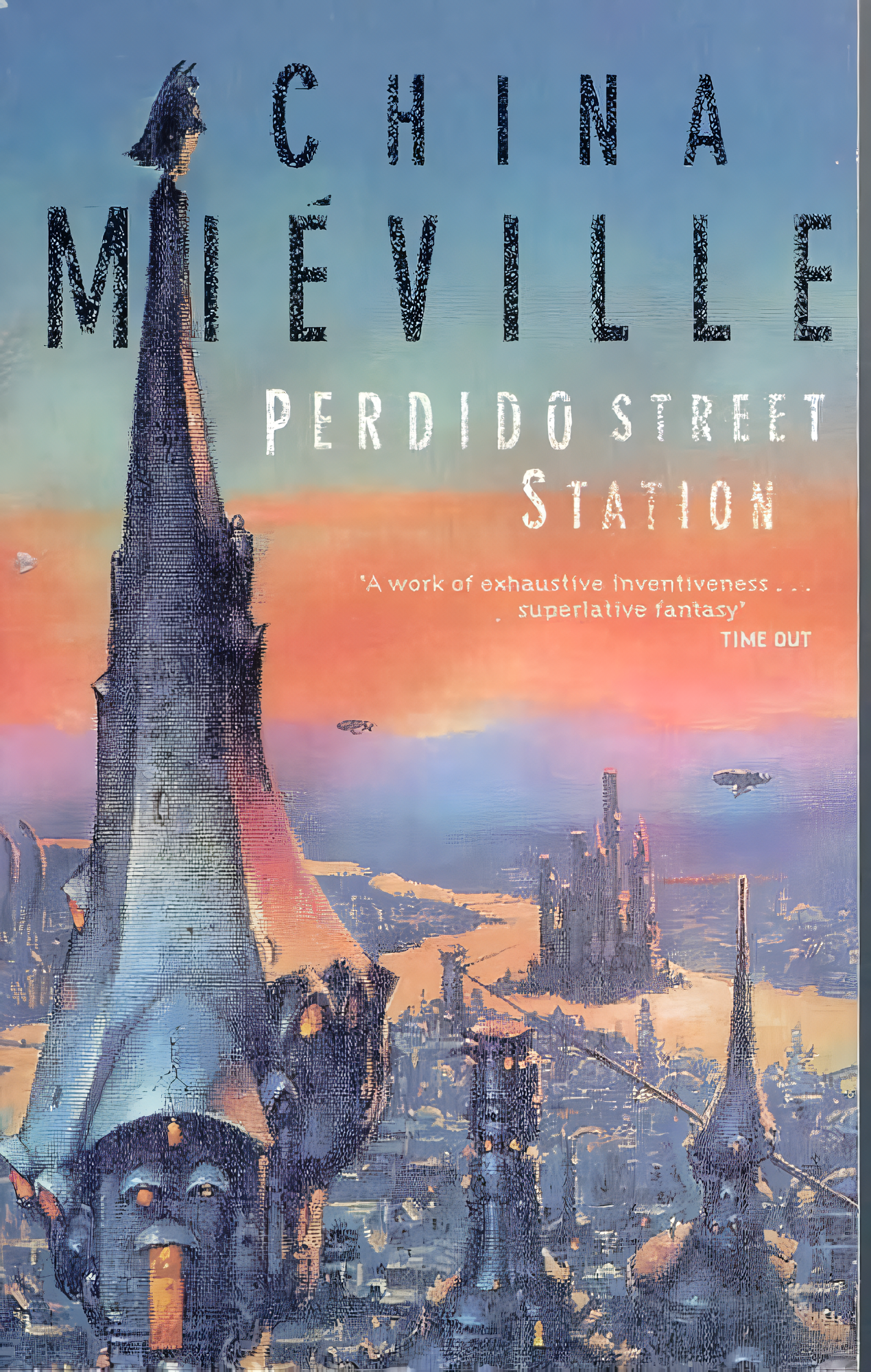
Armada is a floating city built from captured ships — competing ridings, remade bodies, languages and political systems lashed hull to hull — and Miéville explores it with the density that made Perdido Street Station a landmark. Tanner Sack, who chooses aquatic Remaking and belonging, is the deliberate counterweight to Bellis’s defensive attachment to the past.
The plot grows strange on schedule: the summoning of the avanc to tow the city, the nightmare diplomacy of the anophelii island, Silas Fennec’s poisoned espionage, and the Lovers’ obsessive course toward the Scar itself — a wound in reality where possibility bleeds.
Uther Doul is the book’s finest invention, a swordsman whose weapon and politics both run on probability, and whose loyalty is the novel’s real mystery.
The ending withholds certainty about what actually happened at the edge of the Scar — Hedrigall’s return may be testimony from an outcome that never was — and that ambiguity is thematic rather than evasive. Bellis ends between identities, betrayed by every loyalty she tried, and the book is great precisely because it will not resolve her.