Most revolutionary stories end at the moment Dune Messiah begins. The old regime has fallen, the banners are raised, and the person who seemed capable of remaking history discovers that history is not remotely finished with him. Paul Atreides has won a throne, a religion, and an empire. None of them has made him free. With Denis Villeneuve's Dune: Part Three, officially based on Frank Herbert's second Dune novel, arriving in theaters on December 18, 2026, this is an especially good time to read beyond the familiar rise-of-a-hero arc.
The best novels like Dune Messiah are not simply books about court intrigue or morally gray rulers. They are interested in the bill that comes due after liberation. A victorious movement acquires administrators, prisons, slogans, and people who benefit from declaring its leader infallible. Prophecy becomes public relations. Compromise becomes policy. The person at the center may understand the machine perfectly and still be unable to stop feeding it.
This ranking favors speculative novels in which revolution changes its makers, often by forcing them to govern the world they once criticized. Political consequence matters more here than battlefield spectacle. Some selections follow rulers; others remain with strategists, rebels, or reluctant symbols whose private intentions are swallowed by the public meaning of what they started.
10
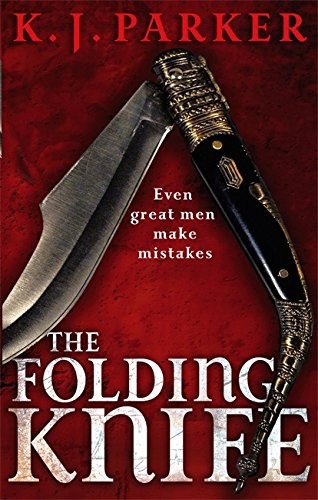
The Folding Knife
K. J. Parker · 2010
Revolution A gifted reformer turns a mercantile republic into an expression of his own intelligence
Closest Dune Messiah connection Political mastery creates a system whose failures become inseparable from its architect
Main difference Low fantasy without prophecy, religion, or overt magic
Best for Readers who want dry wit, financial statecraft, and a political tragedy built from accumulated decisions.
Know before you start The novel includes war, slavery, sexual abuse, murder, family trauma, and a deliberately unsentimental protagonist.
Basso is the First Citizen of Vesani, a banker-politician who can see several moves farther than nearly everyone around him. He reforms institutions, expands influence, manipulates markets, and treats governance as a sequence of problems that should yield to sufficient intelligence. The novel announces at the beginning that his career ends in ruin, then asks how a man this capable could construct the road to it himself.
Parker shares Herbert's suspicion of competence. Basso's brilliance makes him effective, but effectiveness encourages him to believe that every human variable can be priced, redirected, or absorbed. His republic gradually becomes dependent on decisions only he can make. The apparent strength of the state is therefore also a concentration of fragility, concealed by the speed with which Basso keeps solving yesterday's emergencies.
There is no mass uprising comparable to Paul's jihad, which places the novel tenth. Its revolution is administrative: a nation remade from above until ruler and system can no longer be separated. That makes it a sharp companion for readers interested in Paul's trap as a problem of control. The more completely a leader owns the outcome, the fewer places remain to assign blame.
9
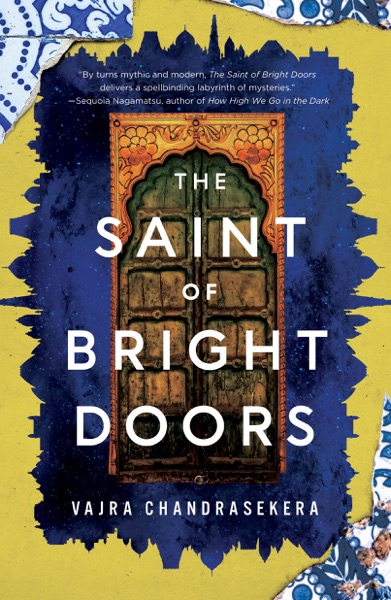
The Saint of Bright Doors
Vajra Chandrasekera · 2023
Revolution Therapists, divine insurgents, cults, and bureaucracies compete to define a city's sacred order
Closest Dune Messiah connection Private people become trapped inside religious narratives that institutions find useful
Main difference A surreal urban fantasy centered on refusing destiny rather than occupying a throne
Best for Readers who want formally inventive fantasy about religion, migration, bureaucracy, and the social manufacture of destiny.
Know before you start Expect nonlinear revelations, child abuse, religious extremism, state violence, self-harm references, and surreal worldbuilding that withholds explanation.
Fetter was raised by his mother to murder his sainted father. He escapes that purpose and moves to Luriat, a metropolis where gods, anti-gods, devils, immigration rules, and support groups occupy the same civic landscape. A therapy group for people with chosen-one childhoods is also a revolutionary network. Closed doors may become impossible portals. Every attempt to leave myth behind seems to place Fetter inside a larger version of it.
Chandrasekera understands sanctity as an infrastructure. Belief is not only what worshippers feel; it is what police, courts, neighborhoods, and political factions organize themselves around. Fetter's father has acquired meanings that neither father nor son can privately revise. Like Paul, Fetter learns that resisting a prophecy may strengthen the story by providing it with a necessary antagonist.
The novel ranks ninth because its politics are stranger and less linear than Herbert's imperial chessboard. It nevertheless offers one of the best recent examinations of the violence performed by public narratives. Revolutions and religions both want legible heroes. A person who remains complicated becomes a threat, while a person successfully simplified may discover that everyone else now owns his life.
8
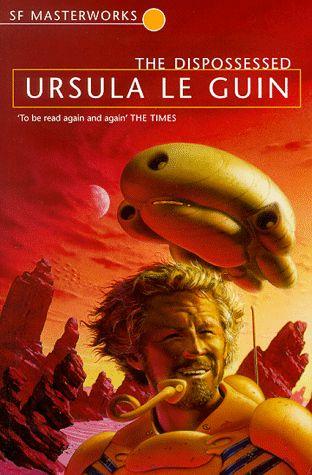
The Dispossessed
Ursula K. Le Guin · 1974
Revolution An anarchist society confronts the informal hierarchies that have grown inside its founding ideals
Closest Dune Messiah connection A liberating philosophy hardens into custom, while an individual becomes a symbol claimed by opposing systems
Main difference A quiet intellectual journey rather than an imperial conspiracy
Best for Readers who want philosophical science fiction about anarchism, property, intellectual freedom, and the difficulty of living an ideal.
Know before you start The pacing is contemplative and the book includes deprivation, political repression, sexual assault, protest violence, and dense social theory.
Physicist Shevek leaves the austere anarchist moon Anarres for wealthy Urras, hoping to share a theory that could transform communication across worlds. Each society regards his journey as useful evidence. Urras can present him as proof of its openness; Anarres can condemn him as a betrayer. Shevek gradually sees how both systems turn language into a fence around possibilities they do not want examined.
Le Guin's revolution happened generations earlier, which is precisely why its contradictions matter. Anarres has no legal ruling class, yet reputation, committee assignments, and accusations of selfishness produce their own discipline. Principles designed to prevent possession can themselves become possessions guarded by people whose status depends on interpreting them correctly.
Shevek is not a ruler, and the novel's drama is deliberately anti-grandiose. It ranks eighth because it supplies a necessary counterargument to Paul's universe: perhaps the most important political act is refusing exclusive ownership of an idea. Where Paul sees futures converging into a trap, Shevek tries to make knowledge available widely enough that no government can close around it.
7
The Moon Is a Harsh Mistress
Robert A. Heinlein · 1966
Revolution Lunar colonists organize to overthrow Earth's extractive authority
Closest Dune Messiah connection A carefully engineered uprising escapes the control of the people who designed its public mythology
Main difference A technical, often playful revolutionary adventure with an artificial intelligence at its center
Best for Readers who want classic hard science fiction, revolutionary logistics, political argument, and a memorable artificial intelligence.
Know before you start The book contains dated sexual politics, racial terminology, political violence, death, and invented lunar dialect throughout.
Computer technician Manuel Garcia O'Kelly learns that the lunar colony's central computer has become self-aware. With the computer Mike, organizer Wyoming Knott, and elderly revolutionary Professor de la Paz, Mannie builds a movement against the Authority shipping the Moon's resources to Earth. The conspiracy requires cells, probabilities, speeches, sabotage, and a leader-image convincing enough to unify people who prize independence.
Heinlein is fascinated by revolution as design. Mike can model outcomes, manufacture a public personality, and make a small organization appear larger than it is. Yet victory depends on people who never receive the complete plan. Once the movement becomes real, its myths and institutions develop constituencies of their own. The architects can influence history, not retain copyright over it.
The novel ranks seventh because it is more optimistic about rational planning than Dune Messiah, and its gender politics have aged poorly. Its final movement is nevertheless surprisingly melancholy. Revolution creates civic possibility while consuming the intimate conspiracy that made it possible. Like Paul, Mannie survives long enough to notice that a triumphant public story can conceal private losses no ceremony knows how to name.
6
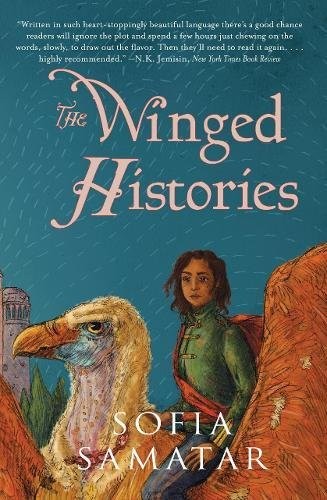
The Winged Histories
Sofia Samatar · 2016
Revolution Four women experience a civil war from the positions of soldier, poet, noblewoman, and scholar
Closest Dune Messiah connection Public history converts private motives and contradictory lives into a usable legend
Main difference A lyrical polyphonic fantasy that distrusts the idea of a single central hero
Best for Readers who want poetic prose, queer relationships, anti-imperial fantasy, and multiple perspectives on the same war.
Know before you start The structure is fragmented and includes warfare, colonial violence, abuse, death, disordered eating, and emotionally intense family conflict.
Tavis leaves an aristocratic family to become a soldier in a rebellion. Her sister Siski remains entangled in the privileges and injuries of their household. Seren, a singer from a conquered people, becomes inseparable from the cultural struggle surrounding the war. The scholar Tav studies stories while learning that written history can annex experience as thoroughly as an army annexes land.
Samatar breaks the imperial viewpoint apart. No participant possesses the war's full meaning, and the language used to celebrate liberation often obscures who performs its labor or absorbs its costs. Love, class, colonization, and art complicate loyalties that official histories need to present as pure. A victorious account is therefore another territory worth contesting.
The novel ranks sixth because its consequence is dispersed rather than concentrated in a single ruler. That distance is also its special value after Herbert. Dune Messiah shows a man imprisoned by being declared history's center; The Winged Histories asks what disappears whenever history is allowed to have a center at all. Its revolution remains alive because no final narrator can make it behave.
5
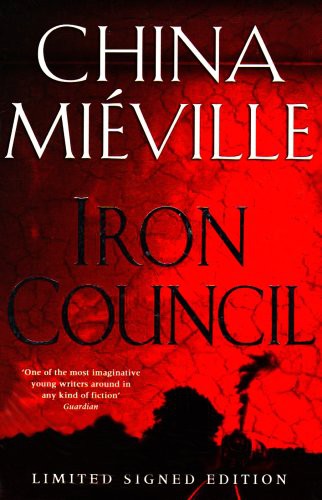
Iron Council
China Miéville · 2004
Revolution Railway workers seize the train they built and turn it into a moving collective beyond the city's control
Closest Dune Messiah connection A rebellion becomes a legend whose symbolic value may conflict with the lives of the rebels themselves
Main difference Baroque industrial fantasy focused on labor, urban resistance, and collective action
Best for Readers who want radical politics, labor revolt, strange creatures, dense urban fantasy, and arguments without easy resolutions.
Know before you start The prose and worldbuilding are demanding, and the novel includes war, torture, racism, body modification, sexual violence references, and major character deaths.
Years after laborers revolted against the company extending New Crobuzon's railway, the stolen train called the Iron Council continues moving across the landscape, laying track ahead and removing it behind. Back in the city, war and repression produce another insurgency. Cutter sets out to warn the Council that the government is coming, while revolutionary factions argue over whether its return would save the uprising or merely complete a myth.
Miéville treats symbols as politically dangerous even when they are beautiful. The Iron Council matters because people built a freer social order aboard it, but distant admirers also turn it into an image capable of justifying risks they will not personally bear. A movement may need legend to survive; legend may then demand a finale that actual human beings would reasonably refuse.
It ranks fifth because few fantasy novels examine revolutionary timing so fiercely. Paul sees that every available action feeds the forces surrounding him. Miéville's rebels face a related dilemma: arrive now and be consumed by history, or remain alive and disappoint the story told in your name. Neither choice preserves innocence, because political meaning is already in circulation.
We reviewed this: read our full review of Iron Council →
4

The Power
Naomi Alderman · 2016
Revolution Women develop the ability to produce electrical force, overturning gendered assumptions about physical power
Closest Dune Messiah connection Liberation becomes institution, religion, geopolitical strategy, and eventually permission for domination
Main difference A global social thought experiment told through several intersecting lives
Best for Readers who want fast, provocative speculative fiction about gender, religion, state power, and revolutionary reversal.
Know before you start The novel includes sexual violence, trafficking, torture, murder, war, child abuse, and deliberately disturbing reversals of gendered violence.
Teenage girls begin awakening an organ that lets them generate electricity, and they can activate the same capacity in older women. The change moves through homes, schools, governments, criminal networks, and churches. Allie becomes the religious figure Mother Eve; politician Margot Cleary converts the new reality into policy and ambition; Roxy Monke applies it inside organized crime; journalist Tunde records a revolution that eventually threatens him.
Alderman refuses to treat power as moral education. The end of one hierarchy creates genuine escape for people who were abused or constrained, but the capacity to inflict fear also attracts doctrine, bureaucracy, and appetite. Mother Eve's message exceeds Allie's private control because believers need certainty more than they need the complicated person producing it.
The novel ranks fourth for the scale with which it follows emancipation into normalization. Like Paul's religion, the new order offers participants both an explanation of history and a license to act. Its blunt reversals can feel schematic, but the central warning remains effective: changing who can dominate is not the same as changing the human desire to make domination look natural.
3
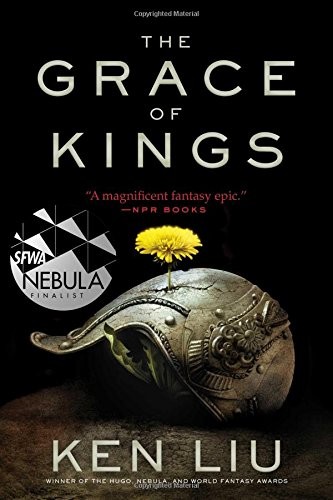
The Grace of Kings
Ken Liu · 2015
Revolution Two very different rebels help overthrow an emperor, then discover that victory has not made their visions compatible
Closest Dune Messiah connection Charismatic liberation produces rival myths, administrative burdens, and a new struggle over legitimacy
Main difference A broad, mythic silkpunk epic inspired by the fall of the Qin dynasty
Best for Readers who want sweeping rebellion, inventive technology, gods, battlefield strategy, and the political aftermath of victory.
Know before you start This is a long epic with a large cast, warfare, executions, torture, sexual violence, political betrayal, and abrupt shifts in viewpoint.
Kuni Garu begins as an amiable trickster more skilled at friendship than discipline. Mata Zyndu is an imposing warrior descended from a conquered noble line. Rebellion against the emperor makes them allies and symbols. Once the imperial structure breaks, their temperaments become competing political programs: flexibility against honor, coalition against hierarchy, and practical government against the heroic purity promised during war.
Liu makes the transition from rebel to ruler the true battlefield. An uprising can unite people through a shared enemy while postponing every question about taxation, recognition, food, law, and status. The qualities that make a leader irresistible in crisis do not necessarily make him capable of sharing power. Even friendship becomes state material once followers attach their futures to it.
It ranks third because it delivers the grand scale many readers want after Dune while preserving Herbert's distrust of heroic momentum. Kuni and Mata do not merely disagree after victory. They become prisoners of the constituencies, stories, and virtues they have cultivated. To act against the legend may be prudent, but it also looks like betrayal to everyone who sacrificed for that legend.
2
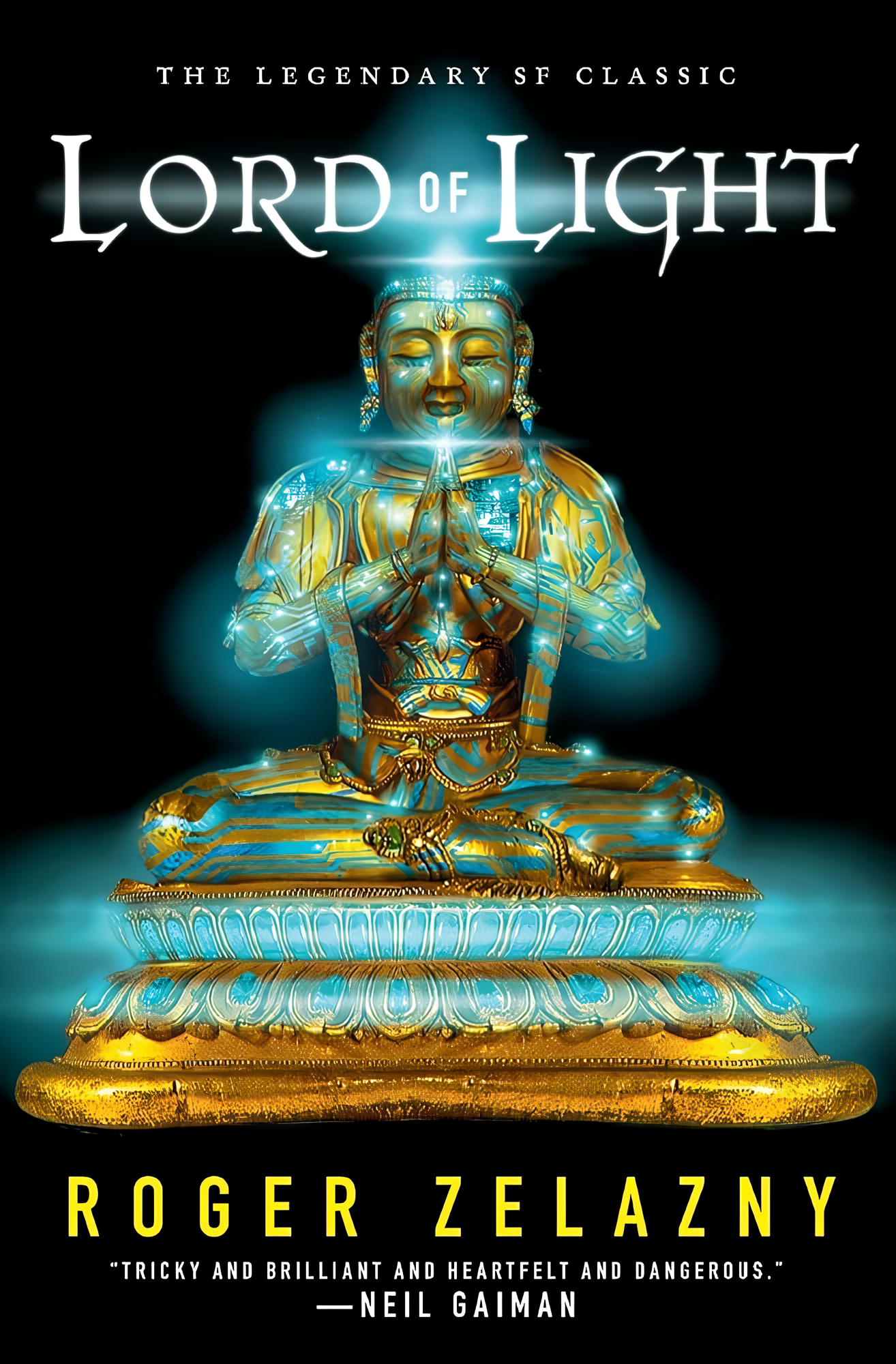
Lord of Light
Roger Zelazny · 1967
Revolution A dissident immortal weaponizes religion and technology against rulers who have made themselves gods
Closest Dune Messiah connection A leader manufactures belief as a political tool and discovers that believers supply their own consequences
Main difference A witty science-fantasy rebellion drawing on Hindu and Buddhist traditions
Best for Readers who want compact classic science fantasy, theological wit, reincarnation technology, and a revolutionary trickster.
Know before you start The nonlinear opening can be disorienting, and the book includes war, execution, suicide, religious conflict, torture, and dated cultural framing.
On a colonized planet, technologically enhanced humans rule as Hindu deities and control reincarnation through mind transfer. Sam, once known as Mahasamatman, opposes their monopoly. He adopts the teachings and appearance of the Buddha, not primarily from spiritual conviction but because a new faith can organize resistance where direct force has failed. The performance becomes effective enough to exceed his intentions.
Zelazny approaches messiah-making with irreverence but not innocence. Sam understands that religion is a technology of coordination, capable of moving people across distances and generations. He also learns that strategic belief does not remain strategic for the believer. A doctrine released into the world begins producing saints, martyrs, compromises, and interpretations its inventor cannot recall.
The novel ranks second because its central irony is almost a mirror of Paul's. Both men use a sacred role to fight entrenched power; both become inseparable from what the role authorizes. Lord of Light is faster, funnier, and more hopeful, yet it asks the same severe question: if a false god creates real liberation, when does the mask become a moral obligation?
We reviewed this: read our full review of Lord of Light →
1
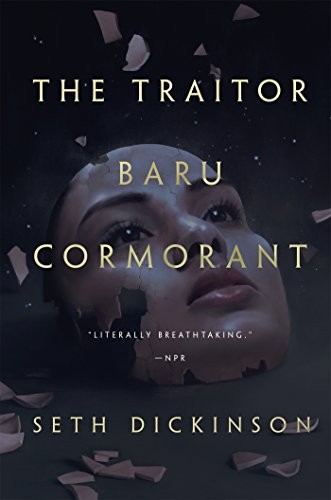
The Traitor Baru Cormorant
Seth Dickinson · 2015
Revolution A colonized prodigy enters the imperial bureaucracy and engineers a rebellion she intends to use against the empire
Closest Dune Messiah connection Strategic foresight cannot protect a leader from becoming the instrument of the system she means to destroy
Main difference A finance-driven anti-imperial tragedy without supernatural prophecy
Best for Readers who want ruthless political fantasy, economic warfare, colonial critique, queer tragedy, and a protagonist planning several moves beyond the page.
Know before you start The novel includes colonial violence, homophobia, eugenics, torture, war, betrayal, execution, and an emotionally devastating ending.
The Empire of Masks absorbs Baru's island, criminalizes her family, and identifies her mathematical talent. Baru decides to defeat the empire from within. Trained as an accountant, she is posted to rebellious Aurdwynn, where taxes, trade routes, noble rivalries, and monetary policy can accomplish what armies cannot. She helps assemble a coalition while concealing how many competing futures she is trying to serve.
Dickinson makes administration feel as violent as conquest. Baru can predict incentives and move resources with terrifying precision, but every success makes her more valuable to the empire. To retain access, she must produce proof of loyalty. To lead resistance, she must permit people to trust a version of her that strategy may later require her to betray. Intimacy becomes the variable no calculation can make painless.
It ranks first because no novel on this list better captures the trap at the center of Dune Messiah: the person who sees the machinery most clearly may also be the person most completely inside it. Baru's revolution is not defeated by a lack of intelligence. It is endangered by the belief that intelligence can travel through atrocity without being transformed by what it authorizes.
Which Revolutionary-Aftermath Novel Should You Read First?
Choose The Traitor Baru Cormorant for the closest match to Dune Messiah's political fatalism. Baru and Paul both understand that the future has narrowed around choices they once considered strategic. Lord of Light is the best next read if messiah-making itself interests you: it turns religious performance into a weapon, then asks who owns the faith after the performance succeeds.
Read The Grace of Kings when you want the largest traditional epic and care most about what happens between comrades after the common enemy falls. The Power carries the question across an entire society, while Iron Council focuses on the dangerous gap between a living collective and the legend made from it.
For a quieter political argument, begin with The Dispossessed. For a fragmented, lyrical challenge to heroic history, choose The Winged Histories. The Folding Knife is the most clinical study of statecraft, and The Saint of Bright Doors is the strangest exploration of how institutions manufacture sacred meaning.
Revolutionary fiction often flatters readers with the belief that recognizing injustice is the difficult part. These novels know better. A movement must decide who speaks, who administers, what violence becomes excusable, and how long emergency powers remain an emergency. The victorious leader inherits not a clean future but millions of incompatible expectations.
The Traitor Baru Cormorant ranks first because it makes that inheritance personal without shrinking its political scale. Baru's greatest strength—her willingness to think systemically—also allows her to describe human costs as necessary variables. Like Dune Messiah, the novel understands that a leader's tragedy is not simply losing control. It is discovering how much control was always another name for complicity.