The Book in Brief
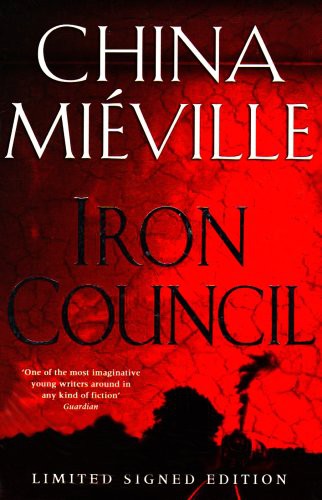
Cutter leaves New Crobuzon to find Judah Low and warn the legendary Iron Council, while at home war with Tesh and state repression feed a revolutionary movement called the Collective, and Ori trades cautious organizing for Toro’s militant cell. A long flashback recounts the Council’s birth: railway workers, Remade laborers and sex workers seize the company train and build a perpetual railway into freedom. In the present, Qurabin’s sacrificed knowledge helps stop Tesh’s Spiral Jacobs as the Collective falls; Ori dies, and when the Council rides home to be slaughtered, Judah freezes the train in a time golem — and Ann-Hari kills him for stealing the Council’s choice.
Important Characters
Judah Low: A golemetrist and former railway scout whose love for the Iron Council becomes protective control.
Cutter: Judah’s lover and follower, traveling to warn the Council and eventually surviving his certainty.
Ori: A young revolutionary drawn from organizing into Toro’s violent, revenge-driven cell.
Ann-Hari: A former sex worker and leader of the Iron Council, committed to collective agency.
Toro: A Remade woman behind the mask, whose militancy conceals a private vendetta against the Magister who ordered her Remaking.
Qurabin: A monk who trades identity, memory, and senses for the knowledge needed to defeat Spiral Jacobs.
Spiral Jacobs: A Tesh agent using reality-altering magic against New Crobuzon.
What to Remember from the Previous Book
Iron Council shares the world and political history of Perdido Street Station and The Scar but follows a largely new cast. New Crobuzon remains an authoritarian industrial city built on Remaking, racial hierarchy, militia power, and exploitation. The earlier books establish that resistance is necessary but never protected from compromise.
Trappings, Returns and Wine Land
Chapter 1
Cutter leaves New Crobuzon with companions who believe Judah and the Iron Council must be warned.
Chapter 2
The journey crosses landscapes shaped by war, displaced people, and the city’s expanding appetite for resources.
Chapter 3
Judah’s earlier life as a railway scout begins to explain why the Council’s return matters to him personally.
Chapter 4
Railroad construction advances through coercion, Remade labor, and the destruction of communities placed in its path.
Chapter 5
Judah encounters the Stiltspear and learns forms of golemetry outside New Crobuzon’s official traditions.
Chapter 6
Workers and camp followers organize across divisions the company relies on to prevent solidarity.
Chapter 7
Ann-Hari emerges as a leader among sex workers and laborers who refuse the company’s violence.
Chapter 8
The revolt seizes the train and turns industrial machinery from employer property into collective infrastructure.
Chapter 9
The rebels lay track before the moving train and remove it behind, creating a railway that perpetually remakes its road.
Chapter 10
The Iron Council develops its own rules and myths while fleeing the state sent to recover or destroy it.
Chapter 11
Judah leaves the Council but converts memory of it into the central faith of his later political life.
anamnesis: The Perpetual Train
Chapter 12
Ori grows frustrated with cautious dissident meetings as the war with Tesh and militia repression intensify.
Chapter 13
The Collective attempts to link workplace, neighborhood, and antiwar resistance into a citywide movement.
Chapter 14
Toro recruits Ori with the promise that targeted violence can accomplish what speeches and strikes cannot.
Chapter 15
The cell attacks symbols and agents of state power, giving Ori a sense of purpose tied to escalating risk.
Chapter 16
Cutter’s expedition continues while New Crobuzon’s uprising moves faster than any warning can travel.
Chapter 17
Toro’s interest in the mayor proves more personal than the group’s public revolutionary language suggests.
Chapter 18
Ori begins to see that clandestine hierarchy can reproduce the manipulation it claims direct action will escape.
Chapter 19
The city approaches insurrection as militia, strikers, radicals, and foreign agents act on incompatible plans.
The Hainting, Retread and The Caucus Race
Chapter 20
Cutter reaches the Iron Council and finds a living society rather than the pure revolutionary symbol he expected.
Chapter 21
Ann-Hari and the Council debate whether returning to New Crobuzon would support the uprising or sacrifice their community.
Chapter 22
Judah argues against the return — he wants the Council to keep roving — and sends Cutter to talk them out of coming.
Chapter 23
Qurabin bargains away parts of selfhood to learn the nature of the Tesh weapon called Spiral Jacobs.
Chapter 24
The Council votes to roll on New Crobuzon against Judah's wishes, asserting a political judgment that is entirely its own.
Chapter 25
The Collective rises and is met by overwhelming state force before the returning train can reach the city.
Chapter 26
News of the defeat changes the Council’s approach from reinforcement to probable martyrdom.
The Stain, The Remaking and The Monument
Chapter 27
Toro's raid kills Mayor Stem-Fulcher and Magister Legus — the man who ordered her Remaking — and Ori learns the private motive behind the mask.
Chapter 28
Judah, Cutter, and their allies confront Spiral Jacobs, using Qurabin’s purchased knowledge to contain the reality attack.
Chapter 29
Ori dies amid the final violence, one more life consumed by the gap between political hope and secret agendas.
Chapter 30
Judah creates a time golem around the arriving Iron Council, freezing train and people before the militia can destroy them.
Chapter 31
Ann-Hari kills Judah for denying the Council its chosen risk; Cutter returns to resistance beneath the image of a revolution suspended, not completed.
Ending Explained
Judah saves the Iron Council physically and violates it politically: he treats the community as a future symbol whose preservation outweighs the present consent of the people inside it. Ann-Hari kills him because the Council’s founding act was collective self-determination — being protected against its own decision by a loving outsider repeats the paternal authority it rebelled against. The frozen train is neither victory nor defeat but a permanent image of arrival deferred, able to inspire resistance and unable to join it, while Cutter’s survival keeps political work in the imperfect present rather than inside the monument.
Themes and Analysis
Revolution and symbolism. Movements need stories, but living people are endangered when leaders value their symbolic role more than their agency.
Collective ownership. The perpetual train embodies workers reclaiming infrastructure and the right to determine its purpose.
Means and ends. Toro, Judah, and the state each justify coercion through a future they claim to understand better than others.
Memory versus action. The frozen Council preserves possibility while also showing the cost of turning history into a sacred object.
Content Notes
This book contains war, execution and graphic political violence, slavery, forced bodily alteration and labor abuse, state repression, torture and deaths of major characters.