The Book in Brief
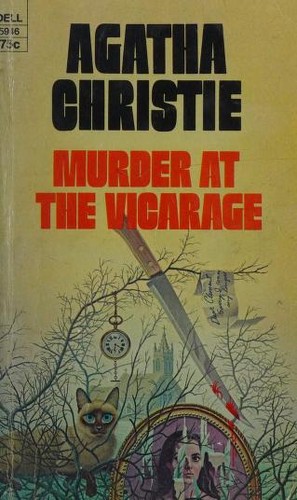
Colonel Lucius Protheroe, the bullying churchwarden and magistrate of St. Mary Mead, announces an audit of the parish accounts and is found shot through the head at the vicar's writing table, after a fake telephone call has drawn the vicar, Leonard Clement, away to a supposedly dying parishioner. An unfinished note headed 6:20 and a toppled clock stopped at 6:22 seem to fix the moment of death, though the clock is kept fifteen minutes fast. The painter Lawrence Redding, secretly the lover of the colonel's wife Anne, confesses at once, but Dr. Haydock's medical timing disproves his story; Anne then confesses in turn, and Miss Marple, who watched her pass at 6:20 carrying nothing that could hide a pistol, disproves hers. Both are released, and suspicion cycles through the village: the vengeful poacher Archer, the secretive newcomer Mrs. Lestrange, who visited Protheroe the night before he died, the twitchy curate Hawes, and the archaeologist Dr. Stone, who proves to be an impostor and jewel-thief type cracksman scheming to substitute copies for the Old Hall silver before a scheduled valuation.
Miss Marple sees through it all. The confessions were staged to fail so both lovers would be formally cleared: Redding hid his pistol and a silencer in a plant pot in the study, made the decoy call in a woman's voice, and rigged a picric acid charge in the woods on a slow fuse; Anne, conspicuously without a handbag, shot her deaf husband at about 6:20 while seeming to look in at an empty room, and the woodland explosion at 6:30 supplied a public gunshot while the pair stood in plain view. Redding retrieved the weapon when he discovered the body, planted a forged note, reset the clock, and pocketed Protheroe's genuine last letter, which accused the curate Hawes of stealing church funds. When the investigation persists, Redding poisons one of Hawes's headache cachets and plants the letter to stage a murderer's suicide; the vicar arrives in time, Haydock saves Hawes, and Miss Marple names the killers. A baited hint that the cachet swap was witnessed sends Redding rushing to warn Anne by night, police officers overhear everything, and both are tried. Mrs. Lestrange proves to be Protheroe's dying first wife, come incognito to see her daughter Lettice, and the book closes with Griselda expecting a child, a secret Miss Marple has naturally already worked out.
Important Characters
Leonard Clement: The vicar of St. Mary Mead and narrator; his idle wish to see Colonel Protheroe removed from the world comes home when the man is shot at his study desk, and he spends the book as a decent, wry amateur investigator and Miss Marple's chief audience.
Miss Marple: The elderly next-door neighbor, dismissed by Griselda as the most dangerous cat in the village; watching everything from her garden, she demolishes both false confessions, counts seven possible suspects, reconstructs the entire conspiracy, and designs the trap that ends it.
Lawrence Redding: A charming young painter and war veteran whose false confession is really strategy; he planned the murder, hid his own pistol in the vicar's study, forged the note, rigged the decoy shot, and finally tried to poison Hawes to close the case, before being caught and tried.
Anne Protheroe: The colonel's quiet second wife, desperately in love with Redding; her own confession collapses on Miss Marple's evidence, but she is the one who actually fired the silenced shot, and she stands trial beside her lover.
Colonel Lucius Protheroe: The victim: a deaf, loud, self-righteous churchwarden and magistrate disliked by the whole parish, killed just as he was about to audit the church accounts and have his antique silver professionally valued.
Griselda Clement: The vicar's much younger, mischievous wife; her prank telephone call to Mrs. Price Ridley, made with Dennis, tangles the timetable, an anonymous letter briefly casts suspicion on her, and she ends the book expecting a child.
Lettice Protheroe: The colonel's vague-seeming daughter, far shrewder than she acts; convinced of Anne's guilt, she plants an earring to incriminate her stepmother and slashes an attic portrait to protect Mrs. Lestrange, who is secretly her mother.
Mrs. Lestrange: The village's mystery woman, really Protheroe's first wife and Lettice's mother, dying and living under an assumed name to see her daughter; her stubborn silence about her movements makes her the book's most elegant red herring.
Dr. Haydock: The humane village doctor whose firm medical timing destroys Redding's fake confession; he shields Mrs. Lestrange, an old love, preaches that crime is illness rather than sin, then abandons theory in a fury when Hawes is attacked and baits the final trap.
Mr. Hawes: The nervy High Church curate, a survivor of sleeping sickness who has been quietly stealing church funds; named in Protheroe's genuine last letter, he is drugged and framed by Redding as a remorseful suicide, and barely survives.
Inspector Slack: The rude, tireless investigating officer who refuses to hear about the fast clock, chases a blackmail theory, and ends up with official credit for a solution he never found.
Colonel Melchett: The Chief Constable, bluff and skeptical of elderly ladies, who is gradually argued into accepting Miss Marple's reconstruction and authorizes her trap.
Dr. Stone: The supposed archaeologist excavating Protheroe's barrow, actually a professional cracksman impersonating a real scholar in order to swap the Old Hall silver for copies; his flight by train is a red herring cleared of the murder.
Gladys Cram: Stone's loud, cheerful young secretary, who carries the suitcase of loot into the woods at midnight; suspected, interrogated, and finally cleared as a dupe rather than an accomplice.
Chapter-by-Chapter Summary
The headings below follow the complete text of the novel, which runs as 32 numbered, untitled chapters, and each recap was written directly against its chapter.
Chapter 1
At Wednesday lunch the vicar Leonard Clement declares that whoever removed Colonel Protheroe from the world would be doing everyone a favor, to the delight of his nephew Dennis and young wife Griselda. The colonel, a bullying churchwarden, has demanded to inspect the church accounts after Mrs. Price Ridley's pound note apparently vanished from the collection, and is due at the Vicarage the next evening. Griselda braces for a tea party of village gossips, including the formidable Miss Marple.
Chapter 2
Lettice Protheroe drifts in, complaining that her father has banned the painter Lawrence Redding from Old Hall for portraying her in her bathing dress, and idly wishing her father would die and leave her money. At tea the spinsters dissect the archaeologist Dr. Stone, his secretary Gladys Cram, and the Redding scandal, while Miss Marple hints that the artist's real attachment is not to Lettice but to quite another person. Miss Wetherby reports seeing Dr. Haydock leave the cottage of the mysterious newcomer Mrs. Lestrange.
Chapter 3
After evening service the vicar meets Mrs. Lestrange in the church and visits her home, where she hovers on the edge of asking his help but sends him away. Looking in at the garden studio, he surprises Lawrence Redding passionately kissing Anne Protheroe, the colonel's wife. Anne follows him to his study, admits the two are in love, says she is desperate and wishes her husband dead, and both think they hear someone outside the window.
Chapter 4
Redding, at dinner, admits the affair and accepts the vicar's plea that he leave St. Mary Mead; over jokes about stealing the Old Hall silver, Lawrence mentions owning a Mauser pistol. The next day Protheroe brags in the street about jailing the poacher Archer, who has vowed revenge, and moves his appointment to 6:15, while Lawrence tells the vicar he has decided to go away for Anne's sake. At 5:30 a telephone call summons the vicar two miles off to a dying parishioner who proves to be in no danger at all.
Chapter 5
Returning near seven, the vicar meets Lawrence at the gate looking half mad, then finds Colonel Protheroe sprawled dead across the study writing table, shot through the head. Dr. Haydock rules out suicide and puts the death at roughly half an hour earlier. Inspector Slack seizes on an unfinished note headed 6:20 and a toppled clock stopped at 6:22 as fixing the time, repeatedly silencing the vicar before he can explain that the clock is kept fifteen minutes fast.
Chapter 6
Griselda finds Anne Protheroe less grief-stricken than strangely terrified, and next morning Mary announces that Lawrence Redding has confessed and been arrested. Miss Marple, calling at breakfast, argues the confession itself clears him: he was in the house barely two minutes, and the deaf colonel was shot from behind in the middle of writing. Lettice drifts in hunting a yellow beret, and Miss Marple observes that the girl is acting on some definite idea of her own.
Chapter 7
Chief Constable Melchett tells the vicar that Redding walked into the station, threw down the pistol, and admitted the killing while refusing details. At Haydock's house the doctor produces the .25 bullet and insists Protheroe died no later than 6:30, which makes Redding's claimed shooting at a quarter to seven physically impossible. Shaken, the three men head for the police station.
Chapter 8
Under questioning Lawrence wavers about the clock and even about where the wound was, and his story visibly falls apart. An urgent note summons the vicar to Old Hall, where Anne Protheroe calmly declares that she shot her husband herself, claiming she took his pistol from a dressing-table drawer. The colonel's valet tells the vicar no pistol was ever kept there, so Anne is lying too.
Chapter 9
Questioned in her garden, Miss Marple relates that Anne passed just after 6:15 carrying nothing that could hide a weapon, went to the study window, then met Redding in the studio, and the pair left at 6:30 looking happy. She heard a single shot, seemingly from the woods, some minutes afterward. Having guessed Anne's confession before being told, she punctures it, and remarks that no fewer than seven people she could name might be glad to see Protheroe dead.
Chapter 10
Melchett grudgingly accepts Miss Marple as a reliable witness, and the studio proves to have no way in or out except its door. Gladys Cram bounces in on Griselda, transparently fishing for murder gossip while volunteering for the Guides. Pressed, Mary admits hearing one odd bang in the wood shortly before Redding arrived, and Griselda reveals that Mary's young man is Archer, the poacher Protheroe jailed.
Chapter 11
With Haydock immovable on the timing, Slack abandons the case against Redding, whose movements up to 6:45 check out completely. Miss Marple then puts her finger on the note: at 6:20 Protheroe had no reason to write that he was tired of waiting, since Mary had told him the vicar would be back by 6:30. The vicar realizes the heading could have been added by the murderer, and Griselda shivers at the thought that someone tried deliberately to fasten the crime on Anne.
Chapter 12
Cleared, Lawrence tells a new story: he found Protheroe already dead at 6:45, recognized his own pistol beside the body, assumed Anne had done it, and confessed to shield her, exactly as she confessed for him. A reconstruction proves Anne could not see the writing table from the window, and Slack spots that the 6:20 heading is written in different ink. Working from the late fish delivery, Slack fixes the audible shot at just after half past six.
Chapter 13
At the police station Mrs. Price Ridley furiously reports an abusive, obscurely threatening telephone call received about 6:30 on the murder evening, right before she heard what sounded like a shot. Slack links the decoy call that removed the vicar with this second call and resolves to trace both. He also begins checking where everyone in the village was between six and seven.
Chapter 14
Haydock, oddly gloomy now that Anne and Lawrence are cleared, tells the vicar that the curate Hawes once suffered encephalitis lethargica, an illness that can warp character. He argues at length that crime is disease rather than sin, and turns evasive when asked whether he would hand a murderer he knew over to the law. A note arrives from Mrs. Lestrange begging the vicar to call on her.
Chapter 15
The shaky Hawes presses the vicar to report Archer's threats against Protheroe, which the vicar refuses to do at second hand. At Little Gates, Inspector Slack interrupts before Mrs. Lestrange can confide anything; she claims she was at home between six and seven, admits visiting Protheroe the night before his death, and serenely refuses to say why. Alone with the vicar afterward, she says only that it is too late for advice and she has chosen her part.
Chapter 16
Slack floats a blackmail theory about Mrs. Lestrange and works through the Old Hall staff: the butler Reeves has given notice after the row over admitting her, and the chauffeur confirms the Protheroes drove to the village at 5:30. Redding, turning amateur detective, brings Miss Marple a large rock for her Japanese garden as a pretext to confirm that nobody unaccounted-for used the lane that evening. Searching the woods for a hidden approach to the Vicarage, vicar and painter instead meet Slack, who declares the murderer simply walked in at the front door.
Chapter 17
Slack traces the decoy call to the empty North Lodge of Old Hall, its receiver wiped clean, proving careful premeditation, and reveals that Mrs. Price Ridley's abusive call came from Redding's cottage while Redding was demonstrably elsewhere. Mellowed by the vicar's vintage port, he shares his blackmail case against Mrs. Lestrange. Miss Marple then reports a Peculiar Thing: at midnight she watched Gladys Cram carry a suitcase into the woods and return without it.
Chapter 18
The Saturday inquest returns a verdict of murder against unknown hands; Haydock certifies Mrs. Lestrange too ill to testify, and old Mrs. Archer now swears positively that Redding's pistol was still in his cottage at Thursday lunchtime. Fleeing journalists, the vicar endures Dr. Stone's torrential lecture on barrows and helps him catch the London train. Panting alongside, Stone warns that Redding is dangerous to innocent girls.
Chapter 19
In Redding's now-locked cottage the two men agree that whoever took the pistol knew the household's habits. Lawrence recounts his sleuthing at Old Hall: the kitchenmaid Gladdie overheard Protheroe's furious interview with Mrs. Lestrange, in which he refused her demand, swore she should never see an unnamed female, insisted he would not believe something whatever Haydock said, and heard the visitor tell him he might be dead by the next night. The vicar wonders how far Haydock will go to shield Mrs. Lestrange.
Chapter 20
Mary gives notice after Lettice, hunting her beret in the study, sneers at the maid's dusting, and the vicar patches the quarrel up. Dennis defends Lettice against all critics while Griselda analyzes why Redding never noticed the girl's devotion. Alone in the study, the vicar finds a blue lapis lazuli earring lodged under the desk and knows exactly where he saw it last.
Chapter 21
At Miss Marple's dinner for her novelist nephew Raymond West, Raymond airily theorizes that the vicar himself is the psychologically perfect murderer, then drops his theory when told of the vicar's lunchtime joke. Talk turns to Dr. Stone, whom Raymond knows personally, and he flatly states that the man the vicar put on the train was not Stone at all. The impostor's midnight suitcase suddenly matters very much.
Chapter 22
Slack orders secrecy while the woods are searched, and Anne summons the Clements to Old Hall: overnight someone has savagely slashed the face out of an old portrait in the attic. Anne announces she will stay six months and then marry Lawrence, and explains that the estate is divided roughly equally between her and Lettice. Confronted with the earring, Lettice admits planting Anne's jewel under the desk out of hatred, hoping to get her stepmother into trouble, and advises the vicar to send Dennis away.
Chapter 23
Reasoning from Miss Marple's timing, the vicar finds the hidden suitcase in a wooded clearing and picks up a small brownish crystal lying nearby. Opened by Slack, the case holds shabby tramp clothes together with Colonel Protheroe's trencher salts and his Charles II tazza, the celebrated Old Hall silver. Miss Marple deduces the plan was to substitute copies, and a call to Anne confirms Protheroe had booked a valuation expert for the coming Monday, giving the sham archaeologist a motive, though Stone was in plain sight when the shot was heard.
Chapter 24
A crumbling Hawes swallows a headache cachet in the study, quizzes the vicar oddly about his visit to Old Hall, frets that Redding called on him for no clear reason, and insists Archer must be the killer. Four letters await: three village ladies each urgently claim important knowledge, and an anonymous fourth accuses Griselda of slipping out of Redding's cottage. Griselda then admits to her husband that she knew Lawrence rather well before their marriage.
Chapter 25
Gladys Cram brazenly denies everything at the police station, while the three summonses yield that Mrs. Lestrange's house stood empty around six on the murder evening, that a lady whose name begins with L was seen turning into the Vicarage road just before six, and that Mrs. Price Ridley's maid Clara heard a strange sneeze near the supposedly empty Vicarage. Haydock confides that Mrs. Lestrange is dying, with a month to live, that she spent six to seven at his house, and that she left to keep an appointment he cannot name. He identifies the vicar's crystal as picric acid and insists that no one will hang for this murder.
Chapter 26
Preaching without notes to a packed and electric church, the vicar delivers an uncharacteristically thunderous call for sinners to repent, and unsettles himself with his own performance. Miss Marple visits afterward, praises his written timetable of the crime, and shows the note is still wrong: at 6:20 Protheroe should not have been seated writing at all, since Anne looked in and judged the room empty. On her way out she stares at the potted palm by the window and abruptly declares she has been almost incredibly stupid.
Chapter 27
Melchett drops in with the handwriting experts' verdict: the unfinished note is a forgery from start to finish, and Protheroe never wrote a word of it. The telephone interrupts with a high, hysterical voice crying that it wants to confess, before the exchange cuts the line. The vicar, believing he recognizes the voice, hurries out into the night.
Chapter 28
At Hawes's lodgings the vicar finds the curate drugged into unconsciousness beside an emptied cachet box, a crumpled letter opening with the vicar's own name lying at his feet. He pockets it, then opens the day's second anonymous note from his own pocket and reads it over in disbelief. After a moment of terrible temptation to let matters stand, he telephones for Melchett.
Chapter 29
The crumpled page proves to be Protheroe's genuine last letter, breaking off mid-sentence as it accuses an ordained clergyman, plainly Hawes, of the church-fund thefts. Melchett reads the scene as a murderer's remorse and attempted suicide, while Haydock races Hawes to hospital, declaring the man not responsible for his actions. Miss Marple, alerted by a misdialed call, walks in and announces the whole tableau is a fabrication: Hawes is innocent, and the murderer is Lawrence Redding.
Chapter 30
Miss Marple lays out the plot: Redding hid his pistol and a silencer in the vicar's palm pot, imitated a woman's voice for the 5:30 decoy call, and rigged picric acid under a stone in the woods to detonate around 6:30 as a public gunshot, while Anne, pointedly without a handbag, passed Miss Marple at 6:20, shot her deaf husband through the silencer, and strolled to the studio. Redding retrieved the weapon while discovering the body, planted the forged note, reset the clock, kept Protheroe's real letter, and later poisoned Hawes's cachet and planted that letter to stage a guilty suicide, the staged confessions having already made the lovers untouchable. Melchett believes every word but has no proof, so Miss Marple proposes a trap, incidentally identifying the Price Ridley call as a prank by Griselda and Dennis.
Chapter 31
The trap takes shape: Haydock, whose humane theories of crime evaporate at the attempt on the defenceless Hawes, agrees in cold fury to hint to Redding that someone in Mrs. Sadler's household saw the cachets switched. He reports that Hawes will live. Miss Marple walks home reflecting that the old know the young are fools.
Chapter 32
Redding takes the bait, hurries to Old Hall by night to warn Anne, and the listening officers overhear enough to send both to trial, with Slack collecting the official credit. Lettice reveals that Mrs. Lestrange is her dying mother, come incognito to see her, explains the slashed portrait and the planted earring, and leaves to go abroad with her. Stone proves to be a famous cracksman, Gladys Cram is cleared, and Griselda tells Len a baby is coming, a secret Miss Marple has, of course, already worked out.
Ending Explained
Who really murdered Colonel Protheroe?: Anne Protheroe pulled the trigger, and her lover Lawrence Redding designed every detail. Redding, who would never have run off with a penniless woman, wanted the colonel dead so that Anne would be free and rich, and Anne, wretched in her marriage and wholly under his influence, stood to inherit half the estate. Their guilt is finally proven when Redding, panicked by a planted hint, rushes to Old Hall at night to warn Anne and two police officers overhear the whole conversation.
How was the murder actually carried out?: Redding hid his pistol and a silencer in the potted palm in the vicar's study, lured the vicar away with a fake 5:30 telephone call in an assumed woman's voice, and left a picric acid charge under a stone in the woods on a slow fuse. Anne, conspicuously without a handbag, passed Miss Marple at 6:20, walked to the study window, shot her deaf husband from behind with the silenced pistol, and strolled on to the studio; the woodland explosion at about 6:30 supplied the gunshot everyone heard while both conspirators stood in public view. The muffled real shot was the odd sneeze a neighboring maid reported.
Why did Lawrence and Anne both confess early on?: The confessions were engineered to fail. Redding's story collided with Dr. Haydock's firm medical evidence that Protheroe died by 6:30, and Anne's collapsed on Miss Marple's testimony that she carried nothing that could hide a pistol, so each lover was formally cleared and pitied as nobly shielding the other. Miss Marple admits the trick fooled even her, since she had suspected Redding from the start until his arrest upset her reasoning.
What happened to the curate Hawes?: Hawes had been stealing church funds, the very irregularities Protheroe meant to expose, and the colonel's genuine unfinished letter accused an ordained priest. Redding kept that letter after the murder, later swapped a poisoned cachet into Hawes's headache box, and planted the letter on him so his death would read as a murderer's remorseful suicide. The vicar reaches him in time, Haydock saves his life, and his hysterical telephone confession proves to concern only the embezzlement, stirred up by the vicar's sermon.
Who is Mrs. Lestrange and why did she visit Protheroe?: She is Protheroe's first wife and Lettice's mother, terminally ill and living under an assumed name so she could see her daughter before dying. She confronted the colonel the night before the murder to ask for access to Lettice and was brutally refused; her missing hour on the fatal evening was spent partly with Dr. Haydock, an old love who shields her throughout, and partly meeting Lettice by the footpath. She is innocent, and Lettice leaves to spend her mother's last months abroad with her.
What was the fake Dr. Stone really doing in the village?: The man excavating the barrow was not the real archaeologist but a professional cracksman impersonating him in order to replace Colonel Protheroe's antique silver, the trencher salts and the Charles II tazza, with copies before a scheduled valuation could expose the theft. Gladys Cram hid his suitcase of loot and disguise clothes in the woods, by her account in good faith, and the vicar's discovery of it unmasks the scheme. Stone is cleared of the murder itself, since he was in plain view when the decoy shot went off.
Themes and Motifs
Gossip as intelligence: The village's tireless watchers, dismissed as idle cats, turn out to operate the only surveillance system that actually solves the crime; Miss Marple simply treats tittle-tattle as data and tests it.
The manufactured obvious: Confessions, a clock, a dated note, and even a heard gunshot are all planted evidence; the novel keeps insisting that what everyone knows is precisely what someone arranged for them to know.
Justice versus mercy: Protheroe's pitiless magistracy, the vicar's plea for mercy over strict justice, and Haydock's medical view of crime as disease form a running argument about what punishment is actually for.
Human nature in miniature: Miss Marple's method of matching present crimes to remembered village parallels argues that people fall into a few recurring types, and that a small stagnant pool contains every species of sin.
Marriage, age, and loyalty: From the Clements' teasing happiness across a wide age gap to Anne's wretched union and the ruined first Protheroe marriage, the book measures its couples by honesty rather than propriety.
Performance and disguise: Nearly everyone is acting a part, from a cracksman playing archaeologist and a dying woman under a false name to a vague girl who is really shrewd and a killer whose confession is his best mask.
Content Notes
This book contains a murder by shooting with the body described at the scene, an attempted poisoning staged as suicide, a terminal illness, and era-typical condescension about class, servants, and women.
About the Book
Best for: readers who want the birth of the village cozy, a fair-play golden age puzzle with a genuinely funny clerical narrator, and Miss Marple's first star turn, and who can forgive a leisurely middle stretch of interviews and red herrings.
Primary text: Agatha Christie, The Murder at the Vicarage, Project Gutenberg eBook #78220, read in the Standard Ebooks edition of the 1930 text. Chapter recaps were written directly against that text.
Selection evidence: chosen from the January 2026 US public-domain cohort (works first published in 1930) — new Project Gutenberg releases with strong continuing search interest and thin existing chapter-summary coverage.