The Book in Brief
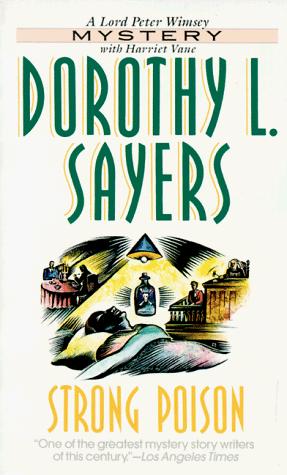
Mystery novelist Harriet Vane is tried for murdering her former lover, the novelist Philip Boyes, who died of arsenic poisoning after a quarrel that began when he offered marriage after first persuading her to live with him without it. The evidence is damning — she bought arsenic under false names while researching a poison novel, and Boyes fell fatally ill hours after drinking coffee alone with her — but the jury hangs, thanks chiefly to Miss Climpson, an elderly juror who happens to run Lord Peter Wimsey's undercover typing bureau. Convinced of Harriet's innocence and abruptly in love with her, Wimsey joins the defence with about a month before the retrial. The suicide theory collapses when a powder Boyes swallowed in a pub that night proves to be bicarbonate of soda, so attention turns to Norman Urquhart, the solicitor cousin at whose house Boyes ate a scrupulously witnessed last dinner. Urquhart shows Wimsey a draft will supposedly leaving their rich, senile great-aunt Mrs. Wrayburn's fortune to himself — but the draft was typed on an office machine only three years old, and Wimsey smells fraud.
The women of the bureau do the digging. Miss Murchison, planted in Urquhart's office, picks the lock of the Wrayburn deed box and finds a deed of trust giving him total control of the old lady's money; Miss Climpson, posing as a medium, cons Mrs. Wrayburn's spiritualist nurse into opening a safe containing the real will, which leaves the estate and fifty thousand pounds to Philip Boyes, with Urquhart merely residuary legatee. Miss Murchison then discovers, behind a panel in Urquhart's office, proof that he gambled away the trust money in the Megatherium crash — together with a packet of white arsenic. Boyes's death before Mrs. Wrayburn's would bury the embezzlement forever. After a night with the great poison trials and a volume of Housman, Wimsey sees the trick: Urquhart had spent two years building an arsenic tolerance, then loaded the cracked egg he directed into the shared omelette, poisoning his cousin with a dish he safely ate himself. Nail and hair clippings obtained through Urquhart's manicurist show heavy arsenic, and when Wimsey pretends to have laced the Turkish delight Urquhart has just eaten with a lethal dose, the unpoisoned solicitor panics and bolts into Parker's arms. At the retrial the Crown withdraws the charge, Harriet walks free with her innocence publicly affirmed, and Wimsey — refused again — drives off, telling his startled family he still intends to marry her if she will have him.
Important Characters
Harriet Vane: Mystery novelist on trial for murdering her former lover; candid, wounded and proud, she refuses to perform contrition for the court or gratitude for Wimsey, turning down his repeated proposals even as he works to save her life. Acquitted at last with her innocence publicly declared.
Lord Peter Wimsey: Aristocrat-detective who decides at first sight that Harriet is innocent and that he will marry her. He funds the defence, deploys his agents, deduces the arsenic-immunity trick from his library, and springs the trap that exposes the real killer — then leaves without collecting thanks.
Norman Urquhart: Boyes's cousin, a sleek Bedford Row solicitor and the murderer. Having embezzled his great-aunt's trust money in the Megatherium crash, he immunised himself to arsenic over two years, poisoned the shared omelette via a cracked egg, staged a suspicion-proof dinner, and forged a will draft to mislead Wimsey.
Philip Boyes: The victim, an advanced novelist of small sales and large vanity who demanded devotion, tested Harriet by offering marriage as a prize, and died of arsenic believing to the end that she hated him. Unknown to himself, the true heir to Mrs. Wrayburn's fortune — which is why he had to die.
Miss Katharine Climpson: Spinster head of Wimsey's typing bureau who, as a juror, forces the hung jury that saves Harriet. Sent to Windle, she fakes seances with a soapbox clicker and wire hooks to manipulate a spiritualist nurse, finds Mrs. Wrayburn's real will, and steams it open with her conscience protesting throughout.
Miss Joan Murchison: Bureau operative planted as Urquhart's typist. She spots the telltale typewriter that exposes the forged draft, learns lock-picking from Blindfold Bill, opens the Wrayburn deed box, and finds the embezzlement papers and the arsenic packet hidden behind the office panelling.
Bunter: Wimsey's incomparable valet, who charms the dinner details out of Urquhart's cook and parlourmaid over crumpets, deduces his master's feelings before anyone else, and performs the Marsh test that proves the hidden powder is arsenic.
Chief Inspector Charles Parker: The Scotland Yard man who built the case against Harriet and is honest enough to help dismantle it. He traces the pub powder, accepts the case against Urquhart, makes the arrest — and, after prodding from Wimsey, finally proposes to Lady Mary.
Mrs. Wrayburn (Cremorna Garden): Harriet-adjacent only by fortune: a scandalous Victorian actress, now over ninety, paralysed and speechless, whose shrewdly hoarded wealth is the engine of the crime. Her 1920 will forgives the Boyes branch and leaves Philip the bulk of everything.
Miss Booth: Mrs. Wrayburn's kindly, credulous nurse-companion, a convinced spiritualist. Miss Climpson's staged messages from her lost sweetheart Harry lead her to open the safe and post the will to Urquhart in good faith.
Hannah Westlock: Urquhart's observant parlourmaid, whose precise testimony about the dinner unwittingly shields the murderer until it becomes the key to convicting him — she remembers the cracked egg Urquhart insisted go into the omelette, and the strangely dry water bottle.
Sir Impey Biggs: Harriet's eminent defence counsel, who secures the hung jury and, at the retrial, insists on a declaration of complete innocence rather than a quiet withdrawal.
Ryland Vaughan: Boyes's devoted hanger-on and literary executor, certain Harriet poisoned his genius out of spite; his grief and his little bottle of poison-in-waiting help Wimsey rule out both him and suicide.
Freddy Arbuthnot: Wimsey's amiably dim City friend, whose financial gossip confirms Urquhart's losses in the Megatherium crash, and whose engagement to Rachel Levy supplies the Christmas chapter's subplot.
Chapter-by-Chapter Summary
These headings follow the complete text in its 23 numbered chapters, with each recap written directly against the chapter it covers.
Chapter 1
An aged judge sums up the Crown's case against Harriet Vane, accused of poisoning her former lover Philip Boyes with arsenic after quarrelling over his belated marriage offer: she bought arsenic and other poisons under false names while writing a poison novel, and Boyes's gastric attacks track their meetings. The judge details Boyes's last day, including a scrupulously shared dinner at his cousin Norman Urquhart's house and coffee alone with Harriet afterward. In the gallery, a gloomy Lord Peter Wimsey watches with Freddy Arbuthnot and his mother, then dashes off to speak to defence counsel at the lunch adjournment.
Chapter 2
The judge completes his summing-up: Boyes died on 23 June after three days of violent illness, his deathbed words about Harriet cut both ways, and exhumation — prompted by Nurse Williams's gossip — revealed a large arsenic dose plus traces near the hair roots suggesting dosing over months. Harriet's defence is that the purchases were research for her novel, a subject she had discussed with her agent before the quarrel. The jury is sent out to consider whether she poisoned him or whether suicide or accident remains reasonably possible.
Chapter 3
The jury deliberates for hours while Wimsey tells a shaken Chief Inspector Parker flatly that the case, however watertight, has the wrong woman in it. The foreman finally reports an unbreakable deadlock — the elderly spinster juror, Wimsey's own Miss Climpson, has held out with two supporters — and the judge orders a fresh trial. Wimsey begs Sir Impey Biggs to bring him into the defence, then exuberantly thanks Miss Climpson for buying him the chance to prove Harriet innocent.
Chapter 4
At a Sunday war council, Wimsey learns from Miss Climpson how the jury split, quietly guarantees the defence costs, and gets himself accredited to visit the prisoner. In Holloway, Harriet explains the quarrel — Boyes had presented marriage as a reward after she surrendered her principles for him, and she refused to be made a fool of. Wimsey abruptly proposes; she deflects him as suitor number forty-seven but does not find him repellent, and outside he realises he has only about a month before the retrial.
Chapter 5
Over tea at the typing bureau, Wimsey and Miss Climpson work through possible motives — a jealous rival, money, blackmail, suicide — and note the unexplained ten minutes between Boyes leaving Harriet's flat and hailing a taxi. Wimsey enlists the bureau's help, then asks Parker to hunt for any arsenic traceable to Boyes, any pub he might have visited near Doughty Street that night, and any discarded bottle or paper.
Chapter 6
Wimsey visits Boyes's father, a threadbare vicar who saw no hint of suicide and reveals that Philip's will left his copyrights to Ryland Vaughan; the only family money is the fortune of a scandalous great-aunt, the ancient ex-actress Cremorna Garden, now Mrs. Wrayburn of Windle. Publisher Mr. Cole gloats over booming posthumous sales, and Harriet's agent Challoner lends Wimsey proofs of her arsenic novel while reporting her own grim sales boom.
Chapter 7
Visiting Harriet, Wimsey spins a mock plot about an author murdering a fellow writer for the publicity windfall, satisfying himself that money meant nothing to her — she out-earned Boyes four to one. Finding Urquhart away at Mrs. Wrayburn's sickbed, Wimsey chats with the cook and with Urquhart's head clerk, learns the office has just lost its lady typist, and phones Miss Climpson to plant one of her women in the job.
Chapter 8
Bunter is deployed to charm Urquhart's servants, first divining — to Wimsey's alarm — his master's matrimonial hopes. Marjorie Phelps tours Wimsey through Bohemia: Ryland Vaughan insists Harriet poisoned Phil and swears he would have known of any suicide plan, while Harriet's partisans Eiluned Price and Sylvia Marriott argue for suicide and, on intuition, for the too-sleek Urquhart. Parker telephones: the police have found the pub and are tracking a packet of white powder.
Chapter 9
Over crumpets in Urquhart's kitchen, Bunter draws out Mrs. Pettican and Hannah Westlock on the fatal dinner: every dish was shared or finished in the kitchen, Urquhart asked pointedly about the fresh eggs and directed that a cracked one go into the omelette Boyes cooked himself, and afterward he had the burgundy sealed and initialled with odd foresight. The women also gossip about rich, senile Mrs. Wrayburn — the wicked old actress whose money Urquhart is expected to inherit.
Chapter 10
Ex-barmaid Mrs. Bulfinch describes a white-faced Boyes gulping brandy at the Nine Rings around ten that night, then stirring a white powder into water — apparent support for suicide, though the packet she shelved has vanished. Crofts grumbles that Wimsey gave the lead to the police; Wimsey then interviews Urquhart, who volunteers that Mrs. Wrayburn left Boyes nothing and shows every sign of candour, promising to produce the draft of her will, which he says is at his house.
Chapter 11
At breakfast Urquhart hands Wimsey a typed draft leaving virtually everything to himself, with a vindictive clause cutting out the Boyes branch, and recounts the family history of Cremorna Garden's fortune. Later, a report from Miss Murchison — now installed in Urquhart's office — urges Wimsey to probe his dealings with the crashed Megatherium Trust; Wimsey notices her letter and the will draft share the same chipped, misaligned office typewriter, and an idea begins to stir.
Chapter 12
Christmas at Duke's Denver: the house party gossips complacently about the poisoning woman until Wimsey is needled past endurance. Freddy Arbuthnot reports that Urquhart was secretly and badly burned in the Megatherium crash, and announces his engagement to Rachel Levy; Wimsey nudges his sister Mary about Parker's long, silent devotion and promises to intervene.
Chapter 13
Miss Murchison reports to Wimsey over tea and Bach: the office typewriter is only three years old, and Urquhart stayed late typing the evening after Wimsey's visit — so the supposed old draft is a fresh fabrication. Wimsey sends her to Blindfold Bill Rumm, a safecracker turned evangelist, for a lesson in lock-picking, and instructs her to open the Wrayburn deed box and memorise any will or trust document she finds.
Chapter 14
Miss Murchison engineers a late night alone in the office by faking a typing omission, survives a heart-stopping interruption from Mr. Pond, and picks the Wrayburn box lock. It contains no will at all — only securities lists, a power of attorney, and a 1920 deed of trust putting Mrs. Wrayburn's whole fortune under Urquhart's sole control, with a letter promising instructions about a will to come.
Chapter 15
With time draining away, Wimsey sends Miss Climpson to Windle to find Mrs. Wrayburn's will by whatever means present themselves, then bullies Parker into finally proposing to Lady Mary. Parker accepts joyfully — and delivers a hammer blow: the packet recovered from the Nine Rings has been analysed, and the powder Boyes took that night was harmless bicarbonate of soda.
Chapter 16
Miss Climpson besieges Windle's teashops for days until she engineers a meeting with Miss Booth, Mrs. Wrayburn's nurse — and discovers with guilty delight that the woman is a devout, credulous spiritualist. Drawing on everything she once learned about fraudulent mediums, Miss Climpson accepts an invitation to a private sitting and equips herself with a metal soapbox clicker gartered above her knee and wire hooks for table-tilting.
Chapter 17
After supper at the house, Miss Climpson stages a seance: cracks from the soapbox and nudges from the wire hooks conjure Harry, Miss Booth's long-lost sweetheart, messages from dead schoolfellows, and a spirit guide called Pongo, with a rogue George Washington thrown in for verisimilitude. Miss Booth is wholly persuaded, pronounces her guest a wonderfully strong medium, and begs her to return.
Chapter 18
The boardinghouse ladies warn Miss Climpson against the local medium Mrs. Craig, sharpening her cover story. At the next sitting the spirits spell out Cremorna's distress: her will must be found and sent to Norman, who wants it. Steered by the letter B and a row of figures Miss Climpson glimpsed in a black notebook, the two women search half the house, then open the library safe with the noted combination and find the sealed will.
Chapter 19
Miss Climpson persuades Miss Booth to post the will to Urquhart registered, then steams the envelope open over the kettle while the nurse is upstairs: Mrs. Wrayburn left the real estate and fifty thousand pounds to Philip Boyes, with Urquhart merely residuary legatee and executor. Her report reaches Wimsey, who now has his motive — under the true will, Boyes's death before the old lady's makes Urquhart heir to everything — and he asks Crofts to get the trial delayed.
Chapter 20
Miss Murchison sees the will arrive, catches Urquhart at a panel over his office mantelpiece, and returns after hours to force its hidden cupboard: inside are papers proving he pledged and lost Mrs. Wrayburn's trust holdings in the Megatherium crash — and a chemist's packet of white powder, which Bunter's Marsh test proves is arsenic. Parker accepts motive and intent but insists the poisoning remains impossible, since every item at dinner was shared; Bunter adds the oddity of Boyes's emptied, bone-dry water bottle. After a night among the poison trials, Maybrick, Dixon Mann and a volume of Housman, Wimsey announces he knows how it was done.
Chapter 21
Harriet again refuses marriage, offering instead to live with Wimsey, which he gently declines to accept as a substitute; he leaves before he can press her further. He then charms Urquhart's manicurist, darling Mabel, into secretly collecting the solicitor's nail parings and hair snippings in chemically clean pillboxes and posting them to him.
Chapter 22
Wimsey invites Urquhart round, plies him with Turkish delight, and spends seventy minutes laying out motive, the forged draft, and the method: arsenic poured into the cracked egg of the shared omelette by a man who had spent two years building up immunity, as his arsenic-laden hair and nails now prove. Wimsey then announces that the sweets Urquhart has been devouring were loaded with a killing dose; the solicitor, showing no symptom whatever, panics, bolts, and runs straight into Parker's handcuffs — the Turkish delight was, in fact, untouched.
Chapter 23
At the retrial the Crown offers no evidence, Sir Impey Biggs secures a public declaration of Harriet's complete innocence, and the jury formally returns Not Guilty as the court learns another arrest has been made. Harriet looks for Wimsey, but he has already driven away; Eiluned Price predicts Harriet will have to send for him herself. At Duke's Denver, Wimsey defends Parker's engagement to Mary and staggers his brother by announcing that he means to marry the prisoner — if she will have him.
Ending Explained
Who really poisoned Philip Boyes?: His cousin Norman Urquhart, the respectable Bedford Row solicitor at whose house Boyes ate his last dinner. Urquhart held Mrs. Wrayburn's fortune under a deed of trust and had secretly gambled it away in the Megatherium crash; her true will left the estate and fifty thousand pounds to Boyes. With Boyes dead before the old lady, Urquhart became heir to everything and his embezzlement would never be exposed.
How was arsenic given at a dinner where every dish was shared?: Through the sweet omelette Boyes cooked himself at table. Urquhart had spent about two years taking regular doses of solid white arsenic — the packet Miss Murchison found in his office panel — building an immunity that let him eat his half of a poisoned dish unharmed. He loaded the dose into the cracked egg he had brought home and directed into the bowl, then ostentatiously shared everything, having even dried out the bedroom water bottle to keep suspicion trained on the dinner and on Harriet's coffee afterward.
What was the powder Boyes swallowed at the Nine Rings that night?: Harmless bicarbonate of soda — a stomach remedy he took when the poison began to gripe him on the way home. Its discovery briefly promised a suicide defence, but the analysis destroyed that theory and forced Wimsey to look for a murderer instead.
How does Wimsey actually prove it?: By converging lines his agents dig up: Miss Climpson's fake seances locate the real will, Miss Murchison's lock-picking exposes the trust papers, the Megatherium losses and the hidden arsenic, and the office typewriter convicts Urquhart of forging the draft he showed Wimsey. Nail and hair samples obtained via Urquhart's manicurist come back saturated with arsenic, proving habitual dosing. Finally Wimsey bluffs that the Turkish delight Urquhart has just eaten carried a lethal dose — and the solicitor's total lack of symptoms, followed by his attempted flight into Parker's arms, gives the game away.
Is Harriet freed, and does she marry Wimsey?: The Crown withdraws the charge at the retrial, stating complete conviction of her innocence, and the jury returns a formal Not Guilty. She has refused Wimsey throughout — including a final offer to live with him unmarried, which he declines — and he drives off without waiting for thanks. The book ends with him telling his family he still intends to marry the prisoner if she will have him.
Themes and Motifs
Justice and its machinery: The hung jury turns on one woman's refusal to convict on prejudice dressed as proof, and the book keeps asking how far a watertight case can differ from the truth.
The double standard: Harriet is tried as much for living unmarried with Boyes as for his murder; the judge's moralising and the public's relish show respectability itself operating as evidence against her.
Love without coercion: Wimsey holds the power of rescue over a condemned woman and repeatedly refuses to use it, accepting rejection rather than letting gratitude stand in for consent.
Money, wills and hidden rot: A trust deed, a suppressed will and a solicitor's speculation drive the murder; Sayers locates the real corruption in sleek professional respectability, not in Bohemia.
The uses of superfluous women: Spinsters, typists and ex-barmaids — the women society discounts — do the decisive detective work, from the jury room to the picked lock to the faked seance.
Performance and misdirection: The suspicion-proof dinner, the forged draft and Miss Climpson's spirit-rapping all trade on how easily people believe a well-staged show, for good and for ill.
Content Notes
This book contains a slow death by poisoning described in clinical detail, a capital trial conducted under threat of hanging, period moralising about women's sexuality, and casual antisemitic and ethnic stereotyping typical of 1930.
About the Book
Best for: golden-age mystery readers who care more about character, wit and social texture than about a crowded suspect list, and anyone who wants to see where the Wimsey-Vane romance — detective fiction's great slow burn — begins.
Primary text: Dorothy L. Sayers, Strong Poison, Project Gutenberg eBook #78157, read in the Standard Ebooks edition of the 1930 text. Chapter recaps were written directly against that text.
Selection evidence: chosen from the January 2026 US public-domain cohort (works first published in 1930) — new Project Gutenberg releases with strong continuing search interest and thin existing chapter-summary coverage.