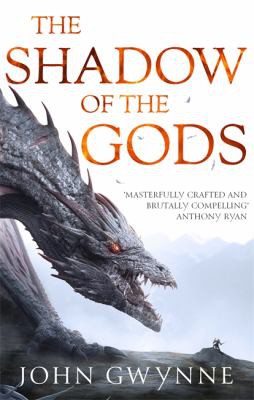
The Shadow of the Gods follows three apparently separate stories through Vigrið, a land broken by the ancient war and death of its gods. Orka is a former warrior trying to preserve a quiet family life. Varg is an escaped thrall seeking the truth about his sister’s murder. Elvar is a noblewoman who has rejected court expectations to earn battle-fame with the Battle-Grim. John Gwynne uses their alternating viewpoints to build toward a convergence around missing children, Tainted blood and the imprisoned dragon-god Lik-Rifa.
Travel, shield walls, training and monster fights are described through weight, distance and practiced movement.
The novel’s strongest quality is physical clarity. Travel, shield walls, training and monster fights are described through weight, distance and practiced movement. That emphasis makes the mythic material feel embedded in labor and survival rather than added as decoration. The three protagonists also embody different kinds of belonging: Orka fears that old loyalties will endanger her family, Varg wants a family he can choose, and Elvar wants a reputation independent of the family she abandoned.
The middle can feel deliberate because clues repeat across viewpoints before the characters understand their shared importance. The structure pays off in the last quarter, when betrayals inside the warbands and the kidnapping network reveal that the old gods are not merely history. Biórr’s betrayal is especially effective because it converts Elvar’s closest emotional connection into the mechanism that frees Lik-Rifa.
The ending is not a self-contained victory. Orka reaches Grimholt and rescues several children but learns Breca has been carried away. The Bloodsworn find Orka and commit to the pursuit. Elvar survives the ritual at Oskutreð but watches Lik-Rifa return to the world. Each plot therefore resolves its immediate search while opening a larger war.