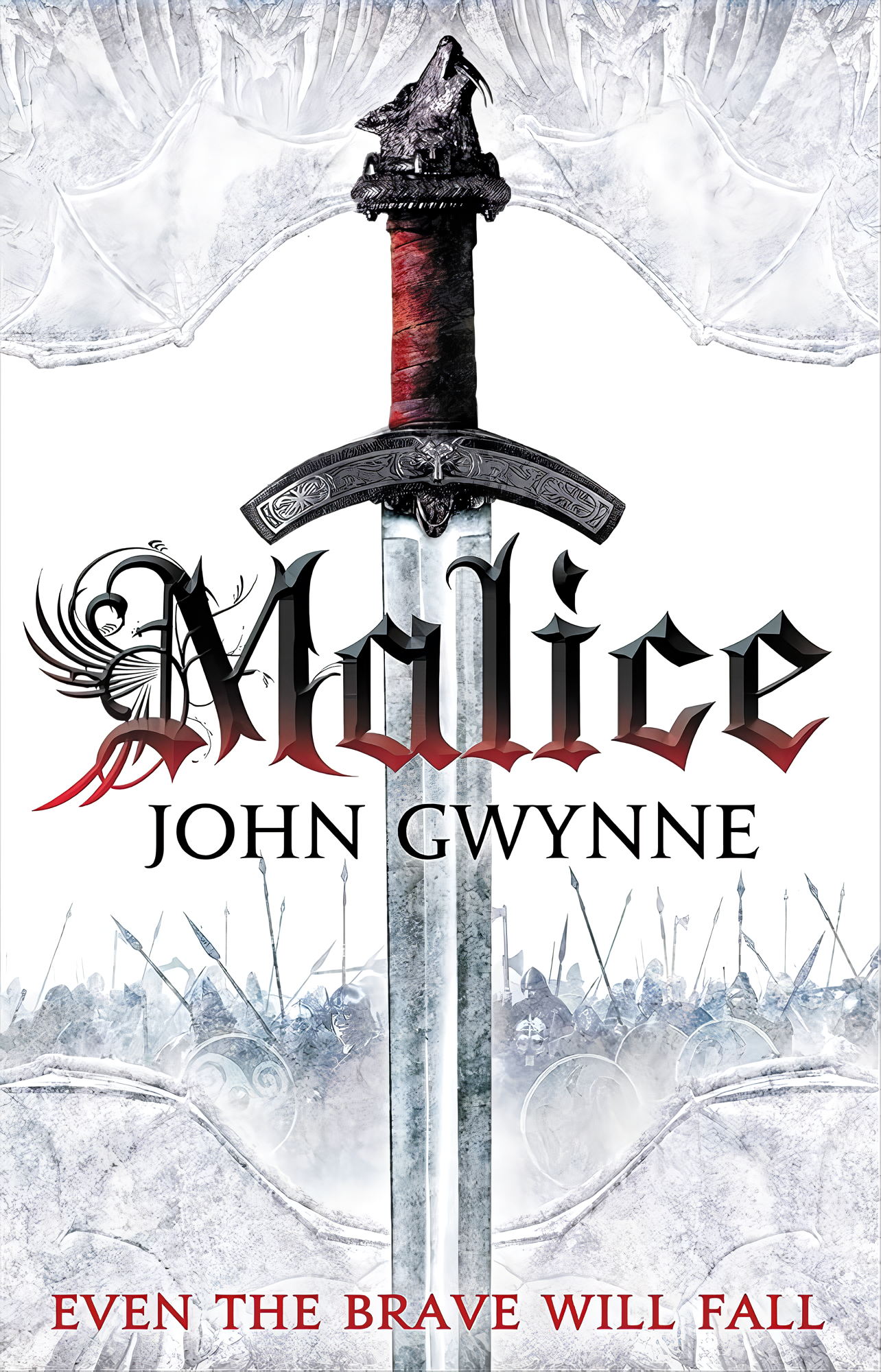
John Gwynne’s Malice opens in a world that believes its great war is safely buried in history. Giants have retreated into forests and mountains, kings concern themselves with borders and succession, and old prophecies have become stories. Then ancient stones begin bleeding, enormous wyrms stir and rival servants of Elyon and Asroth start searching for the champions who will decide the next God-War.
The story is told through seven viewpoint characters, although three dominate. Corban is a blacksmith’s son in Ardan who wants to become a warrior. Veradis is an overlooked younger son who enters the service of Prince Nathair. Kastell is a dispossessed noble determined to avenge his family against the giants. Their stories begin far apart, but every private ambition is gradually absorbed into the same approaching conflict.
Corban’s chapters are, for me, the novel’s heart. His education under the enigmatic stablemaster Gar could have been a familiar chosen-one storyline, yet Gwynne grounds it in family, friendship and physical work. Corban is not compelling because a prophecy may concern him; he is compelling because he loves his parents, argues with his sister, mourns his friends and repeatedly chooses compassion before he understands why it matters.
The battle scenes are the book’s clearest strength. Gwynne writes shield walls, spear work and desperate retreats with an unusual sense of weight. Fighters tire, formations matter and even skilled warriors survive through cooperation. The violence is brutal without becoming meaningless, because the narrative spends so much time showing the homes and relationships that every battle threatens.
The first half is slower and more conventional. There are many kingdoms, warriors and pieces of invented terminology to learn, while some early developments resemble familiar epic-fantasy material: the hidden champion, the corrupted prince, the mysterious mentor and the returning dark god. The female cast is also given less narrative space than the men, even though Cywen, Brina, Edana and Gwenith become increasingly important.
Patience is rewarded. The apparent simplicity of good against evil is complicated by the fact that nearly everyone believes they are choosing the righteous side. Nathair’s conviction is more dangerous than ordinary greed, and Veradis’s loyalty makes him sympathetic even while it carries him toward terrible decisions. The final hundred pages bring the separate plots together in betrayal, siege and several genuinely painful deaths.
Malice is a strong beginning rather than a complete adventure. It establishes an enormous conflict and leaves many of its most important questions unanswered, but the ending provides enough consequence to make the long preparation worthwhile. Readers who enjoy character-driven military fantasy, found families and heroes who still believe honour matters should find a great deal to like.