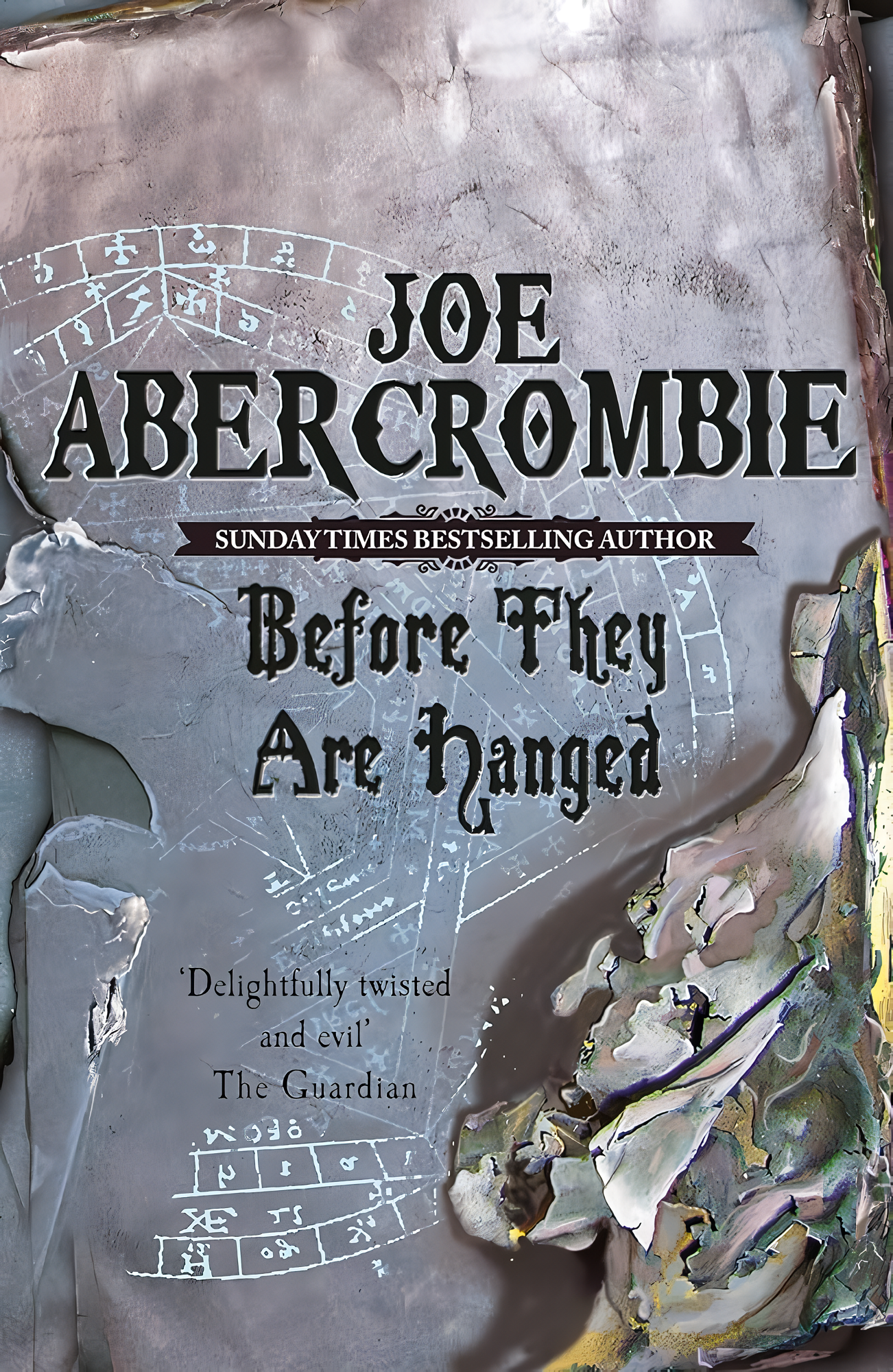
The Blade Itself assembled the pieces. Before They Are Hanged puts them under pressure. Joe Abercrombie separates his six point-of-view characters across three fronts: Glokta is sent to defend a city the Union cannot reinforce; West is trapped inside an army commanded by vain aristocrats; and Bayaz leads Logen, Ferro, and Jezal through the ruins of the Old Empire in search of a weapon that might alter the balance of the world.
The result is a middle volume with the momentum of a conclusion. Dagoska gives Glokta exactly the kind of impossible assignment in which he thrives: failing walls, empty coffers, unreliable mercenaries, hostile councillors, and an enemy whose most dangerous agents may already be inside the city. Abercrombie turns the siege into a blackly comic administrative thriller. Every solution purchases a worse problem, and Glokta remains fascinating because his flashes of decency never erase what he does for a living.
The northern campaign is harsher and more immediate. Through West and the Dogman, war becomes an accumulation of wet clothes, bad roads, missing supplies, foolish orders, and frightened men trying to survive other men's ambitions. Abercrombie has little interest in heroic command from a hilltop. His battles are confused, local, and brutally physical; courage matters, but weather, timing, and incompetent leadership matter more.
The western expedition is the book's slowest strand, but also its richest in character. Jezal's vanity is tested by genuine suffering. Ferro and Logen circle a tenderness neither has the language or trust to sustain. Bayaz, meanwhile, grows less like the kindly wizard of an old quest story with every explanation he offers. The dead cities around him are not merely scenery. They are evidence—and perhaps warnings—about the sort of men who claim history has chosen them.
Abercrombie's great strength remains the distance between how his characters imagine themselves and what their actions reveal. West believes he is disciplined until anger takes command. Jezal mistakes polish for worth until hardship strips it away. Logen wants to become a better man while carrying something inside him that makes improvement terrifyingly fragile. Even Glokta, the trilogy's sharpest observer of hypocrisy, is not exempt from it.
The novel occasionally shows the machinery of its three-track structure, particularly when the western journey pauses for history lessons. Yet the payoff is cumulative: each strand dismantles a different fantasy convention—the noble war, the righteous institution, the wise mentor, the healing quest—without surrendering excitement or emotional force.
Bleaker, funnier, and more assured than its predecessor, Before They Are Hanged is where The First Law becomes more than a clever inversion of epic fantasy. It becomes a study of damaged people discovering that change is possible, costly, and never complete. Middle books are not supposed to be this good.