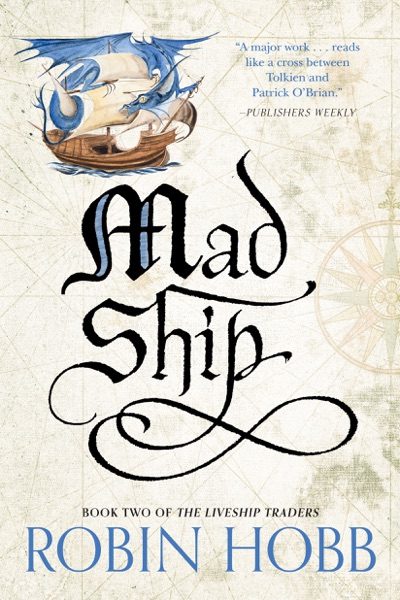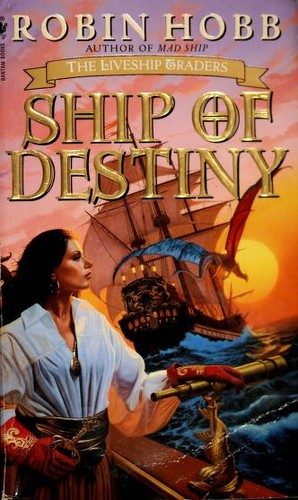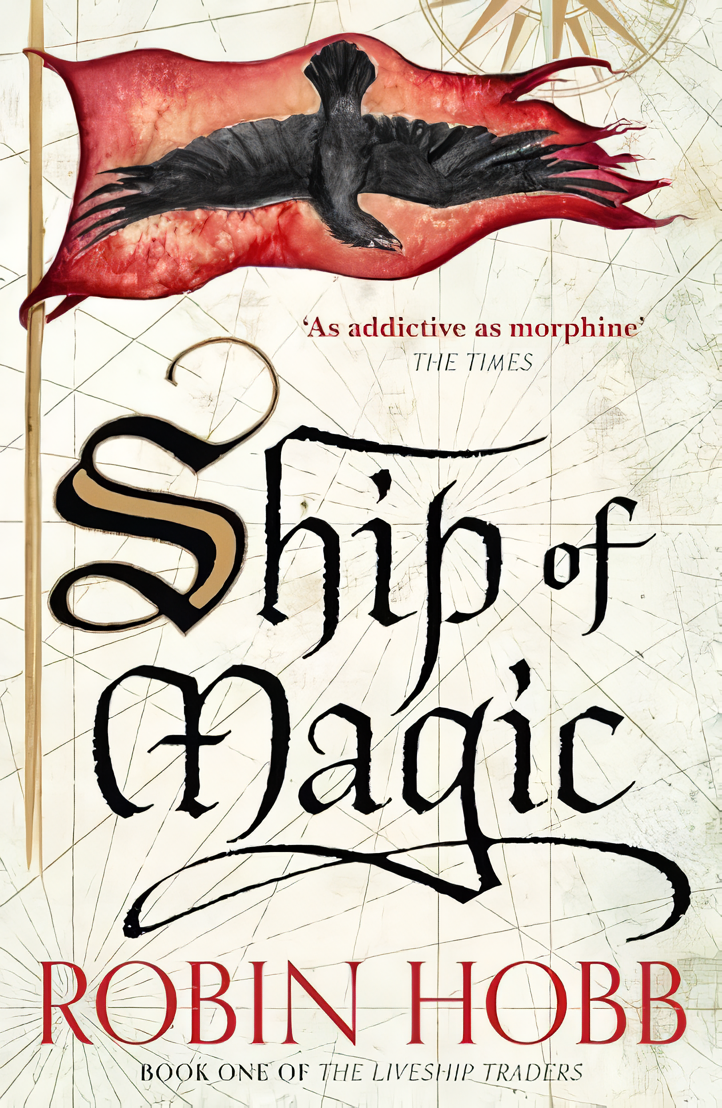
Ship of Magic is the book that answers a question no one thought needed answering: what does Robin Hobb do when she abandons the tight first-person intimacy that made the Farseer trilogy great? The answer is that she writes an even bigger, richer, more ambitious book — a sprawling, multi-voiced merchant-and-pirate epic that many longtime readers name as their favorite trilogy opener in the entire sixteen-book Realm of the Elderlings. George R.R. Martin famously called the Liveship Traders "even better than the Farseer trilogy — I didn't think that was possible." Having read it, I understand the sentiment.
The gamble here is structural, and it's a real one. The Farseer books lived or died on Fitz's voice — that claustrophobic, self-lacerating first-person narration that made his every humiliation land like a body blow. Ship of Magic throws that out entirely. In its place is a rotating third-person ensemble: a disinherited daughter, a conscripted boy-priest, a scheming pirate, a mad ship, three generations of merchant women, and — most audaciously — a chorus of sea serpents whose chapters are among the strangest and most haunting in the book. It's a completely different machine, and Hobb runs it flawlessly. The viewpoints interlock, the ironies compound across threads, and the 880 pages move with a momentum the page count has no right to allow.
The central conceit is, for my money, the single best invention in Hobb's whole canon. A liveship is a vessel of magical wizardwood that, after three generations of a family die aboard it, wakes up — the figurehead gaining consciousness, memory, and a soul, bound forever to the family that made it. It's a brilliant device because it turns a ship into a person and an inheritance into a hostage, and Hobb wrings every drop of horror and pathos from it. The newly quickened Vivacia, confused and reaching for love, asks whether she is a real being or just a puppet of the dead; the mad, blinded, suicidal Paragon shows what abandonment does to such a creature; and the whole system rests, we slowly realize, on a secret so dark it recolors everything. This is worldbuilding as moral argument, and it's masterful.
What elevates the book to five stars is the characters, and specifically Hobb's refusal to make any of them simple. Althea's arc — a woman disguising herself as a man to earn certification of skills everyone can already see she has, in a society sliding backward into patriarchy — is a genuinely stirring feminist thread that never once feels anachronistic or preachy. Wintrow, the gentle priest torn from his vocation and branded a slave by his own father, carries the book's moral weight; his amputation and his tattooing are among the most harrowing scenes Hobb has written. And then there's Kennit, the pirate: charming, monstrous, self-mythologizing, freeing slaves for entirely cynical reasons and becoming a hero anyway. Hobb lets you into his head and makes you complicit in rooting for a man you'd cross oceans to avoid. Villain is too small a word; he's a study in how the world mistakes charisma for virtue.
Hobb's other great subject here is cruelty, and she does not flinch. The slave trade is not backdrop — it's on the page, in the tattooed faces and the chained holds and the corpses the serpents feast on. The book is unsparing about complicity, about the way "respectable" merchant economics slide into atrocity when the profit is good enough. It's also, in the Malta–Reyn courtship, deliberately and pointedly uncomfortable, refusing to romanticize what it's depicting. This is not a cozy read, and it isn't trying to be.
The caveats are few and mostly structural. This is a slow, long, patient book — Hobb builds for hundreds of pages, and readers who need the plot sprinting by page 100 will chafe. It is also unmistakably book one of three: it resolves almost nothing, ending mid-story with the Vivacia captured and every thread mid-arc, which is thrilling if you're continuing and frustrating if you wanted a self-contained story. And the sheer number of viewpoints means the momentum occasionally diffuses — the Bingtown domestic-politics material is the slowest, and a first-time reader may find the serpent chapters baffling until their purpose clarifies. But these are the costs of ambition, not failures of execution, and the payoff across the trilogy justifies every one of them.
For readers arriving from the Farseer recaps, a word of orientation: Fitz is not here, and this is not his story. What you get instead is the same world seen through a wide-angle lens, the same unflinching emotional honesty applied to a whole society rather than a single wounded boy. It rewards patience the way Hobb always does — with characters so real they ache, and with a slow-burn payoff that lands like a wave.
Five stars. It is ensemble fantasy at full power, home to a villain for the ages and a genuinely affecting coming-of-age arc, built on a magic system that is also a moral trap. As a series opener it's close to perfect, and as an argument that Hobb could do anything, it's conclusive. Start it knowing you'll want the next two immediately.