The Book in Brief
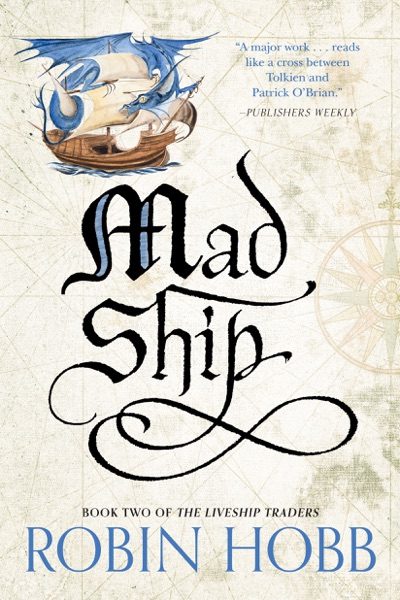
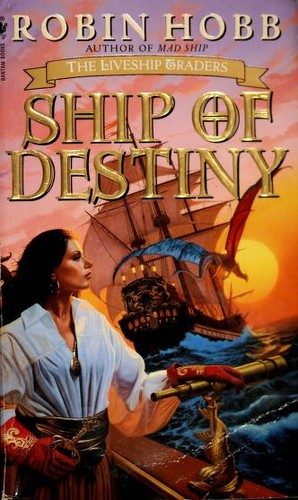
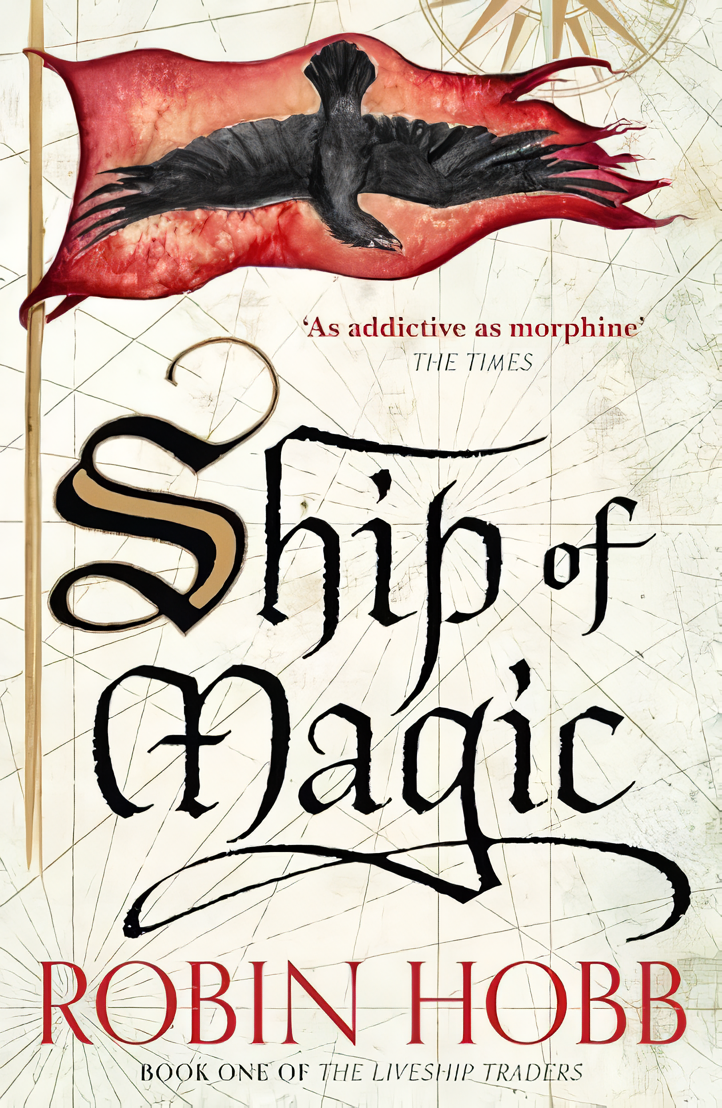
Ship of Magic (1998) is the first volume of Robin Hobb's Liveship Traders trilogy, followed by The Mad Ship (1999) and Ship of Destiny (2000). It is the second trilogy in Hobb's larger Realm of the Elderlings sequence — the same world as the Farseer trilogy (Assassin's Apprentice, Royal Assassin, Assassin's Quest), but a very different corner of it.
Where the Farseer books were a tight, first-person coming-of-age story narrated by the royal bastard and assassin FitzChivalry Farseer in the northern kingdom of the Six Duchies, the Liveship Traders trilogy swings far to the south, trades Fitz's single voice for a rotating cast of third-person viewpoints, and tells a sprawling, ensemble saga of merchant families, pirates, and living ships. Fitz does not appear in this trilogy. For readers arriving from the Farseer recaps, that's the key adjustment: this is the same universe, roughly contemporaneous with the years around and after the Red-Ship War, but almost none of the Farseer cast carries over.
The two trilogies are nonetheless quietly stitched together. There are passing references to the Six Duchies and the war in the north. A magic that behaves a great deal like the Skill turns up in the training of a young priest. And a mysterious newcomer to Bingtown, the beadmaker and woodworker Amber, is — though the novel never says so outright in book one — the Fool from the Farseer books, whose long game connects the whole Realm of the Elderlings. The serpent-and-dragon mystery seeded here pays off across this trilogy and again in the later Rain Wild and Fitz and the Fool books.
Important Characters
Althea Vestrit: The younger Vestrit daughter, raised on the decks of the family liveship Vivacia and certain the ship will be hers. Cut out by her father's will, she sails disguised as a boy to earn the ship's ticket that would prove her competence, is denied it for being a woman, and heads home at the end still resolved to reclaim her ship.
Vivacia: The Vestrit liveship, whose carved figurehead wakes to consciousness when Ephron's death completes the third generation to die aboard her. Newborn and unsure whether she is truly a person, she is forced to serve as a slave ship, bonds deeply with Wintrow, and at the close is charmed into sailing for the pirate Kennit.
Wintrow Vestrit: Kyle's gentle thirteen-year-old son, pulled out of his monastery training as a priest of Sa and pressed aboard the Vivacia to steady her. Twice tattooed as property and drawn ever deeper into the ship's bond, he keeps her from capsizing during the slave uprising and trades his healing skills to Kennit to spare his father's life.
Kennit: The coldly charming captain of the Marietta, privately certain he is destined to be King of the Pirate Isles. His purely pragmatic policy of freeing slaves makes him a folk hero, a sea serpent costs him a leg, and he ends the novel with the captured Vivacia won over and under his flag.
Kyle Haven: Keffria's husband, a hard-driving captain with no Trader blood, who takes command of the Vivacia and converts the sentient ship into a slaver. He forces Wintrow into service, brands the boy as the ship's property after buying him at auction, and finishes the book a prisoner of the freed slaves and pirates.
Brashen Trell: A disowned son of a Trader family and the Vivacia's first mate under Ephron, who walked away rather than serve Kyle. Aboard the Reaper he guards Althea's secret and watches over her, and back in Bingtown he remains one of the few friends of the mad ship Paragon, aboard whom he has long slept between berths.
Ronica Vestrit: Ephron's widow and the family's sharp, exhausted matriarch. She spends the book fighting to keep the Vestrits solvent against crushing debts, above all the ancient wizardwood obligation owed to the Khuprus family of the Rain Wild Traders.
Keffria: The elder Vestrit daughter, who inherits the Vivacia under Ephron's will and yields practical control to her husband Kyle. She is left in Bingtown struggling beside Ronica with the family's finances and with her headstrong daughter Malta.
Malta Vestrit: Keffria and Kyle's vain twelve-year-old daughter, impatient to be seen as a grown woman. By trading tokens with a veiled stranger at a Traders' gathering, she unwittingly signals consent to a courtship from Reyn Khuprus, heir of the family holding the Vestrit debt, a development the novel presents as deliberately unsettling and her elders find alarming.
Amber: An enigmatic beadmaker and woodworker newly arrived in Bingtown, with hints of a much larger design behind her kindness. She prepares Althea for her voyage in disguise, drops cryptic prophecies, and moves to buy the abandoned liveship Paragon before he can be cut apart for his wizardwood.
Paragon: Bingtown's outcast liveship, blinded when his figurehead's eyes were hacked out and left beached for decades by the Ludluck family after drowning his crews. Half-mad from grief and abandonment, he is befriended by Brashen and guarded by Amber while a New Trader schemes to butcher him for his priceless wood.
Etta: A woman of Divvytown who becomes Kennit's lover and fiercest defender. When a serpent seizes his leg she cuts it away to save him from being pulled under, fulfilling a prophecy he refuses to accept, and receives his fury rather than his gratitude.
Sorcor: Kennit's loyal first mate, a former slave devoted to destroying the slave trade. His bargain, hunting a slaver for every liveship they chase, turns the Marietta's raids into a campaign of liberation that builds Kennit's legend among the freed.
Maulkin: A golden-eyed sea serpent, a rare seer among his kind who dimly remembers an earlier time, who opens the novel and leads his tangle north. His search for the being called She Who Remembers threads the serpent mystery through the book, pointing toward the secret that binds serpents, dragons, and liveships together.
The World: Bingtown, Liveships, and the Cursed Shores
The trilogy is set on the Cursed Shores, centered on Bingtown, a wealthy trading city founded generations ago by settlers — the Bingtown Traders, or "Old Traders" — who made a hard bargain to colonize a strange and dangerous coast. Bingtown sits at a crossroads between the sea, the decadent empire of Jamaillia to the south (from whom the Traders hold their founding charter), warlike slaveholding Chalced to the north, and the Rain Wild River to the north.
Up the acidic, perilous Rain Wild River live the Rain Wild Traders, kin to the Bingtowners but hidden away — a people marked and deformed by the caustic environment, who veil themselves and who mine fabulous magical goods from the buried ruins of an ancient civilization, the Elderlings. Trading these goods is the foundation of Bingtown wealth, but the river will dissolve an ordinary hull.
Only a liveship can safely make the run. Liveships are vessels built from wizardwood, a rare, enormously expensive material sold only by the Rain Wild families. After three generations of an owning family have died aboard a wizardwood ship, it "quickens": the carved figurehead wakes into full consciousness, gaining a personality, the absorbed memories of the dead, and a psychic bond to its living family. A quickened liveship can talk, feel, sail itself, and navigate the river — and is bound, body and soul, to the family that owns it. They are the ultimate status symbol and the engine of the Rain Wild trade, and the debt families take on to buy the wizardwood can bind them for generations.
Three other forces move through the book: sea serpents, which have begun mysteriously trailing ships — especially slavers — and which possess a dim, tormented intelligence; pirates, based in the lawless Pirate Isles, preying on the shipping lanes; and the slave trade, spreading south from Chalced and increasingly tolerated by a weak, spendthrift Satrap of Jamaillia — a corrosive new economy dividing Bingtown between tradition-minded Old Traders and profit-hungry "new traders."
The Structure
Ship of Magic is a long novel — 685 pages in its first hardcover — built from a prologue and thirty-six titled chapters. The prologue, "The Tangle," is told from the point of view of the sea serpent Maulkin, and the book rotates among many viewpoints thereafter: Althea, Wintrow, Kennit, Ronica, Keffria, Malta, Brashen, Kyle, Etta, the serpents, and the liveships Vivacia and Paragon themselves. The story braids together roughly six or seven arcs: the Vestrit family and Vivacia, Althea's quest for a ship's ticket, Wintrow on the slaver, Kennit the pirate, Paragon and those who care for him, Malta and Bingtown, and the serpents.
The Vestrit Family: Ephron's Death and Vivacia's Quickening
The novel opens on a family in crisis. Captain Ephron Vestrit, patriarch of one of Bingtown's oldest Trader families, is dying of a wasting illness. His liveship, the Vivacia, was commissioned generations ago; two Vestrits have already died aboard her. Ephron's death will complete the third generation and finally quicken the ship — and he is desperate to die on her decks so his life's work, and the crushing family debt sunk into her, will not be wasted.
The Vestrit women hold the family together. Ronica Vestrit, Ephron's wife, is the sharp, exhausted matriarch quietly wrestling with mounting debts. Their elder daughter Keffria is married to Kyle Haven, an ambitious, hard-driving sea captain who is not himself a Trader by blood and who chafes at Bingtown's traditions. Their younger daughter, Althea Vestrit, is a spirited young woman who was largely raised aboard the Vivacia at her father's side, loves the ship above all else, and fully expects to inherit her.
Ephron is carried aboard and dies on the Vivacia's deck. The ship quickens — her figurehead wakes into confused, newborn consciousness, flooded with the memories and grief of the dead Vestrits. But the will delivers a devastating blow to Althea: Ephron has left the Vivacia not to her but to Keffria — and Keffria, in keeping with Bingtown's increasingly patriarchal drift, cedes practical control to her husband. Kyle takes command of the liveship. Althea, who has poured her whole identity into that ship and that bond, is shattered.
Kyle wastes no time. He sees the Vivacia not as a person but as a very expensive asset that must be made to pay. His plan to rescue the family fortune is brutal and, to Old Traders, deeply taboo: he will refit the sentient liveship as a slave ship and run the lucrative Chalcedean slave trade. He also moves to shove Althea aside entirely, blaming her presence for undermining his authority.
Althea: Cast Off and the Ship's Ticket
Humiliated and grieving, Althea clashes bitterly with Kyle. He challenges her contemptuously: she will never captain the Vivacia until she can prove herself a real sailor — bring him a ship's ticket, a formal certification of competence signed by a reputable captain who does not know she is a Vestrit or a woman. It is meant as a taunt. Althea takes it as a vow.
Before she leaves Bingtown, Althea befriends Amber, the enigmatic new beadmaker, who feeds her, coaches her on how to pass as a man, and — in exchange for a future favor — gives her a serpent-egg bead and speaks cryptically of a "nine-fingered slave boy," a foreshadowing whose meaning lands later. Disguised as a boy named "Athel," Althea signs aboard the Reaper, a "slaughter" ship that hunts sea mammals in the barren north — grueling, filthy work, but a berth where she can earn her ticket.
By coincidence, Brashen Trell — the Vivacia's former first mate under Ephron, a disowned Trader son, rough but decent, who quit rather than serve under Kyle — is also aboard the Reaper, risen to third mate and ship's doctor. He recognizes Althea, keeps her secret, and watches out for her. After a near-abduction by press-gangers in port, the two patch each other up and, guards down and high on cindin, sleep together — a charged, complicated encounter. When the Reaper reaches port, Althea's competence has earned the captain's respect until he learns her true name and sex and refuses to sign her ticket, unwilling to certify a woman. Her proof slips away on a technicality. She and Brashen quarrel and part; he signs onto a ship trafficking pirated goods, and she talks her way aboard the warm, motherly liveship Ophelia, owned by the Tenira family, and heads back toward Bingtown to press her claim through the Traders' rules.
Wintrow: The Priest Conscripted onto the Slaver
Kyle's slaver scheme needs a blood member of the owning family aboard to steady the liveship. With Althea gone, he turns to his own son. Wintrow Vestrit is thirteen — small, gentle, scholarly — and has spent years in a monastery training to become a priest of Sa. Kyle regards his son's vocation as weakness, and over Wintrow's anguished objections rips him out of the priesthood and forces him aboard the Vivacia as ship's boy and intended heir.
Life aboard is miserable: Wintrow is bullied by the crew and the sadistic mate Torg, worked past exhaustion, and torn three ways between his faith, his hatred of what his father is doing, and the undeniable, deepening bond he feels with Vivacia, who reaches for him as the family member closest to her newborn consciousness. When Wintrow injures his hand and the wound festers, he insists — steadying himself with prayer, refusing his father's authority — that the rotten finger be amputated, and makes Kyle witness it. His blood soaks into the deck, and the ship secretly swallows the severed finger, absorbing him further into herself. But he also lashes out at Vivacia, calling her a soulless simulacrum built by men's greed — words that plant a genuine identity crisis in the newly living ship.
The Vivacia is refitted as a slaver and takes on human cargo, tattooed and chained below; the horror sickens Wintrow and destabilizes the ship, forced to feel the suffering in her hold. In Jamaillia City, Wintrow escapes and flees toward the monastery — but a free boy alone in a slaving port is prey. He is seized, thrown into the slave pens, and tattooed across the face as one of the Satrap's slaves. His father does not come. At auction, Kyle buys his own son back with an insultingly low bid and, as a final mark of ownership, has Wintrow tattooed a second time with the Vivacia's own figurehead, branding the boy as property of the ship.
Kennit: The Pirate Who Would Be King
In the Pirate Isles, a different ambition takes shape. Kennit, captain of the Marietta, is charismatic, coldly calculating, and privately convinced he is destined for greatness. He wears a carved wizardwood charm bearing his own face that speaks to him with an unnervingly honest, mocking voice. Visiting the inhuman Others, he is told he will get his heart's desire — to become King of the Pirate Isles — but, arrogantly crushing one of their treasures underfoot, earns a second, ominous foretelling: that the heel which destroys what belongs to the sea will be claimed by the sea.
Kennit's grand design requires a liveship as his flagship. But his loyal, ex-slave first mate Sorcor thinks the plan is madness and has his own passionate cause: destroying the slave trade. They strike a bargain — for every liveship Kennit chases, they will also hunt a slaver, kill the slavers, and free the captives. Kennit agrees mostly for pragmatic reasons, quickly grasping that freed slaves and grateful pirate towns will hand him the loyalty and legend he needs. Almost in spite of himself, he becomes a folk hero. Etta, a Divvytown prostitute who loves him, becomes his lover and fierce protector.
Then the prophecy bites. During an attempt to take a slaver, a sea serpent seizes Kennit's leg; to save him from being dragged under, Etta hacks his leg off — the "heel claimed by the sea." Kennit nearly dies, wakes furious, blames Etta, and refuses to credit his own foretelling. The wound festers dangerously as the book goes on, and his ambitions curdle with pain and paranoia even as his legend grows.
Paragon, Brashen, and Amber: The Mad Ship on the Beach
Bingtown has another liveship, and his story is the darkest note in the book. Paragon — nicknamed the Pariah — is a quickened liveship abandoned decades ago by the Ludluck family. He capsized and drowned his crews more than once, and at some point his figurehead's eyes were chopped out with a hatchet, blinding him. Now he lies beached, half-mad, suicidal, and alone, shunned by Bingtown. Grief and neglect broke him: he quickened traumatically after two generations of Ludlucks died together in a storm, and the family never returned to comfort him.
Brashen, homeless and drinking between berths, has long slept aboard the derelict Paragon, and the two share a prickly, genuine friendship. Meanwhile a New Trader schemes to buy Paragon not to sail him but to chop him up for his priceless wizardwood — to butcher a living, feeling being for lumber. Amber, the beadmaker, takes an intense, protective interest in the mad ship, bidding to buy him herself to save him and spending nights aboard to guard him. Book one only hints at the depths here — Paragon's shattered psyche, his hidden history, and his buried connection to a certain pirate captain are mysteries Hobb saves for later volumes — but the seeds of his redemption arc, and Amber's larger design, are planted.
Malta and Bingtown: Debts, a Ball, and a Rain Wild Suitor
Back in Bingtown, Ronica and Keffria struggle to keep the family solvent while Kyle is at sea. The Vestrit debts — above all the generations-old wizardwood debt owed to the Rain Wild Khuprus family — threaten to swallow everything, and such debts can be paid in marriage. Into this pressure walks Malta Vestrit, Keffria and Kyle's daughter, twelve at the start, vain, headstrong, and desperate to be treated as a grown woman. At a Traders' meeting, a bored Malta slips outside and, not understanding the customs, exchanges tokens with a veiled stranger — accepting his flame-jewel scarf and giving him her wineglass. The stranger is Reyn Khuprus, twenty-year-old heir of the very Rain Wild family the Vestrits are indebted to; in Rain Wild custom, that exchange signals mutual consent to a courtship. When Reyn follows up with a magical dream-box, Ronica and Keffria are appalled, but Malta is thrilled. This is the seed of the central Malta–Reyn arc; in book one it is only beginning, and the age gap and the manipulation implicit in it are unsettling by design.
The Serpents: A Mystery Following the Ships
Threaded through the whole novel are short, strange chapters from the point of view of the sea serpents. The golden-eyed Maulkin — one of the rare "seers" who dimly remembers a time before — rouses his tangle to migrate north, following a compulsion none of them fully understand. They are searching for something they have forgotten — a way north, and a being they call "She Who Remembers" who can restore their lost memories and lead them home. The serpents trail ships, above all slavers, feeding on the corpses thrown overboard. In a haunting sequence, a serpent makes contact with the Vivacia and half-recognizes her — sensing that she is somehow one of them and not truly "Vivacia" at all. The reader is left to intuit what the characters cannot yet: that the serpents, the dragons, and the wizardwood liveships are bound together by a terrible secret, one the later books confirm.
The Climax: Mutiny, Storm, and the Taking of the Vivacia
Everything converges at sea. Aboard the slaver Vivacia, the misery below decks reaches its breaking point. A captive priest organizes the chained slaves, and during a violent storm the slaves revolt, overwhelming and slaughtering nearly the entire crew. Kyle survives, and so does Wintrow, but the ship is thrown into chaos: the Vivacia, forced to absorb the terror and death soaking into her decks, nearly capsizes. In a decisive moment, Wintrow himself takes the wheel and, working with the ship, keeps her from going over — a first true act of command and communion between boy and ship.
At that exact moment, Kennit's Marietta bears down through the storm, hunting a liveship. The freed slaves recognize the pirate's Raven flag — the flag of the man who frees slaves — and welcome Kennit aboard. As serpents feast on the bodies thrown overboard, Kennit boards and takes the ship. When the slaves move to kill the hated Kyle, Wintrow intervenes, bargaining for his father's life and his own by offering to treat Kennit's badly infected leg and to help gentle the liveship. Kennit — impressed by the boy's nerve, and startled when his wizardwood charm echoes a phrase from his own dark past — agrees. The Vivacia, defending Wintrow, then finds herself unexpectedly charmed by Kennit, drawn to his daring in a way she never was to Kyle, and agrees to become his pirate ship.
The book ends with the Vivacia in Kennit's hands. Kyle is a captive; Wintrow is aboard, tattooed, bonded to a ship falling under the spell of a charismatic pirate; Kennit has his liveship at last and his kingship in sight. Far away, Althea sails home on the Ophelia, still without her ticket but unbroken in her determination to reclaim her ship. In Bingtown, Paragon lies on his beach with Amber and Brashen circling his fate, the family debts tightening around Malta, and the serpents swimming north after a memory. Nearly every thread is left mid-arc — the deliberate, propulsive incompleteness that launches The Mad Ship.
What the Book Is About
Family, inheritance, and duty. At its core this is a story about what one generation owes the next. The Vivacia is literally built from dead Vestrits; the family's wealth, debt, and identity are all sunk into a being made of their ancestors. Ephron's will detonates the question of who deserves an inheritance — merit (Althea) versus law and gender (Keffria and Kyle).
Slavery and complicity. Hobb refuses to keep slavery offstage. Kyle's conversion of a sentient ship into a slaver, Wintrow's forced participation, Sorcor's remembered horrors, the tattooed faces — the novel insists on the machinery and the moral cost, and on the way "respectable" economics slide into atrocity. It also complicates easy heroism: Kennit frees slaves for entirely cynical reasons and becomes a hero anyway.
Personhood and what it means to be alive. The liveships are the book's central philosophical device. Vivacia is newly conscious and asks, plaintively, whether she is a real person or merely a reflection of the family that made her. Paragon shows what abuse and abandonment do to such a being. The serpents are minds we barely recognize as minds. Wintrow's question — is Vivacia a soul or a simulacrum? — is the novel's too.
Identity and self-determination. Althea disguising herself as a man to be judged on her competence; Wintrow torn from a chosen self and branded with someone else's; Malta demanding to define her own womanhood; Kennit inventing the man he intends to become — again and again, characters fight to author their own identities.
Feminism and women's roles. Set in a Bingtown sliding backward into the patriarchal customs of Jamaillia and Chalced, the book foregrounds three generations of Vestrit women, plus Malta and Etta, each negotiating a society that increasingly denies women agency. Althea's whole arc is a protest against a world that will not certify a woman's obvious skill.
Coming of age and faith. Wintrow's thread is a bildungsroman under extreme duress: a boy's gentle faith tested against cruelty, forced to discover whether his priest's principles can survive a slave ship.
Ending Explained
How does Ship of Magic end?: During a violent storm, the slaves chained aboard the Vivacia rise up and kill nearly all of the crew, and Wintrow takes the wheel to keep the ship from capsizing. Kennit arrives aboard the Marietta, is welcomed by the freed slaves, and claims the liveship as his own. The novel closes with the Vivacia under Kennit's control, Kyle held prisoner, Wintrow still aboard, and Althea sailing home on the Ophelia, determined to win back her family's ship.
How does Kennit capture the Vivacia in Ship of Magic?: Kennit has been hunting a liveship to serve as flagship for his plan to become King of the Pirate Isles. When the slave revolt guts the Vivacia's crew mid-storm, the Marietta bears down on the chaos, and the freed slaves recognize Kennit's Raven flag as the mark of the pirate who liberates slaves and welcome him aboard. He takes possession of the newly quickened ship without a real fight.
What happens to Wintrow and Kyle at the end of Ship of Magic?: Both survive the uprising, and when the freed slaves move to execute Kyle, Wintrow steps in and bargains for both their lives. He offers to doctor the pirate's festering leg wound and to help settle the liveship, and Kennit, impressed by the boy's nerve, accepts. The book ends with Kyle a captive and Wintrow, twice tattooed, bound to a ship that is falling under a charismatic pirate's spell.
Does Althea get her ship's ticket in Ship of Magic?: No. Disguised as a boy called Athel, she earns the respect of the Reaper's captain through grueling work, but once he learns she is a woman he refuses to sign her certification. She parts from Brashen after a quarrel and sails back toward Bingtown aboard the warm liveship Ophelia, planning to pursue her claim to the Vivacia under the Traders' rules. The book leaves her ticketless but undeterred.
Why does Vivacia agree to sail with Kennit?: Defending Wintrow during the takeover, the newly quickened ship finds herself unexpectedly drawn to the pirate's daring as she never was to Kyle. Charmed by Kennit, she consents to become his pirate vessel. Her choice leaves Wintrow, the family member she is bonded to, caught between his link to the ship and the man now winning her over.
What does the ending of Ship of Magic set up for The Mad Ship?: Nearly every storyline stops mid-arc by design. Kennit holds the Vivacia and has his kingship in sight, though his leg wound still festers; Althea heads home to fight for her ship; Paragon lies beached with Amber and Brashen contending over his fate; the Vestrit debts tighten around Malta and her Rain Wild suitor Reyn Khuprus; and the serpents keep swimming north in search of She Who Remembers. All of it continues in The Mad Ship.
About the Book
Ship of Magic was published in 1998, simultaneously in the US by Bantam Spectra and in the UK by HarperCollins Voyager, in a first-edition hardcover of 685 pages. It is book one of the Liveship Traders trilogy, continuing with The Mad Ship (1999) and Ship of Destiny (2000).
The Liveship Traders is the second trilogy in Robin Hobb's sixteen-book Realm of the Elderlings, whose reading order runs: the Farseer trilogy, then the Liveship Traders trilogy, then the Tawny Man trilogy, then the Rain Wild Chronicles (four books), and finally the Fitz and the Fool trilogy. Robin Hobb is the pen name of Margaret Astrid Lindholm Ogden, who also writes as Megan Lindholm.
The trilogy's deepest tie to the rest of the sequence runs through Amber, revealed in later books to be the Fool from the Farseer trilogy — a connection Ship of Magic only whispers. The serpent-and-dragon mystery seeded here becomes central to the Rain Wild Chronicles.
Ship of Magic was well received and was a finalist for the 1999 Locus Award for Best Fantasy Novel. Reviewers praised its intricate worldbuilding, its multi-viewpoint structure, and its refusal to write flat characters — with particular admiration for the morally slippery Kennit and for Althea's feminist arc. The most common criticism was length and the deliberately unresolved ending. The Liveship Traders is frequently cited by longtime readers as their favorite Realm of the Elderlings trilogy, and it carries a now-famous endorsement from George R. R. Martin, who called it even better than the Farseer trilogy.
Readers should know going in that the book contains slavery, mutilation, and a courtship with a significant age gap presented as deeply unsettling, and that it is a long, slow-building series opener that ends mid-story rather than resolving — the deliberate first movement of a trilogy.