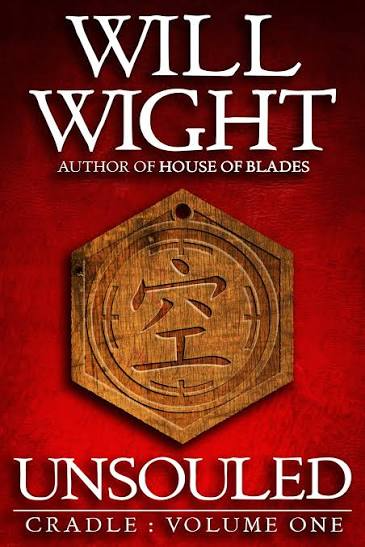
Unsouled is the front door to the best-selling Western progression-fantasy series ever written, and to review it fairly you have to say two things at once: it is a genuinely propulsive, clever little underdog novel, and it is the least representative book in a twelve-volume saga that gets dramatically bigger and better from here. Fans have a stock line for newcomers — "it starts slow, push to book three" — and while that undersells Unsouled, it isn't wrong about the shape of the series. This is the lean prologue to something enormous.
It's worth understanding what the book is actually doing, even if you've never touched cultivation fiction. Progression fantasy is the genre of measurable growth: a hero climbs a clearly defined power ladder, rung by rung, and the reader's pleasure comes from watching effort compound into strength. Cradle is the gold-standard Western entry point to a form that originated in Chinese xianxia web-serials, and Wight's great insight was to keep xianxia's addictive advancement structure while stripping away the denser cultural scaffolding that makes the originals a harder sell to Western readers. The result is fast, legible, and emotionally direct. Unsouled front-loads the rules — madra, cores, Paths, the Foundation-to-Gold ladder — and then lets you feel every small victory as a concrete gain.
The protagonist is the reason it works. Wei Shi Lindon is not a secret chosen one; he's genuinely, mechanically the weakest person in almost every room, branded "Unsouled" and forbidden to practice the sacred arts at all. His only superpower is refusing to accept the box he's been shoved into, and Wight makes the inspired choice to let him win by scheming, cheating, over-preparing, and shamelessly bending the rules of every contest he enters. He negotiates with monster hornets, buries traps in arenas in advance, cons his way up a deadly trial staircase in a carriage, and grovels strategically whenever it buys him an edge. In a genre that can tip into wish-fulfillment, Lindon's pragmatic, faintly ruthless cleverness keeps him grounded and genuinely likable — partly because the society judging him is so casually cruel that you want him to beat it at its own game.
The boldest move in the book is the intrusion of the cosmic frame. Near the midpoint, an ascended tyrant massacres Lindon's home and kills him outright — and then Suriel, one of the seven godlike Judges who administer the multiverse, rewinds time, banishes the tyrant to await trial before the Court of Seven, and shows Lindon a vision of his home's inevitable destruction decades hence. It's a genuinely audacious move: within a hundred pages Wight zooms from a village power-squabble to the administration of the universe and back, and the whiplash is the point. It reframes Lindon's small, scrappy ambitions as the first step of a story with literally cosmic stakes, and it gives the series its engine. Suriel's lesson — that there are a million Paths but they all reduce to "improve yourself" — is both the theme and the reader's contract.
What keeps Unsouled at four stars is easy to name. It is short, it is introductory, and by design it's the smallest-scale book in the series — a village tournament and a mountain heist, when later volumes deliver tournaments between nations and battles between gods. Wight's prose is functional rather than beautiful; he writes clean, quick, momentum-first sentences, not lyrical ones, and readers coming from Hobb or Jemisin will feel the drop in texture. The emotional palette is narrower than the series will eventually reach, and the supporting cast — apart from Yerin, who arrives late and immediately improves every scene she's in — is thin here compared to the ensemble Cradle later becomes. And there's no getting around the structural reality: Unsouled is a setup novel. Its job is to get Lindon out of Sacred Valley with a purpose and a companion, and it does that job efficiently, but its biggest rewards are deferred to books that don't exist yet when you're reading it.
None of that is a reason to skip it — the four here means a good book, not a hedge. As pure momentum, Unsouled is hard to put down — it's the kind of book people finish in a sitting and immediately start the sequel. The domestic scenes have real sting (a family that loves Lindon and still, reasonably, won't invest in a son who can't advance), the trickster set pieces are a delight, and the final image of two outcasts flying out of the only world they've ever known is a perfect series-launch beat. It earns its place as the on-ramp to a completed twelve-book series — rare currency in modern fantasy, and I envy anyone who gets to binge it fresh.
On its own, Unsouled is a four-star book — but the series it opens reaches five once it gets going. If you've never read progression fantasy and want to understand why millions of readers are obsessed with the form, this is exactly where to start — just go in knowing you're reading chapter one of something much larger, and be ready to keep going.