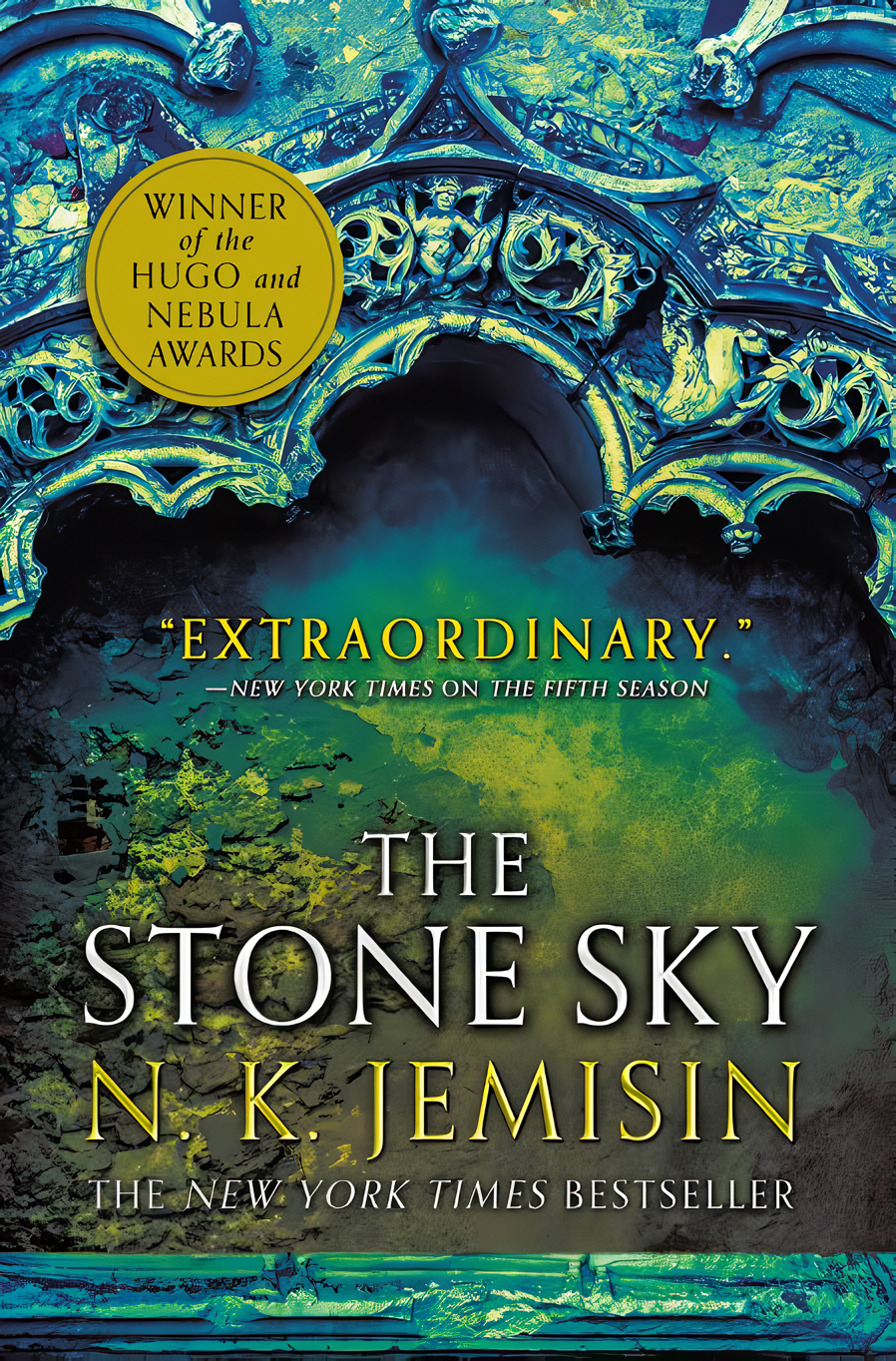
The Stone Sky is the book that completed the most decorated run in the history of the Hugo Awards, and — far more importantly — it is the rare trilogy finale that actually delivers on everything its predecessors set up. N.K. Jemisin won the Best Novel Hugo three years running, once for each volume of this trilogy, a feat no author had managed before and one unlikely to be repeated. The Stone Sky added the Nebula and the Locus to complete a clean sweep of the field's major awards. The accolades are not the reason to read it, but they are a fair signal of what Jemisin pulled off: she stuck the landing on a story that was structurally, thematically, and emotionally ambitious enough that most writers would have fumbled it.
The trilogy's central formal risk pays its final dividend here. Across three books, Jemisin has been telling Essun's story in the second person — an unusual, accusatory "you" that most writers are warned away from — and The Stone Sky finally reveals why. The "you" is Hoa, an ancient being who loves Essun, telling her her own life back to her so she will remember who she was after she is remade. That revelation lands as the emotional capstone of the whole trilogy, retroactively transforming a narrative device into an act of devotion. Few series pay off their formal choices this completely.
The great addition of this volume is the third thread: Hoa's first-person account of Syl Anagist, the civilization that existed forty thousand years before the Seasons. For two books, the orogenes' oppression has functioned as allegory. Here Jemisin makes it literal history, and in doing so writes the most pointed racism parable in the trilogy. The Niess — a people demonized with invented biological myths, genocided, and then grotesquely re-engineered as living caricatures so their oppressors could "prove" the lie retroactively — are the origin of everything: the tuners, the stone eaters, orogeny itself, the obelisks, and Father Earth's grievance. Watching Jemisin take the logic of dehumanizing propaganda to its literal endpoint, engineering racist mythology into flesh, is the intellectual high point of the series. And crucially, it never reads as a lecture: the Syl Anagist chapters are, for my money, the most gripping and heartbreaking in the book, anchored by Kelenli and the doomed tuners' slow discovery that they are people.
What keeps the cosmic scale from going cold is the intimacy Jemisin never loses sight of. Underneath the stolen Moon and the sentient planet and the forty-thousand-year backstory, this is a book about a mother and a daughter who want opposite things and are aimed straight at each other. Essun has spent three books and an entire dying continent trying to reach Nassun, only to find a daughter who may end the world. The resolution refuses every cheap option. Essun does not defeat Nassun, does not out-argue her, does not overpower her. She lets go — trusting her daughter, smiling and weeping as she turns to stone — and it is that act of love, not any feat of magic, that changes Nassun's mind at the last instant. In a genre that usually resolves its finales with a bigger explosion, Jemisin resolves hers with a mother's surrender. It is devastating and completely earned.
The trilogy's closing argument is its boldest stroke: it declines to assume the world is worth saving. With Father Earth revealed as a wronged, conscious victim and the Seasons reframed as justified revenge, the book seriously entertains Nassun's nihilism — that a world this cruel to the powerless should simply end — before choosing, precariously, hope. That the choice feels precarious rather than inevitable is exactly why it works. Jemisin does not pretend the oppressed owe the world their forgiveness. She lets Nassun choose life anyway, and makes that choice a decision rather than a foregone conclusion.
The complaints are minor and mostly structural. The Syl Anagist thread, brilliant as it is, asks the reader to hold a third timeline and a large cast of similarly named tuners in memory, and some readers find it slows the present-day momentum in the early going. The novel is emphatically not a standalone — it assumes both prior books completely and pays off threads planted across the whole trilogy, so its power is inseparable from the two volumes before it. And Jemisin's density of invented terminology, never light, is at its heaviest here. None of it dents the achievement.
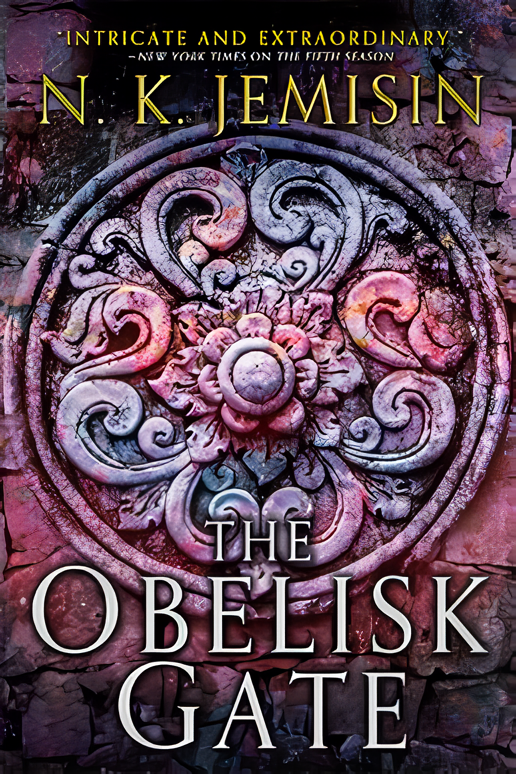
As a finale, The Stone Sky does what the very best trilogy conclusions do: it reframes everything that came before, answers the questions the series raised without cheapening them, and delivers an emotional payoff proportional to the investment. It is a stronger book than The Obelisk Gate and arguably the equal of The Fifth Season, which is rare air for a third volume. Five stars, and a fitting close to one of the defining fantasy achievements of its century.
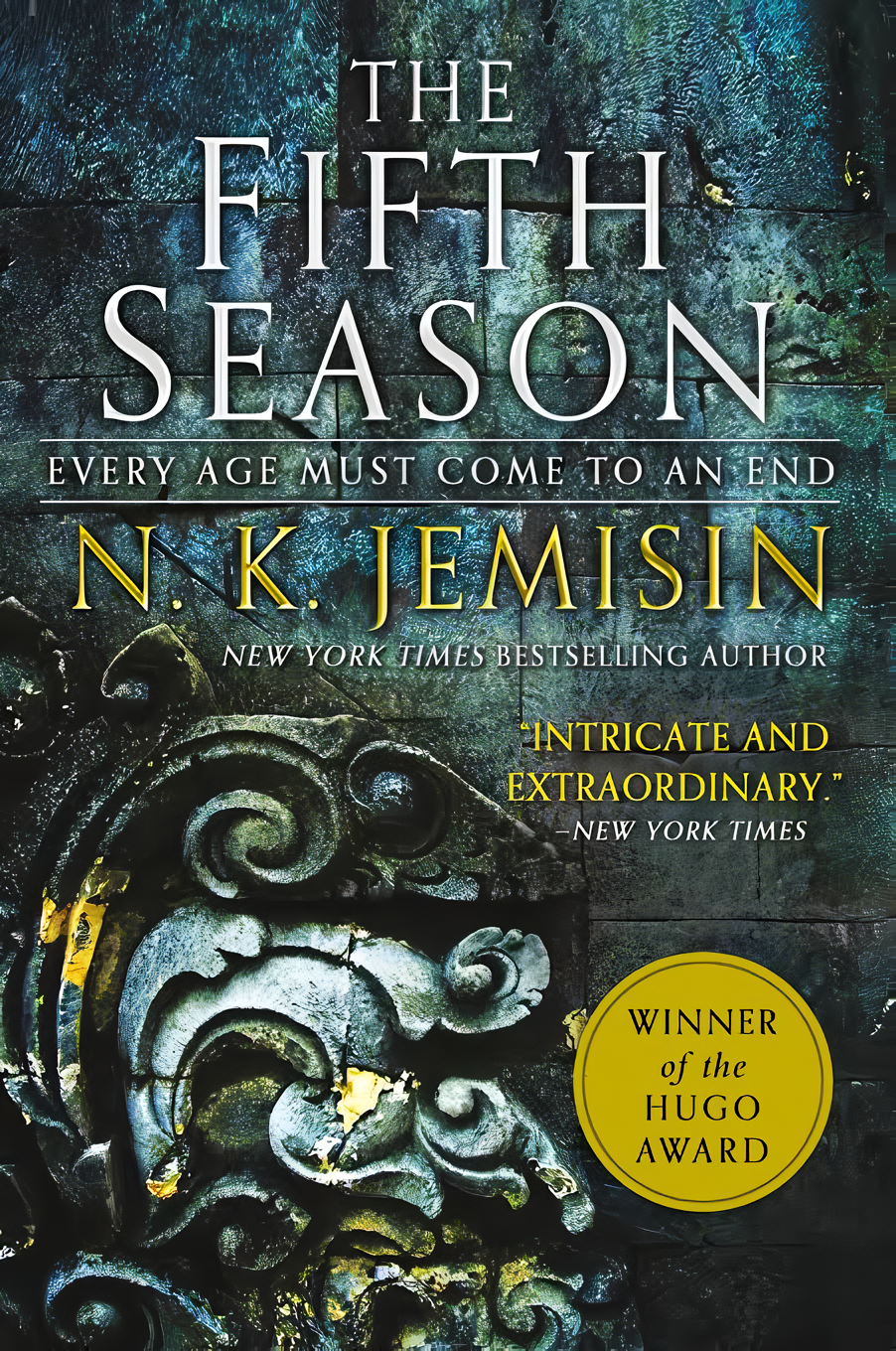
If you have read the first two books, there is nothing to decide. If you haven't, start at The Fifth Season — but know that this is where it's all going, and that it gets there.