Where The Obelisk Gate Left Us
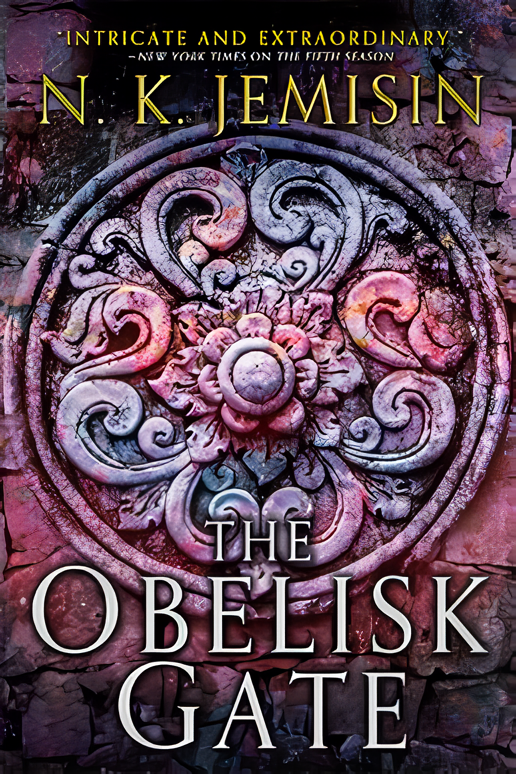
The Obelisk Gate ended at the Battle of Castrima. Besieged by the army of the northern comm Rennanis, Essun — the orogene who has lived under three names across the trilogy (Damaya, Syenite, Essun) — opened the Obelisk Gate and turned the entire enemy army to stone at once. The cost was steep: her right arm calcified into stone, the same slow petrification that had already consumed her mentor Alabaster. Alabaster, who broke the continent in half to start this Season, finished turning to stone and was remade as a stone eater by his companion Antimony. Before he died, he gave Essun her mission: use the Obelisk Gate to catch the wandering Moon and return it to orbit, ending the Fifth Seasons forever.
On the far side of the world, Essun's ten-year-old daughter Nassun had been living at Found Moon, a haven for orogene children, under the care of the Guardian Schaffa — the same Schaffa who once broke Essun's hand as a child, now a gentler figure whose corrupted corestone still tortures him. Nassun killed her father, Jija, after he tried to murder her for being an orogene. Guided by the sinister stone eater Steel, Nassun had begun to conclude that a world this cruel should not exist at all — and that the merciful thing would be to use the Obelisk Gate to bring the Moon down and end all suffering permanently.
Mother and daughter enter the final book on a collision course: both able to command the obelisks, both bound for the ancient control point on the other side of the planet, and each wanting the opposite of the other. Threaded through it all is Father Earth — a conscious, furious planetary entity that hates humanity for stealing its child, the Moon — and Hoa, the ancient stone eater who has been narrating Essun's story to her all along.
How the Book Is Structured
Like The Fifth Season, The Stone Sky braids together three narrative threads, but this time the third strand is entirely new and reaches back roughly forty thousand years:
Essun (present day, second person "you"), narrated by Hoa. Essun leads the survivors of Castrima across the dying continent toward Rennanis, then travels to Corepoint to reach her daughter.
Important Characters
Essun: The trilogy's protagonist, an orogene who has lived as Damaya, Syenite, and Essun, and whose right arm petrified when she opened the Obelisk Gate at Castrima. She leads the comm's survivors to Rennanis, crosses through the planet to find her daughter, and sacrifices herself in their final standoff, turning almost wholly to stone before Hoa rebuilds her as a stone eater.
Nassun: Essun's young daughter, a powerful orogene convinced that a world so cruel has no right to continue. She journeys with Schaffa to Corepoint meaning to pull the Moon down, but her mother's tearful sacrifice finally shows her she is loved, and at the last moment she catches the Moon instead, ending the Seasons at the cost of her own hand.
Hoa: The ancient stone eater who tells Essun her own story, originally a tuner of Syl Anagist named Houwha. Forty thousand years ago he redirected the Plutonic Engine's power into the Moon and hurled it from orbit; in the present he protects Essun, ferries her party through the planet, and finally remakes her stone body into a stone eater so she can remember who she was.
Schaffa: The Guardian who broke Essun's hand when she was a girl but has become, in effect, Nassun's true father, shepherding her across the world despite the ceaseless torment of his corestone. His mind gives way during the passage through the planet's core, and after a machine at Warrant strips the corestone out, he dies free of pain and at peace.
Steel: The gray stone eater who has fastened himself to Nassun, steering her toward ending the world; when she considers transforming Schaffa, his account of immortality's unbearable loneliness, drawn from his own forty thousand years, dissuades her. The coda reveals he is Remwha, another of Hoa's fellow tuners.
Father Earth: The living, conscious planet, which has hated humanity since the theft of its Moon and made the Fifth Seasons its long punishment. It struck first on Launch Day, seized twenty-seven obelisks, and made the tuners the first stone eaters; in the end it accepts a bargain returning its Moon and dismantling the obelisks in exchange for ending the Seasons.
Kelenli: A woman of Syl Anagist who can pass as a full citizen but shares the tuners' nature, and the last lorist of the murdered Niess people. She teaches the tuners the buried truth of their origin, and Hoa's love for her, pregnant on Launch Day, drives his split-second choice to redirect the Engine's power into the Moon.
Alabaster: Essun's mentor, the orogene who split the continent to start the Season and completed his own petrification before this book begins; Antimony remade him as a stone eater. The journal he left at Corepoint, recording his grief and his experiments with the Gate, hands Nassun the spare key of twenty-seven lesser obelisks.
Ykka: Castrima's orogene leader, at first enraged that Essun's defense of the comm ruined the geode where they lived, later her partner in guiding the survivors to Rennanis. Essun makes a point of showing her the lobotomized node maintainer so the comm's new home is built with its worst sin in plain sight.
Lerna: Castrima's healer and Essun's longtime friend, who becomes her lover on the desert crossing; he later tells her she is pregnant and pleads with her to abandon a mission sure to finish her petrification. He insists on coming to Corepoint anyway and is killed when rival stone eaters attack during the transit.
Tonkee: Essun's friend, who pushes her to examine whether she wants to rescue Nassun or simply be near her again, noting the girl has managed alone for more than a year. She travels with Essun all the way through the Earth to Corepoint.
Gallat: The conductor who heads the Plutonic Engine project in Syl Anagist, raised in the same household as Kelenli and her lover. He is so certain the tuners are mere tools that he cannot grasp why revealing the briar patch, where the Niess are drained as living batteries, is monstrous.
Danel: A former general of the Rennanis army, once of the lorist caste, who asks to accompany Essun so that someone can witness what happens and set it down. Danel joins the party Hoa carries through the Earth toward Corepoint.
Nassun (present day, third person)
Nassun and Schaffa journey toward Corepoint, the dead city on the far side of the world, so that Nassun can seize the Obelisk Gate.
Hoa / Syl Anagist (deep past, first person "I")
Hoa recounts his own origin as a "tuner" in the vanished super-civilization of Syl Anagist. These flashback interludes, titled "Syl Anagist" and counting down from Five to Zero, finally explain the origin of the Seasons, the obelisks, orogeny, the stone eaters, the loss of the Moon, and Father Earth's grievance.
The chapters alternate in a strict rhythm — an Essun chapter, a Nassun chapter, a Syl Anagist interlude — so the two present-day journeys and the ancient catastrophe advance in lockstep until all three converge in the final chapters.
The Recap
Opening (Prologue; Chapters 1–2; Syl Anagist: Five)
Hoa opens by reflecting on memory and identity across forty thousand years — he is the person who witnessed what he is about to describe "and yet not." He introduces Syl Anagist, the sprawling dead civilization that existed before the Seasons, and describes a colorless boy imprisoned at the base of the amethyst obelisk. That boy is Hoa himself, and he declares outright that he is the one who destroyed Syl Anagist and flung away the Moon.
In the present, Essun wakes from the coma that followed her use of the Gate. Her right arm is stone; from now on, every further use of orogeny will petrify more of her body. The Castrima survivors are carrying her north because her defense of the comm irreparably damaged the geode they lived in. In one of the trilogy's most unsettling images, Essun lets Hoa eat her stone arm — an act she finds strangely intimate, and which Hoa insists he does out of love and to prevent any "loss of data" when she eventually becomes a stone eater. Ykka, Castrima's orogene leader, is furious with Essun for destroying their home even in saving it.
Nassun's thread resumes moments after she has killed Jija. She, Schaffa, and Steel fight and kill the two corrupted Guardians of Found Moon — Schaffa punching through one skull to rip out its corestone. Nassun spares the other orogene children and tells Schaffa she needs to reach a control point on the far side of the world. Schaffa vows to go anywhere with her.
The first Syl Anagist interlude introduces the tuner Houwha — Hoa's original name — and his fellow tuner Gaewha, and the arrival of Kelenli, a woman who looks like a full citizen of Syl Anagist but whom the tuners sense is like them. Kelenli announces that the Plutonic Engine will go live in twenty-eight days and that she will help; secretly, speaking through the earth, she tells them she is there to teach them who they really are.
The Journey Begins (Chapters 3–6; Syl Anagist: Four and Three)
Essun recovers enough to walk. Her friend Tonkee presses her on what she actually wants from Nassun — to save her, or simply to be with her again — and points out that Nassun has survived on her own for well over a year. Essun mends fences with Ykka as the comm navigates a treacherous stone forest. In a later attack by commless raiders, Essun is reunited with Maxixe, an orogene she knew during her Fulcrum training, now missing an eye and both legs; Ykka pragmatically folds Maxixe and his people into the comm because they can contribute.
Nassun and Schaffa travel toward the transport station Steel has described. Nassun secretly feeds Schaffa small amounts of her own silver each night to ease the pain of his corestone, taking quiet pride in soothing the man who has become, in effect, her true father. They reach a dead-civilization ruin buried inside an old caldera — a place, Schaffa tells her, where the obelisks were once made, destroyed in the Shattering.
In the Syl Anagist interludes, Kelenli takes the six tuners on a "tuning" field trip through the living city — their first time outside their prison. She reveals the buried history: Syl Anagist was once one of three nations, and it conquered and assimilated the others, including a people called the Niess. The Niess were more efficient at magic than the Sylanagistines and believed magic should not be owned or commodified. Unable to bear being outdone, Syl Anagist invented lies that the Niess were biologically different — that their brains, their eyes, their split tongues made them less than human — and used those lies to justify genocide. When no factual basis for the myths could be found, the tuners were engineered from Niess genetic material and deliberately given exaggerated "Niess" features, so the civilization could tell itself the racist caricature had been real all along. Kelenli reveals she is the last Niess lorist, keeper of the true story.
Toward the Two Endpoints (Chapters 7–8; Syl Anagist: Two)
Hoa warns Essun that Nassun intends to open the Obelisk Gate — which would almost certainly kill her — and that the stone eater Essun once called the Gray Man (Steel) has attached himself to Nassun. Essun, enraged, accuses Hoa of manipulating her too. Nassun and Schaffa descend into the underground ruin to find the ancient transport system.
The Syl Anagist interludes build toward horror. Kelenli brings the tuners to her home and explains that she was raised as an experiment in the same household as Conductor Gallat — head of the project and her lover — to test whether her kind could pass as human. Then the tuners are shown the amethyst's "sinklines": what Gallat clinically calls a power source is in fact the "briar patch," a mass of Niess and decommissioned tuners — including the tuners' own vanished sibling Tetlewha — kept barely alive and wired in as biomagical batteries, their life force drained to charge the obelisks. Gallat is so certain the tuners are tools incapable of feeling that he cannot even grasp why showing them this is monstrous. The tuners resolve to revolt.
The Desert and the Descent (Chapters 9–10; Syl Anagist: One)
Castrima crosses a brutal desert to reach Rennanis. Danel, a former Rennanis general who was once of the lorist caste, asks to accompany Essun on her final mission to witness and record history. Essun sleeps with Lerna, the comm's healer and her longtime friend, who also declares he is coming with her. Of the roughly eleven hundred who set out, only about eight hundred fifty survive the crossing. Hoa admits he could have spared Essun the ordeal but did not, because the people of Castrima have become part of her — suffering, he suggests, is her healing.
Nassun and Schaffa board a "vehimal," an ancient living vehicle that carries them through the planet toward Corepoint. As they pass through the core, Nassun senses the vast silver thread running through the Earth and realizes the old stories are literally true: Father Earth is alive. She also grasps that Schaffa's corestone — the source of his pain and his unnaturally long life — comes from the Earth's heart. The Earth addresses Nassun as "little enemy." Schaffa's agony becomes unbearable and his mind breaks; Nassun despairs, more certain than ever that the cycle of cruelty must end.
Arrival and the Truth (Chapters 11–12; Syl Anagist: Zero)
Castrima reaches Rennanis, an intact city with food and water to spare — but its former inhabitants stand frozen as crystal statues where Essun turned them to stone. To stay, the comm must keep a node maintainer alive: an orogene child, lobotomized and wired to suppress earthquakes, kept in perpetual pain. Essun deliberately shows Ykka this atrocity, insisting a better society can only be built if its worst sins are kept in plain view. Lerna gently tells Essun she is pregnant, and begs her to reconsider a mission that will surely turn her fully to stone. Hoa confirms that Alabaster is now a stone eater, and that Hoa himself has been eating Essun's stone in order to one day remake her as one. Essun decides to go anyway; she has two days before the Moon moves out of reach.
At Corepoint, Nassun drags the comatose Schaffa to an apartment and discovers a journal handwritten in her own language — Alabaster's, kept during his years stranded there after Innon's death. She reads of his grief for Syenite (Essun) and their murdered son, and of his experiments with the Gate. Nassun sees the Moon for the first time and practices sensing its weight. She contemplates saving Schaffa by turning him into a stone eater, but realizes the imprecise Gate would force her to transform everyone alive. Steel talks her out of it, describing the unbearable loneliness of immortality — a description that is really about his own forty-thousand-year existence.
The final interlude, "Syl Anagist: Zero," is the trilogy's keystone. On Launch Day, the tuners are taken to Zero Site — a station on the Moon — to fire the Plutonic Engine, which is meant to plunge the onyx into the Earth's core and achieve "geoarcanity," an infinite, self-perpetuating supply of magic. Disillusioned and enraged after the briar patch, the tuners plan instead to turn the Engine's power back on Syl Anagist and destroy it. But the Earth — sentient, and long aware through the iron shards it planted in the obelisk sockets — strikes first. It seizes twenty-seven of the obelisks, intending to sterilize the surface of all life so humanity will finally leave it alone. In the command center, the core sample explodes into iron needles that kill the conductors. Caught between the Earth's fury and their own doomed rebellion, Hoa makes a split-second choice — driven, he admits, by his love for the pregnant Kelenli — and redirects the built-up energy into the Moon, flinging it out of orbit. The tuners manage to delay the twenty-seven rogue obelisks by a century, buying humanity just enough time to survive the first Season. As punishment for their part in stealing the Moon, the Earth transforms the tuners into the first stone eaters. Father Earth whispers: Burn for me. This is the Shattering — the first and worst Fifth Season.
The Convergence at Corepoint (Chapters 13–14; Coda)
Nassun decides it is time to end the world, using a "spare key" she learned from Alabaster's notes — a network of twenty-seven smaller obelisks arranged to emulate the onyx. Meanwhile Hoa transports Essun and her companions — Tonkee, Hjarka, Danel, and Lerna — through the Earth. A rival faction of stone eaters attacks them mid-transit, and Lerna is killed.
At Corepoint, Nassun follows the suddenly mobile Schaffa down into Warrant, the catacomb where Guardians hibernate, and finds a machine forcibly removing his corestone. For the first time in ages Schaffa is himself, free of pain, smiling genuinely — but the silver inside him is fading, meaning he will soon die. Nassun understands that Father Earth has done this deliberately: if Schaffa is at peace, she might not destroy the world. Instead it hardens her resolve to save him by transforming everyone into undying stone eaters. Essun, searching, sees Nassun climbing out of the building.
The climax shifts fully into Hoa's first-person voice. Mother and daughter face each other, both utterly changed. Essun fumbles the reunion, reverting to commanding Nassun not to use the Gate. Nassun throws up a wall of obsidian and begins to open the Gate with her spare key. To reach her, Essun drains the magic of the thousands of hibernating Guardians in Warrant — killing them — to access the onyx, which grants her control because it recognizes her fear and her genuine desire to make the world better. The two lock in a deadlocked battle for the Gate, and Essun feels Nassun beginning to turn to stone as she herself did. Rather than watch another of her children die — and trusting her daughter — Essun lets go. She smiles at how strong Nassun has become, weeping, as she turns almost entirely to stone.
That is the moment that breaks through. Seeing her mother crying, smiling, and sacrificing herself — still wanting to fix a world that has taken everything from them both — Nassun finally understands she is loved. At the last instant she changes her mind and uses the onyx to catch the Moon, returning it to orbit and ending the Seasons forever.
In the Coda, the obelisks dematerialize; the onyx drifts down into the sea. Nassun sits by Essun's stone body, her own hand now turned to stone from using the Gate. Schaffa dies peacefully. Hoa reconciles with his fellow surviving tuners — Gaewha, and Remwha, who is Steel — and the stone eaters descend to negotiate with Father Earth: the return of the Moon and the dismantling of the obelisks, in exchange for an end to the Seasons. After several days, the Earth accepts. Hoa carries Essun's stone body into the mountain beneath Corepoint and, slowly and deliberately, remakes her as a stone eater — telling her this very story so that she will remember who she was. Essun emerges from a geode. She tells Hoa she still wants the world to be better; satisfied that she is still Essun, they set off together to try. The reader finally understands the trilogy's second-person "you": Hoa has been narrating Essun's own life back to her, to reconnect her with the human self she was.
What the Book Is About
The Stone Sky is the culmination of the trilogy's central argument, and it is a bold one: it refuses the default assumption of epic fantasy that the world is inherently worth saving. Instead it interrogates what right a world built on oppression and genocide has to exist at all. Essun and Nassun embody the two answers — rebuild it, or burn it down — and the novel takes both with complete seriousness before landing, precariously, on hope.
The Syl Anagist flashbacks make explicit what the first two books rendered as allegory. The Niess are the trilogy's clearest and most pointed racism parable: a people demonized with invented biological myths, genocided, and then grotesquely re-created as caricatures — the tuners — so their oppressors could "prove" the lie retroactively. Jemisin takes the logic of dehumanizing narratives to its endpoint, showing racist mythology literally engineered into flesh. The revelation that stone eaters are transformed tuners, that orogeny descends from the tuners, that the Guardians' corestones come from the Earth, and that the Seasons themselves are Father Earth's revenge for a stolen child — all of it reframes the entire world as the long aftershock of one civilization's greed and cruelty.
Running beneath the world-scale grievance is the intimate core Jemisin has said the trilogy is really about: motherhood, family, and sacrifice. Essun's arc is a turn from armored self-preservation toward community and trust; her final act is not to overpower her daughter but to let go and believe in her. Both Hoa and Nassun are figures so hurt by the world that they want to end it, and in both cases it is an image of love — Hoa's for Kelenli, Nassun's dawning recognition of Essun's — that pulls them back from annihilation. The book's answer to eternity, and to a few brutal days alike, is the same: family, blood and found, moving forward together. It is a story about whether the oppressed owe a broken world their forgiveness, and it declines to pretend the answer is easy.
Ending Explained
How does The Stone Sky end?: Essun and Nassun face each other at Corepoint in a deadlocked struggle for control of the Obelisk Gate. When Essun feels her daughter beginning to petrify, she chooses to let go rather than see another of her children die, and her own body turns nearly all the way to stone. Her mother's tears and sacrifice break through to Nassun, who changes her mind at the last instant and with the onyx catches the Moon, setting it back in orbit and ending the Fifth Seasons for good. Hoa afterward remakes Essun's petrified body as a stone eater, and the two leave together to keep trying to better the world.
Does Essun die at the end of The Stone Sky?: Essun petrifies almost completely in the fight over the Gate, weeping and smiling at how strong Nassun has grown. Hoa then carries her stone body into the mountain under Corepoint and slowly rebuilds her as a stone eater, telling her the story of her own life so her memory of her human self survives. She emerges from a geode still recognizably Essun, says she still wants a better world, and sets off with Hoa to try.
Why does Nassun catch the Moon instead of destroying the world?: For most of the novel Nassun plans to pull the Moon down onto the world, convinced that ending everything is the only mercy left; Schaffa's agony and the Earth's cruelty have hardened that resolve. In the final confrontation she watches her mother stop fighting, smile at her through tears, and give herself up while still hoping to mend the world. Seeing that, Nassun finally understands that she is loved. At the last moment she redirects the Gate's power and returns the Moon to orbit instead.
What happens to Schaffa at the end of The Stone Sky?: At Corepoint, Schaffa descends into Warrant, the catacomb of hibernating Guardians, where a machine pulls the corestone out of him. Free of pain for the first time in ages, he becomes his old, genuine self, but the silver within him is running out, meaning he has little time left. Father Earth arranged the release deliberately, betting that a Schaffa at peace would soften Nassun; instead it hardened her determination to save him by making every living person an undying stone eater. Once the Moon is caught, Schaffa dies peacefully.
What deal do the stone eaters make with Father Earth?: After the Moon is caught, Hoa reconciles with the two other surviving tuners, Gaewha and Remwha, the stone eater who has been acting as Steel. Together the stone eaters descend to bargain with Father Earth, offering the Moon's return along with the dismantling of the obelisks in trade for an end to the Seasons. The Earth accepts after several days; the obelisks dematerialize and the onyx sinks into the sea.
Who is the narrator of The Stone Sky and the Broken Earth trilogy?: The narrator is Hoa, an ancient stone eater who began forty thousand years ago as the tuner Houwha in the civilization of Syl Anagist. The ending finally explains the second-person voice of Essun's chapters. Hoa has been telling Essun the story of her own life while remaking her petrified body as a stone eater, keeping her connected to the human self she once was.
About the Book
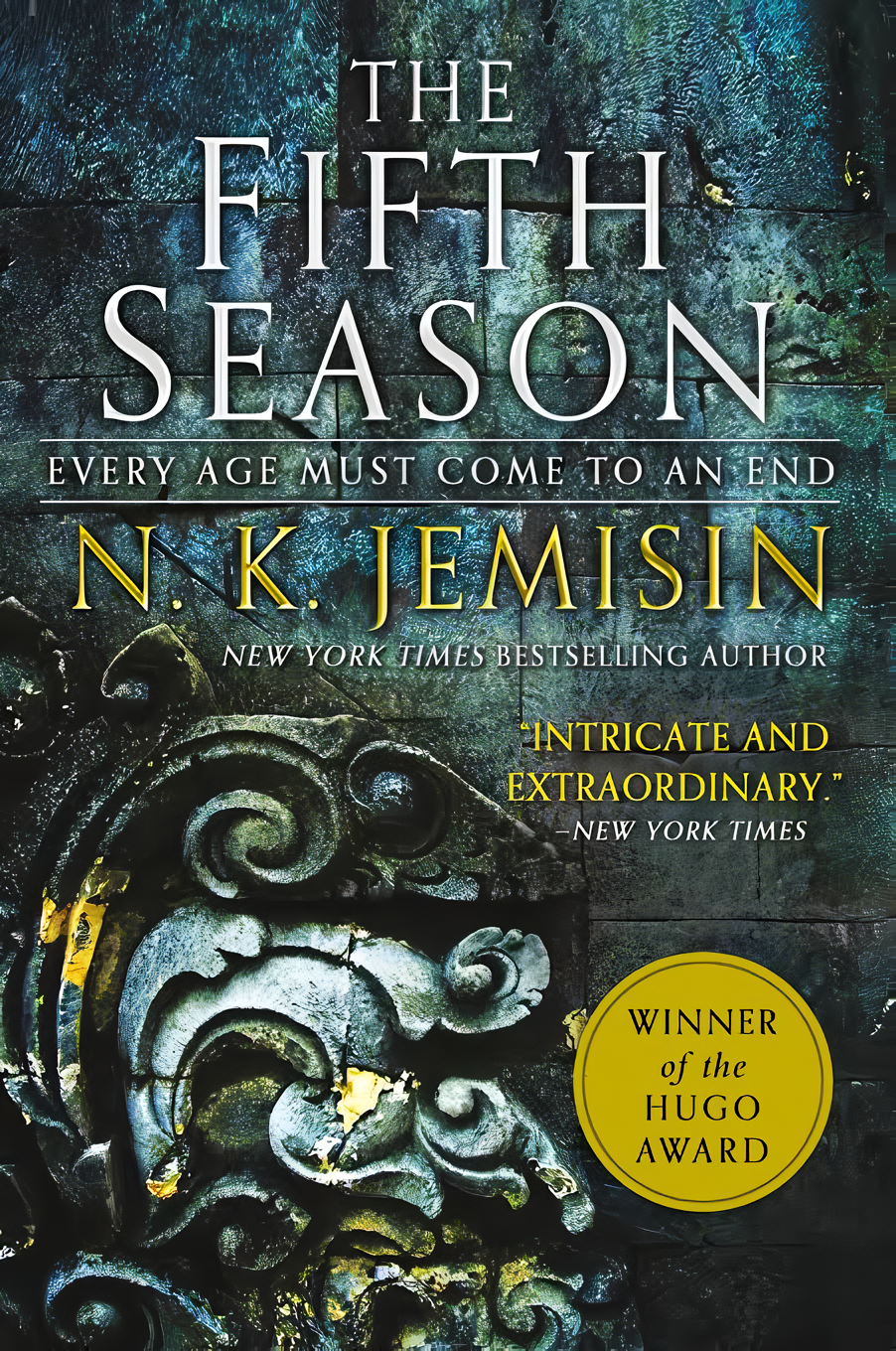
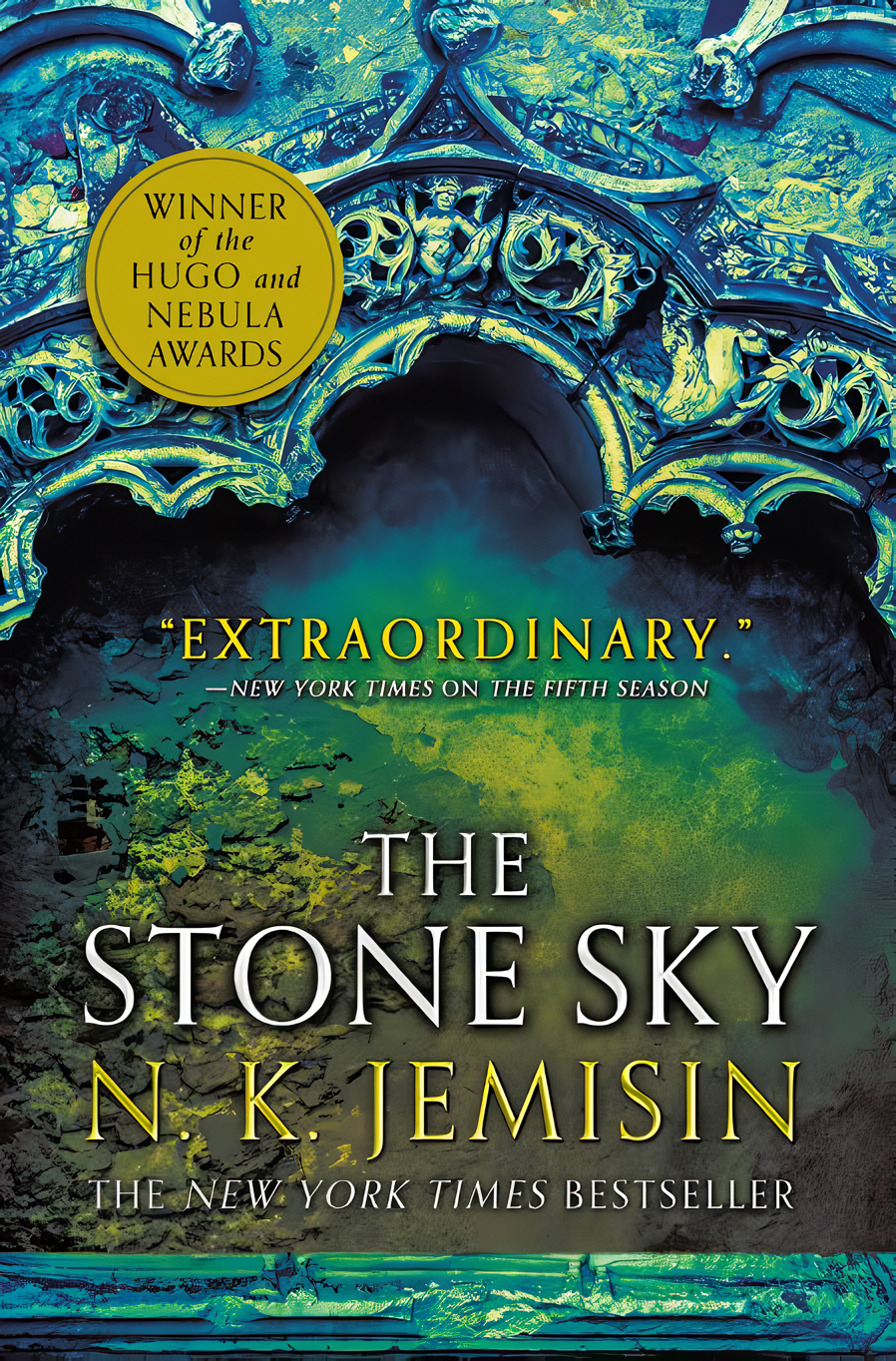
The Stone Sky was published by Orbit Books on August 15, 2017, running 464 pages in its first hardcover edition. It is the third and final volume of the Broken Earth trilogy, following The Fifth Season (2015) and The Obelisk Gate (2016).
Its accolades made history. The Stone Sky won the 2018 Hugo Award for Best Novel — Jemisin's third consecutive Best Novel Hugo, one for each book of the trilogy. No author had ever won the Best Novel Hugo three years running, and none had ever won it for every volume of a single trilogy; the feat is widely regarded as unlikely to be repeated. The book also won the 2018 Nebula Award for Best Novel and the 2018 Locus Award for Best Fantasy Novel, a rare sweep of the field's major honors. In her acceptance speech, Jemisin reflected that she wrote the trilogy to speak to the struggle of what it takes just to live, let alone thrive, in a world that seems determined to break you.
Jemisin had already made history with The Fifth Season as the first Black author to win the Hugo for Best Novel; the trilogy's clean sweep cemented her as one of the defining voices of contemporary speculative fiction. She was named a MacArthur Fellow in 2020, and Sony's TriStar Pictures acquired the film rights to the trilogy, with Jemisin adapting. The Broken Earth stands as a landmark of twenty-first-century fantasy — a work that reshaped what the genre could say about power, oppression, and the possibility of a better world.
Be aware that the finale contains genocide, child death, and sustained depictions of systemic cruelty, and that it is emphatically not a standalone — it assumes both prior books and pays off threads planted across the whole trilogy.