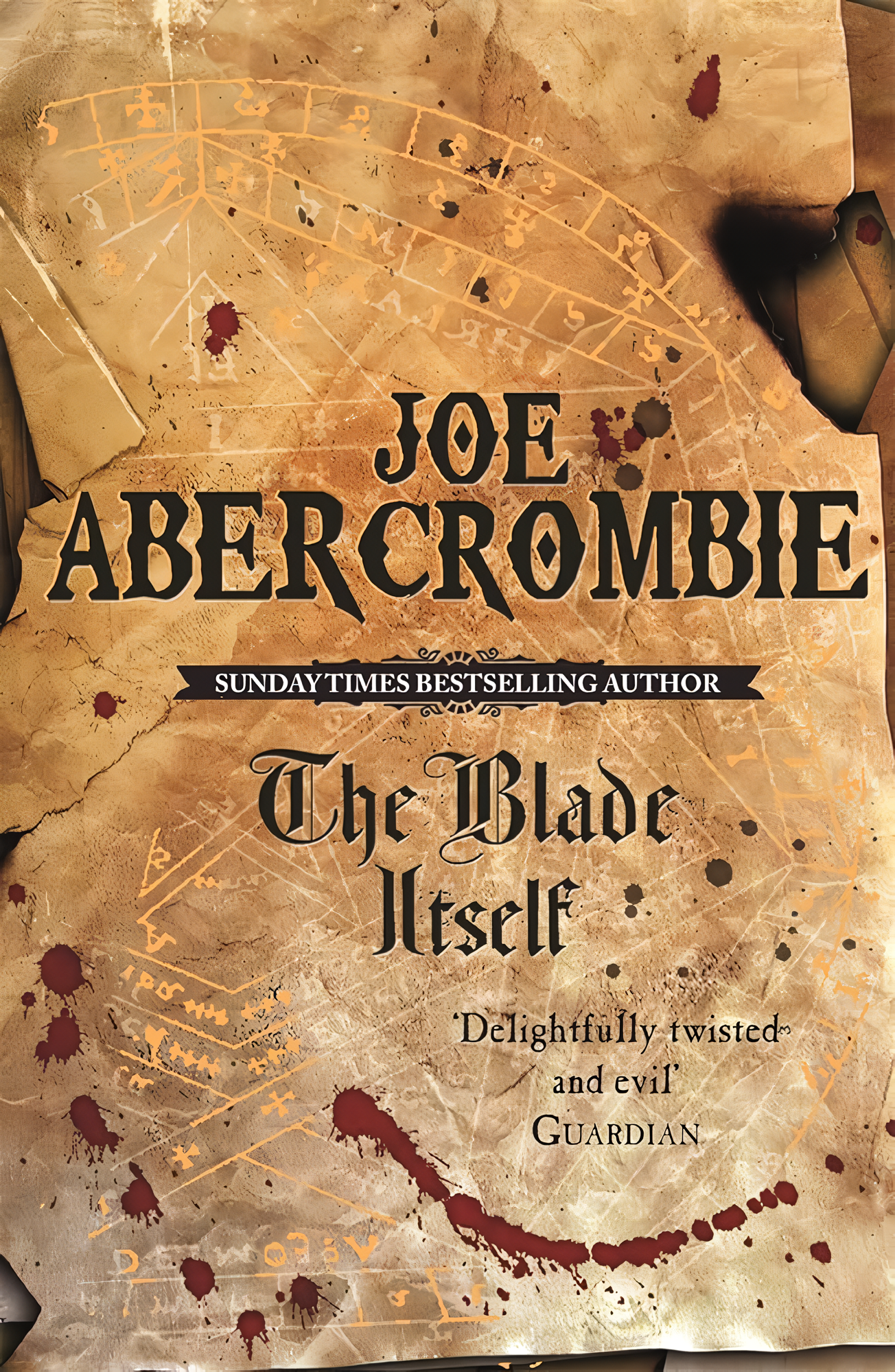
The Blade Itself is the book that reset commercial fantasy for a generation, and twenty years on, it still works exactly the way Joe Abercrombie designed it to.
Grimdark as a subgenre existed before this novel — Glen Cook had been writing the Black Company since 1984, and A Game of Thrones was a decade old by 2006 — but The Blade Itself is the book that gave the subgenre its house style. Close-third narration with distinctive voice per character. Interior monologue rendered in italics. Refrain lines that stitch across chapters. Dark humor braided into gruesome violence. Institutions rotten to their foundations. Heroes deconstructed down to the frame. Every grimdark debut of the following fifteen years — Mark Lawrence, Anthony Ryan, Django Wexler, Anna Smith Spark, Nicholas Eames — is reading Abercrombie somewhere in its DNA. He didn't invent the genre. He wrote its manifesto.
The book's central achievement is voice. Three point-of-view protagonists, each rendered with such distinctive interiority that a reader can tell whose chapter it is from the first paragraph without checking the header. Logen Ninefingers speaks in short, laconic Northern sentences and reflects that you have to be realistic about these things — a refrain that carries every ounce of ironic weight it needs to by the end. Sand dan Glokta narrates his own life in a stream of self-loathing italics punctuated by why do I do this?, and no other character in modern fantasy has interiority that lands with the same precision or the same black comedy. Jezal dan Luthar is vain, hollow, and slowly beginning to suspect he is those things — his chapters are the funniest in the book because he is the only person who cannot see how ridiculous he is. That the reader can hold three such different voices in memory and never confuse them is Abercrombie's showpiece skill, and he was already this good in his debut.
The plotting is the book's most divisive element. The Blade Itself is almost pure first act. Very little is resolved by the end; the book closes on three journeys just beginning — Glokta sailing to Dagoska, Bayaz's party crossing the sea toward the Edge of the World, West marching north to fight Bethod — and none of the plot's real questions have been answered. Readers who need a self-contained arc will find the book unfinished. Readers who understand it as one third of a larger structure will find it perfectly paced. The Mercer conspiracy is a legitimate mini-arc that resolves inside the book; everything else is setup. Abercrombie treats the trilogy as a single 1,600-page novel, and The Blade Itself is the opening of it rather than a standalone. Whether that lands or not depends on what you brought to the book.
What does land, unambiguously, is the character work. Logen's Bloody-Nine sequences — the killer persona that surfaces when he is cornered and narrates the slaughter in third person — are among the most disturbing prose Abercrombie has written, precisely because Logen the man clearly hates what he becomes. Glokta's torture scenes are the moral heart of the book: a man whose own body was destroyed by exactly the same techniques he now applies to others, asking himself between each session why he keeps doing it and answering, honestly, that he does not know. Jezal's arc is slower and quieter — a vain young officer being nudged toward the first suspicion that his self-image is a lie — but by the closing chapters he is a recognizably different person from the one who fleeces his friends at cards in the fourth chapter. Bayaz is a portrait of the wizard as manipulator: not benevolent, not evil, just old and tired and playing a longer game than anyone at the table can see. When he rigs Jezal's Contest by pumping the Art into him from the stands, the reader understands immediately that every apparent victory in this world is bought or engineered by someone the winner cannot see.
The prose has flaws worth naming. Abercrombie's action writing occasionally over-relies on the same beats — the taste of blood, the shudder of impact — and his female characters in this specific book are underserved compared to what he does with them in the standalones. Ardee West is memorable but often filtered through Jezal's or Glokta's gaze; Ferro is introduced late and mostly functions as a plot device by the end of Part Two. Abercrombie corrects the imbalance decisively in Best Served Cold and again in the Age of Madness trilogy, where Monza Murcatto, Rikke, and Savine dan Glokta are among the strongest POV characters he has ever written. But in this book the female cast is thinner than the male cast, and it is fair to say so.
The book is also, and this rarely gets said, extremely funny. Grimdark at its worst curdles into self-serious misery-tourism. Grimdark at its best is a comedy of manners about people with too many weapons, and The Blade Itself is grimdark at its best. Glokta's asides about his own rotting body, Logen's bewilderment at Adua's social customs, Jezal's petty snobbery under pressure — the book earns its bleakness by being funny about it. Abercrombie's control of tonal shift, from graveyard humor to genuine dread inside a single paragraph, is the skill that separates him from most of the writers who came after and tried to write like him.
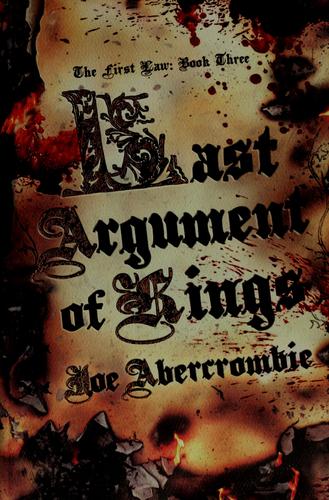
Five stars is the right rating. This is one of the two or three most influential fantasy debuts of the 21st century, and unlike some influential books, it is also genuinely a pleasure to read. The trilogy that follows is stronger than the opening book — Last Argument of Kings has one of the great third-act climaxes in the genre, and the standalones Best Served Cold and The Heroes are Abercrombie at the peak of his powers — but The Blade Itself is where all of that starts, and the voices it introduces are the reason the whole edifice works.
Read it. Then read the rest.