The Book in Brief
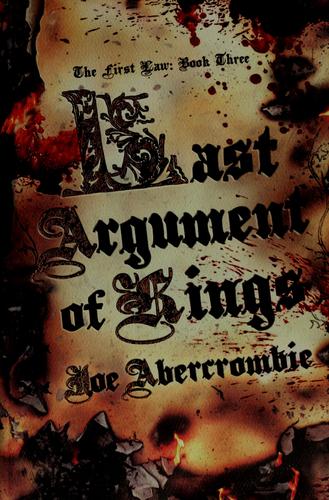
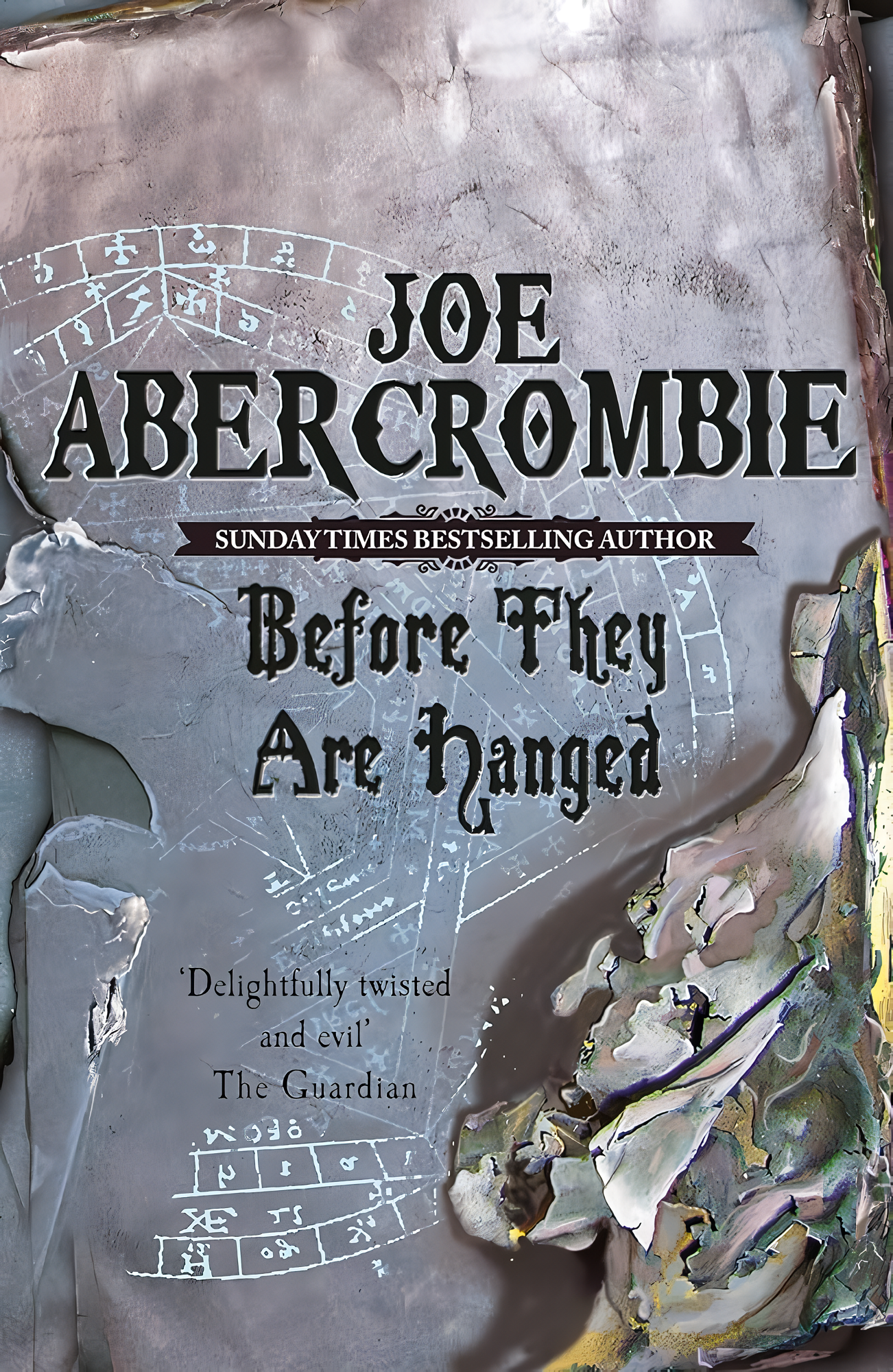
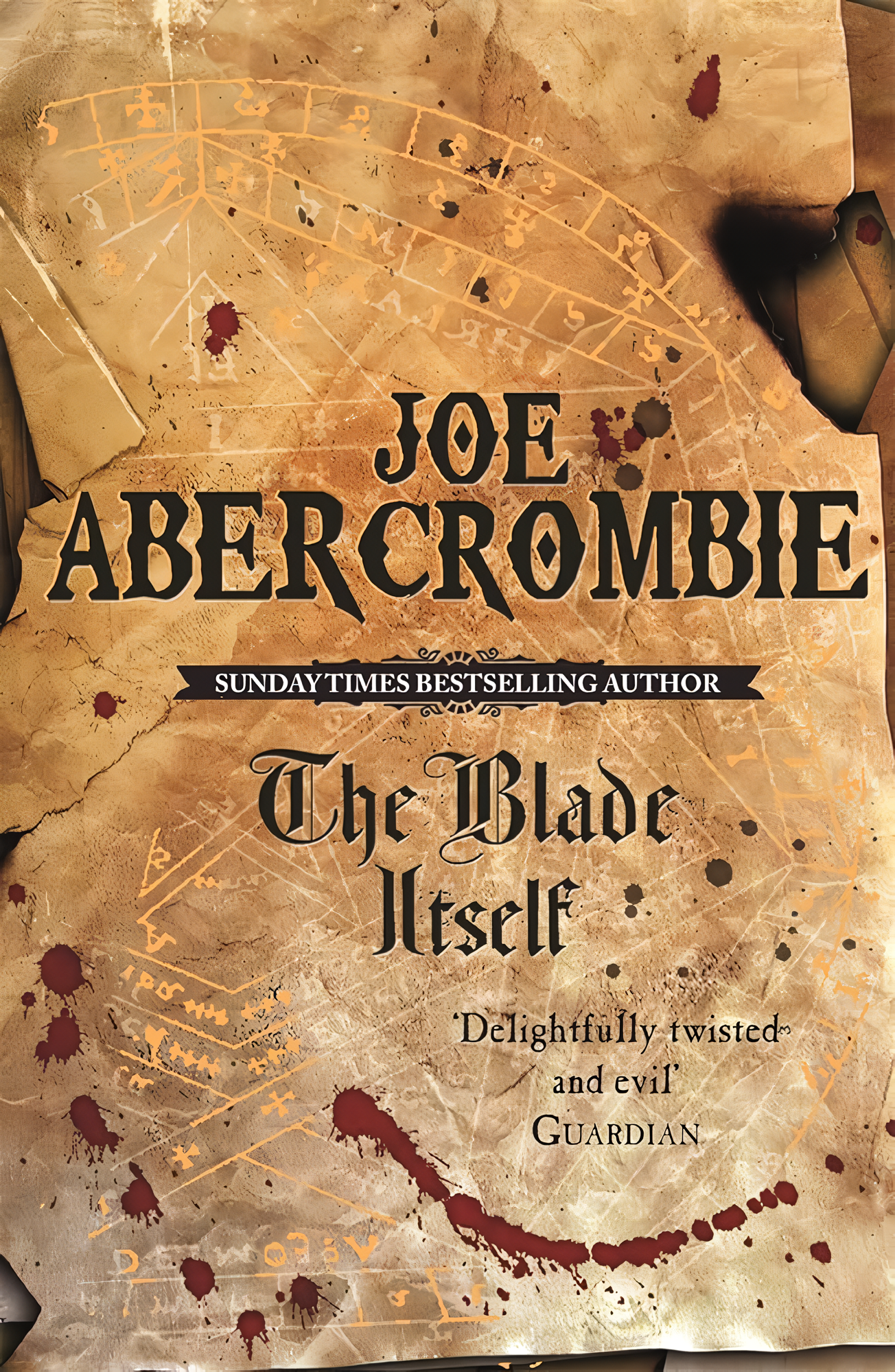
The Blade Itself is Joe Abercrombie's 2006 debut novel and the opening volume of The First Law trilogy, followed by Before They Are Hanged (2007) and Last Argument of Kings (2008). It is one of the foundational works of grimdark — the strand of fantasy defined by morally gray characters, graphic violence, cynical institutions, and a deliberate subversion of the clean heroism of Tolkien-style epic fantasy. Abercrombie, now widely nicknamed "Lord Grimdark," has said in interviews that he wanted his characters to suffer, and that he was reacting against decades of post-Tolkien imitation with fantasy that felt dangerous, real, and humane in its cruelty.
The book is famously a first-act novel. Very little is resolved by the end; almost the whole 500-plus pages are setup, world-building, and character introduction, closing not on a climax but on three separate journeys just beginning. It reads like the literary equivalent of The Fellowship of the Ring ending at Rivendell, except the quest's true purpose is still mostly hidden even from the characters undertaking it. What the book delivers, supremely, is voice — three unforgettable point-of-view protagonists rendered in tight close-third narration, each with distinctive interior monologue and speech.
The title comes from Homer's Odyssey, book 16: "The blade itself incites to deeds of violence." It is the line the disguised Odysseus speaks to Telemachus before the slaughter of Penelope's suitors, and the thematic rhyme with Jezal's fencing Contest and the book's pervasive violence is deliberate.
The World
The story takes place in the year 575 of the Union, a stagnating, quasi-medieval-to-Renaissance European-flavored kingdom whose capital is Adua. The Union is squeezed on two sides. To the North, the Viking/Scandinavian-flavored barbarian clanlands have recently been unified under the ruthless King Bethod. To the South, the vast Ottoman/Middle-Eastern-flavored Gurkish Empire is ruled by the Emperor and the religious leader Khalul, called the Prophet.
Magic is rare, ancient, and feared. The Magi are a near-mythical order founded by the wizard Juvens; their governing rule, the First Law, forbids touching "the Other Side" — the realm of devils. Those who break the related prohibition against eating human flesh become Eaters, Khalul's flesh-fueled magical servants and Bayaz's ancient enemies. Despite the wizards, the book is far more political thriller than epic fantasy. Magic is sparse, weird, and unsettling rather than flashy.
The Main POV Characters
Logen Ninefingers, called "the Bloody-Nine," is a famous, weary Northman warrior with a monstrous reputation, separated from his crew and presumed dead. His refrain — you have to be realistic about these things — masks a man who periodically loses control to a berserker killing persona. His chapters are written in blunt, earthy prose with a sardonic edge.
Inquisitor Sand dan Glokta is a former fencing champion and war hero who was captured and tortured for two years by the Gurkish and returned a crippled wreck. He now tortures prisoners for the Union's Inquisition. His chapters are famous for their self-loathing interior monologue rendered in italics, punctuated by the constant refrain why do I do this?
Captain Jezal dan Luthar is a vain, lazy, self-absorbed young nobleman officer training for the Contest, a national fencing tournament. His arc across the book is the slow puncturing of his vanity.
Bayaz, First of the Magi, is an ancient, bald, bad-tempered wizard who arrives to claim a seat on the Union's Closed Council owed to his order by law, and who quietly engineers events around every other character in the book.
Major Collem West is a principled, common-born officer with a temper, friend to both Glokta and Jezal.
The Dogman is the scout and tracker of Rudd Threetrees's crew of Named Men in the North.
Ferro Maljinn is a vengeful escaped Gurkish slave introduced in Part Two, persuaded by Yulwei to travel to Adua and join Bayaz.
How the book is structured
After a prologue titled "The End," the novel is divided into two numbered Parts made up of titled chapters that rotate between viewpoints. This recap groups the chapters by storyline within each Part rather than reading through strict chapter order, because the POV rotation makes a per-chapter walk-through nearly impossible to follow.
Prologue — "The End"
The book opens with Logen Ninefingers fleeing through a freezing northern forest, hunted by Shanka — also called Flatheads, bestial orc-like creatures with a taste for human flesh. He kills one with his axe but the blade lodges in its skull. Grappling a second, he is dragged over a cliff edge and left dangling from a tree root above a deep gorge with a Shanka clamped to his ankle. Rather than die on someone else's terms, he lets go and plunges into the river far below. The chapter's title is a long-running joke and foreshadow: the man we meet "ending" is the one whose story is just beginning.
Part One (chapters 1–18)
Overview
Part One is almost pure character establishment. It introduces the three protagonists in their separate worlds, plants the brewing war with the North, and sets Bayaz's machinery quietly in motion. Very little happens in a conventional plot sense — and that restraint is the point. By the end of Part One, Logen has met Bayaz and been recruited, Glokta has cracked the Mercer conspiracy, Jezal has met Ardee and started actually training, and the Union has refused Bethod's ultimatum.
Logen survives and finds a purpose
Logen washes ashore alive, cold, and convinced his crew is dead. Around a campfire he summons spirits, who tell him a Magus of the Old Time is seeking him and that Bethod has crowned himself king of the North. Given a reason to keep moving, Logen heads south. He meets Malacus Quai, Bayaz's sickly apprentice, and when Quai falls gravely ill after a bandit fight, Logen carries him cross-country on his back to Bayaz's remote library. It is the first act of decency that defines him and separates him from the reputation of the Bloody-Nine.
Glokta tortures his way through the Mercers
We meet Glokta mid-interrogation of Salem Rews, a fat merchant of the corrupt Guild of Mercers, with his masked albino Practical Frost looking on. Arch Lector Sult — head of the Inquisition and one of the most powerful men in the Union — tasks Glokta with breaking the Mercers, both to seize their wealth for the Inquisition and to weaken the nobility. Glokta coerces Rews into naming names, but when he and his Practicals (Frost and Severard) move to arrest those on the list, they find every man already murdered. The Guild is cleaning house, tipped off from inside. Sult grants Glokta authority to run a sting, and the trail leads through an assassin to a senior Mercer, Gofred Hornlach, who is "trained" into confession under the machinery of the Inquisition's House of Questions.
Jezal trains, loafs, and meets Ardee
Captain Jezal dan Luthar fleeces his friends at cards, drinks too much, and grudgingly trains for the Contest under the formidable Lord Marshal Varuz. He meets Ardee West — his friend Major West's sharp-tongued, common-born sister — and is intrigued and unsettled by a woman who mocks rather than flatters him. When Glokta, recognizing his own younger self in Jezal, bluntly tells him that everyone fences only for personal advancement and that quitting would hurt no one but himself, Jezal's wounded pride hardens into genuine resolve to train harder. It is the first sign in Jezal that vanity might, under pressure, become something like character.
Bayaz, Bethod, and the Union court
Logen reaches Bayaz's library, and the wizard proves to be a short-tempered, foul-mouthed old man — but unmistakably powerful. Bethod's son arrives demanding Bayaz pledge himself to the new King of the North. Bayaz refuses, reminding them that Bethod only became king with the Magus's help, and sends the envoy and Bethod's white-haired sorceress Caurib away with contempt. In Adua, Major West attends the sweltering Open Council, where Lord Chamberlain Hoff dismisses petitioners and Bethod's emissaries deliver an ultimatum: cede the northern province of Angland or face war. The Union refuses. War is coming.
The Dogman's crew
The narrative reveals that Logen's crew survived the Shanka attack: Threetrees the leader, the tracker Dogman, the giant Tul Duru Thunderhead, the brutal Black Dow, the silent bowman Harding Grim, and Forley the Weakest. Believing Logen dead, they move south, discover Bethod's tax-collectors butchering farmers, and learn the North is already at war with the Union. Meanwhile, on the road south, Bayaz, Logen, and Quai are ambushed by a party of Bethod's men. Bayaz unleashes his Art, making the trees erupt in fire and incinerating the attackers — Logen's first sight of real magic, and a warning about what the old man traveling with him actually is.
Part Two (chapters 19–45)
Overview
Part Two brings all the threads together in Adua. Ferro is introduced and escorted north; the Mercer conspiracy resolves and points to something much larger; Bayaz claims his seat and proves his identity by opening the sealed House of the Maker; Jezal wins the Contest; war erupts in the North; and the book ends with the quest party assembled and three journeys beginning.
Ferro and Yulwei
In the Gurkish south, Ferro Maljinn — an escaped slave consumed by hatred and vengeance — is burying her dead crew when the Magus Yulwei finds her. Her arrows curve away from him in midair. She is hunted by both Gurkish soldiers and by Eaters. Yulwei reveals the Eaters serve Khalul, that Khalul has broken the Second Law by making flesh-eaters, and persuades Ferro to travel with him to Adua to meet Bayaz. Along the way her uncanny endurance and connection to what Yulwei calls the world below start to surface, hinting at the Devil-blood in her veins.
The Mercer conspiracy resolves — and points higher
Glokta parades his confessed prisoners before the Open Council. The Guild of Mercers is convicted of treason and dissolved, its lucrative Westport trade license handed to the Inquisition, and Sult's power grows. But when Glokta moves to arrest the Guild's head, Magister Kault, Kault puts a noose around his own neck and, before leaping to his death, raves that the Mercers were merely puppets — that the bank Valint and Balk own everyone, and that the rot reaches the University, the Closed Council, and the Inquisition itself.
Glokta is pulled deeper into Sult's conspiracy
In a pivotal private meeting, Sult reveals how much he already knew: Superior Kalyne, Glokta's rival in Adua, had been on the Mercers' payroll throughout, while the innocent Sepp dan Teufel was framed so a Sult ally could take the Mints. He let the rot fester and timed the strike to destroy the Guild and consolidate his own power. Glokta realizes he has been a piece on Sult's board. When Glokta asks to investigate Valint and Balk, Sult forbids it — the bank is too well connected — and instead assigns him a new target: prove that the newly arrived Bayaz, who is claiming a seat on the Closed Council by ancient right, is a fraud, a Gurkish agent, or a noble's proxy. War is formally declared, and Major West is ordered to Angland to fight Bethod.
Bayaz's party arrives in Adua, and an Eater strikes
Bayaz, Logen, and Quai reach the city. Jezal, on gate duty, has his first uneasy encounter with the strange Northman and the old man and his servant Yoru Sulfur. Logen finds Adua baffling and stifling, a place full of people with nothing better to do than dream up ways to make easy things difficult. One night a figure resembling Logen's dead wife lures him close, then explodes: an Eater, sent by Khalul's faction, blowing a hole through a thick stone wall. Glokta, investigating the blast site the next day, is baffled by what force could have done such damage.
The Contest, rigged
Jezal's training pays off and he advances through the Contest, even besting Major West in a sparring exhibition, while his fraught secret romance with Ardee deepens. In the final he faces the hulking, gentle-voiced champion Bremer dan Gorst and is hopelessly outmatched, going down three touches to nil. From the stands, Bayaz — sweating with effort — uses his Art to flood Jezal with strength and speed. Jezal rallies and wins a victory that is not really his own. Glokta, watching, becomes convinced Bayaz has cheated but cannot prove how. Gorst, a gracious loser, congratulates the bad-winner Jezal.
Glokta investigates Bayaz's history
Digging at the University, Glokta meets the aged Adepti and learns the history of the Magi: Bayaz's ancient war on Kanedias the Master Maker, the deaths of Juvens and Kanedias's daughter Tolomei, and the crucial fact that the true First of the Magi alone holds the key to the sealed House of the Maker, the vast black tower that dominates Adua's skyline. If this Bayaz cannot open the House, he is a fraud.
The House of the Maker
At Jezal's victory banquet, Sult challenges Bayaz to prove himself. Bayaz casually produces the key, collapses the Arch Lector's chair with a flick of his Art, and the next day opens the ever-sealed House before Glokta, Logen, and Jezal. Inside, space and time bend: a map of the Circle of the World lies on the floor, orreries turn overhead, hours pass as minutes. Logen recognizes the smell of Shanka — Kanedias made them. In an inner chamber Bayaz retrieves a heavy dark metal box and leaves behind a weapon called the Divider, and gives the others a stripped-down history of the Old Time. His identity is now proven. The box's purpose remains a mystery he refuses to explain.
War in the North and Forley's death
Realizing Bethod is unaware that Shanka are pouring over the mountains, Threetrees's crew resolves to warn him. The harmless Forley the Weakest volunteers to carry the message — no one else in the crew would be trusted to survive an approach to Bethod's camp. Bethod's men return Forley's severed head in a sack. Enraged, the Named Men take revenge on Bethod's outriders. They do not yet know that Logen is alive and in Adua — that reunion is two books away.
The quest is assembled; the Bloody-Nine emerges
Bayaz announces his true purpose to the group: a journey to the Edge of the World to retrieve an ancient relic he calls the Seed. He recruits Logen, Quai, the boastful navigator Brother Longfoot, the newly arrived Ferro, and — over his furious objections — Jezal, who is ordered to go by High Justice Marovia instead of riding to war with his regiment. As they prepare to leave, Superior Goyle's Practicals corner Ferro to arrest her. Logen comes to her aid and, cornered, loses himself to the Bloody-Nine — his cold, gleeful killing persona, who narrates the slaughter in third person and beats the Practical Vitari half to death before Bayaz ends the standoff by exploding a pursuing Practical into pink mist. The party flees to catch their ship.
The final chapter — The Tools We Have
Glokta calls on Ardee, as the departing Major West asked, and the two cynics warm to each other instantly over shared contempt for the nobility. Then Sult, furious over Goyle's botched arrest of Ferro, hands Glokta a new and likely fatal assignment. Superior Davoust has vanished from Dagoska, the Union's isolated stronghold deep in Gurkish territory, now facing an imminent siege. Glokta is named the new Superior of Dagoska, with Vitari attached to his staff to spy for Sult. He accepts, limping toward the docks, and asks himself one final time in the closing line of the book: why do I do this? Why?
The book ends with three journeys just beginning. Glokta sails to a doomed southern city. Bayaz's mismatched party crosses the sea toward the Edge of the World. West and the Northmen march to war in Angland.
What the Book Is About
The Blade Itself is fundamentally about the deconstruction of the fantasy hero.
Abercrombie systematically inverts the archetypes. The barbarian, Logen, is thoughtful, weary, and longs for peace. The dashing young officer, Jezal, is hollow and selfish. The closest thing to a moral center in the whole novel, Glokta, is a torturer. There are no chosen ones; the characters are dragged into events by other people's schemes or their own worst impulses, not by prophecy or calling. The book asks, page after page, whether the person any of them believes themselves to be is the person their actions actually add up to.
The book is also about the illusion of agency. Almost every apparent victory is engineered by someone else. Sult plays Glokta like a piece across half of Part Two. Bayaz rigs Jezal's Contest, opens the House to win a political game, and quietly steers the entire cast toward his quest. The bank Valint and Balk — later revealed across the series to be Bayaz's own instrument — sits behind the Mercer conspiracy, hinting that the real powers in this world are financial and ancient, not the kings and councils on the surface. The characters believe they are making choices. They are almost never as free as they think.
Where much earlier fantasy let violence pass without consequence, Abercrombie insists on the toll. Logen's Bloody-Nine kills friend and foe alike and leaves him hollowed with guilt afterward. Glokta's torture is administrative, depersonalized horror committed by a man whose own body was destroyed by exactly the same techniques. Battle is fear and confusion, not glory. As Logen puts it, blood gets you nothing but more blood — the book's grim thesis.
Each protagonist is at war with who they are. Glokta asks why do I do this? and keeps doing it anyway. Logen tries to be a better man than the killer he was and fails whenever a fight begins. Jezal slowly, reluctantly, begins to suspect there might be more to a person than vanity, though he is nowhere close to acting on the suspicion by the end of the book. The close-third voices — Glokta's italicized interior monologue, Logen's laconic Northern speech, the Dogman's dialect — are the engine of all of it, and are the reason readers who don't usually love fantasy prose often love this book.
For all its bleakness, the novel is frequently very funny. Glokta's sardonic asides, Logen's bafflement at city etiquette, and Jezal's petty snobbery keep the tone from ever curdling into self-serious misery. Grimdark at its best is a comedy of manners about people with too many weapons, and The Blade Itself is grimdark at its best.
Ending Explained
How does The Blade Itself end?: Rather than reaching a climax, the novel leaves three journeys just getting underway. Bayaz gathers Logen, Malacus Quai, Brother Longfoot, Ferro, and an unwilling Jezal and sets out over the sea for the Edge of the World, hunting an ancient relic he names the Seed. Glokta, handed a likely fatal promotion, sails for Dagoska as its new Superior, closing the book by once again asking himself why he does this. Meanwhile Major West and the Northmen march toward the war against Bethod in Angland.
What is Bayaz's quest at the end of The Blade Itself?: Bayaz reveals his true purpose only at the end — an expedition to the Edge of the World to recover a relic known as the Seed, whose function he refuses to explain. His party is Logen, the apprentice Malacus Quai, the navigator Brother Longfoot, the escaped slave Ferro, and Jezal, forced to come by order of High Justice Marovia despite furious objections. Before leaving, Bayaz proved who he is by opening the long-sealed House of the Maker, where he collected a heavy dark metal box whose purpose is likewise kept secret.
What happens to Glokta at the end of The Blade Itself?: Glokta finishes his case with the Guild of Mercers convicted of treason and dissolved, but the dying Magister Kault raves that the real power is the bank Valint and Balk — a lead Sult forbids him to pursue. Unable to prove Bayaz a fraud once the wizard opens the House of the Maker, Glokta is instead named the new Superior of Dagoska, an isolated Union outpost deep in Gurkish lands whose previous Superior, Davoust, has vanished and which faces imminent siege. Vitari joins his staff to spy for Sult, and the book's last line has him limping toward the docks asking himself once more why he does this.
Does Jezal win the Contest in The Blade Itself?: Yes, but the victory is rigged. In the final against the champion Bremer dan Gorst, Jezal is thoroughly outmatched and falls three touches behind — until Bayaz, sweating with effort in the stands, secretly pours his Art into Jezal, lending him borrowed strength and speed to rally and win. Glokta becomes convinced the match was fixed but cannot prove how. Rather than riding off to war with his regiment afterward, Jezal is ordered onto Bayaz's expedition.
What is the Bloody-Nine in The Blade Itself?: The Bloody-Nine is the cold, gleeful killing persona that seizes Logen whenever he loses control in a fight, and the source of his monstrous reputation in the North. It erupts at the end of the book when Superior Goyle's Practicals corner Ferro and Logen steps in to defend her. Taken over, he batters the Practical Vitari nearly to death, and Bayaz ends the standoff only by bursting one of the pursuing Practicals into red mist. They then run for their ship out of Adua.
Is anything resolved at the end of The Blade Itself?: Deliberately little — the book works as one long first act. By the close, the Guild of Mercers has been destroyed, Bayaz has proven he is truly the First of the Magi by opening the House of the Maker, Jezal has won his rigged Contest, and the Union's war with Bethod has formally begun. But the purpose of the Seed, the reach of Valint and Balk, and what Bayaz actually wants remain hidden, with the quest's goal a mystery even to the people pursuing it. Those threads run on into the sequels Before They Are Hanged and, after that, Last Argument of Kings.
About the Book
The Blade Itself was first published in the UK by Gollancz on May 4, 2006, and in the US by Pyr on September 6, 2007. The mass-market paperback runs 531 pages in the US Pyr edition. It is the first volume of The First Law trilogy — The Blade Itself, Before They Are Hanged, and Last Argument of Kings — and the cornerstone of a much larger shared world.
That world continues in three standalone novels set after the trilogy — Best Served Cold (2009), The Heroes (2011), and Red Country (2012) — and a sequel trilogy, The Age of Madness, set roughly thirty years later: A Little Hatred (2019), The Trouble with Peace (2020), and The Wisdom of Crowds (2021). Abercrombie's First Law short fiction is collected in Sharp Ends: Stories from the World of the First Law (2016), whose story "Tough Times All Over" won a Locus Award.
Abercrombie, a former film editor, wrote the book during breaks between jobs. He was a finalist for the 2008 John W. Campbell Award for Best New Writer at Denvention 3 in Denver, the award won that year by Mary Robinette Kowal in a shortlist that also included Scott Lynch.
The Blade Itself is widely regarded as one of the foundational texts of grimdark fantasy and as a deliberate, character-first response to both Tolkien-style epic fantasy and the work of George R. R. Martin. It remains one of the most influential fantasy debuts of the twenty-first century. It is graphically violent, sexually frank, and structured as a long first act — the book does not resolve its major questions, and readers who dislike middle-book sag should either commit to the whole trilogy or wait until all three are on the shelf before starting.