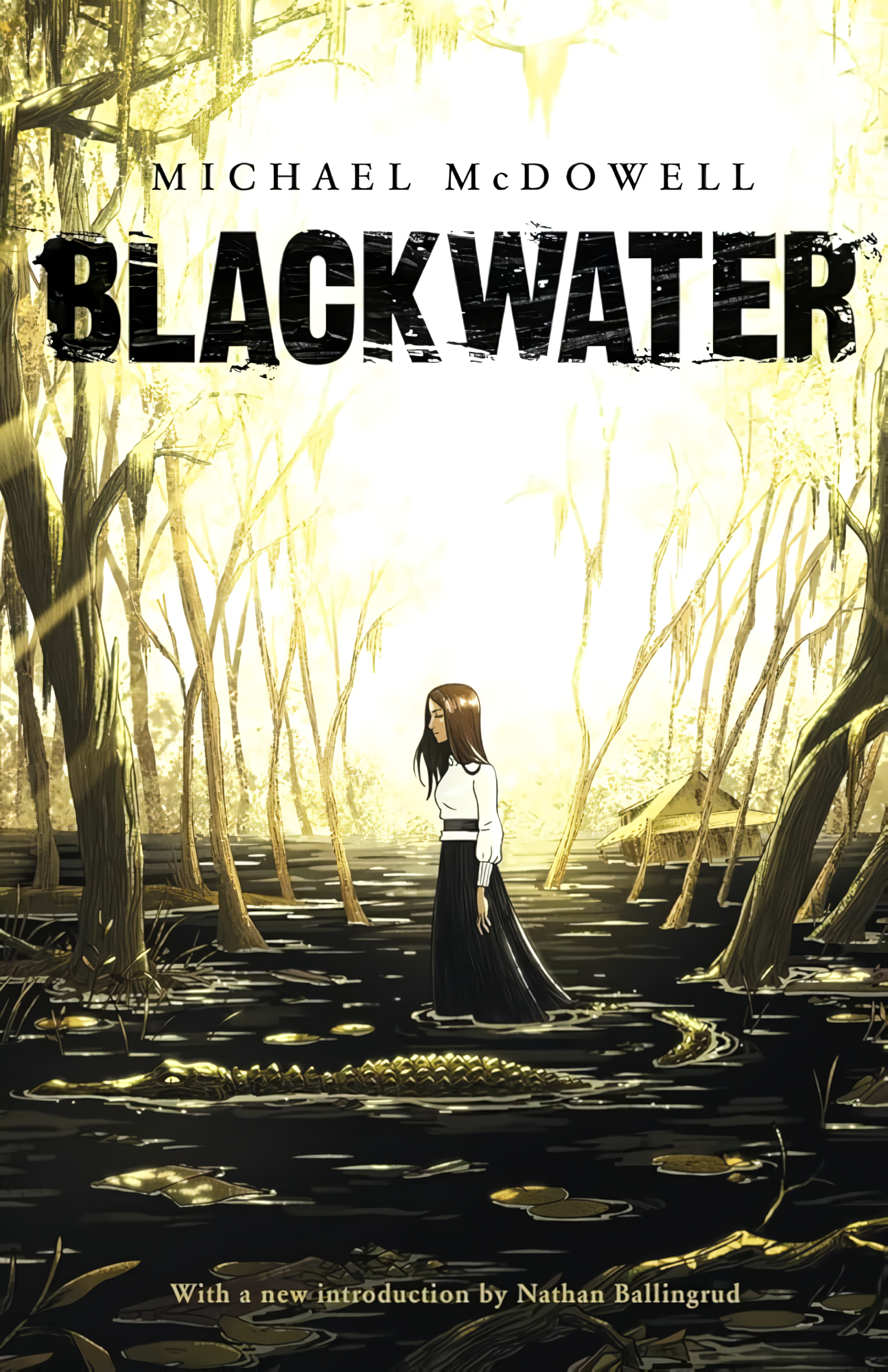
Michael McDowell’s Blackwater begins with a catastrophe. On Easter Sunday in 1919, the rivers surrounding Perdido, Alabama, rise high enough to drown the town. When Oscar Caskey ventures into the flooded streets, he finds Elinor Dammert waiting calmly in an upstairs hotel room. She claims to be a stranded schoolteacher. She is also something else, although McDowell is in no hurry to explain exactly what.
That opening suggests a conventional monster story, but Blackwater is far stranger and more ambitious. Its six volumes follow the wealthy Caskey family across roughly fifty years of marriages, grudges, births, deaths, business deals, wars, inheritances and Sunday dinners. The supernatural is always present, yet it often remains beneath the surface for hundreds of pages. This is primarily a family saga in which one member of the family happens to be an aquatic predator.
The central conflict is not between good and evil. It is between Elinor and Oscar’s mother, Mary-Love, two women who understand power perfectly and exercise it in entirely different ways. Mary-Love controls through money, obligation and injured affection. Elinor is patient, generous and almost impossible to provoke—but she can wait years for circumstances to turn in her favour. Their war is fought through houses, children and invitations to dinner, which makes it much more compelling than a straightforward supernatural confrontation would have been.
McDowell’s greatest trick is his restraint. He can spend several chapters on household arrangements or the finances of a lumber mill, then deliver a few pages of startling violence without changing his plain, conversational tone. The horror works because Perdido’s everyday life is so carefully established. Ghosts, river creatures and impossible transformations do not invade this domestic world; they belong to it.
The enormous cast is another strength. Miriam’s cold competence, Frances’s divided nature, James’s gentleness, Queenie’s resilience, Sister’s slow transformation into her mother and Billy Bronze’s delighted acceptance of the Caskey matriarchy all give the later volumes their momentum. Characters age, repeat old mistakes and become the people they once resented. The result feels less like a long novel than a history of an actual family—albeit one whose history is repeatedly edited by Elinor.
Some elements have aged less gracefully. The novel’s treatment of race is inseparable from its early-twentieth-century Alabama setting, but Black characters such as Zaddie, Ivey and Bray are sometimes treated more as indispensable witnesses or servants than as fully independent people. The pace also slows, for me, in portions of The Levee and The War. Even then, McDowell’s dry humour and sharp understanding of family politics keep the story moving.
Blackwater is an exceptional Southern Gothic: funny, grotesque, warm, cruel and completely assured. Readers looking for constant horror may be surprised by how much time it devotes to money and marriage. Readers willing to accept a multigenerational family chronicle with something ancient moving beneath it will find a saga of rare, cumulative satisfaction.