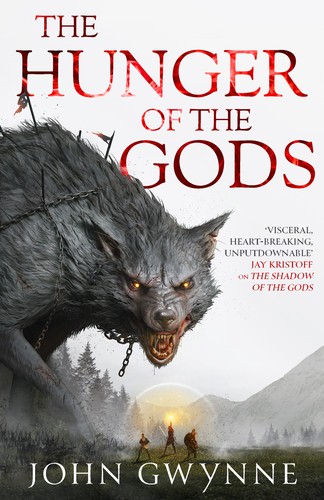
The Hunger of the Gods is a true middle volume in the best sense: it widens the war, separates the people you most want reunited, and makes every victory create a new obligation. The scale outgrows The Shadow of the Gods, but the emotional engine stays intimate — parents hunting for children, warriors repaying loyalty, former thralls deciding what freedom requires.
Orka is formidable, but information, distance and divided loyalties are problems that cannot be solved by strength alone.
Orka’s remains the strongest thread. Her search for Breca gives the sprawling conflict one simple human line, and Gwynne uses her competence shrewdly: Orka is formidable, but information, distance and divided loyalties are problems that cannot be solved by strength alone.
Varg’s chapters deepen the Bloodsworn from admired warband into chosen family — his education is no longer just weapons but the group’s history, grief and the cost of its oaths. Elvar’s rise is the most politically interesting development: binding the wolf-god Ulfrir brings power and an impossible responsibility, and her ambition keeps colliding with the moral habits she inherited from the Battle-Grim.
It is a demanding book — a large cast, dense terminology, and alternating viewpoints that can leave one crisis suspended for chapters. Review the first book’s ending before starting.
The density pays because the action is causal: rescues expose new threats, bargains create future debts, and the return of the gods rewrites both strategy and identity. It ends with its people scattered further than ever — Varg across the sea in Iskidan, Elvar on a stolen throne, Orka a poisoned captive in the north, Breca alone — and every thread on a knife edge.