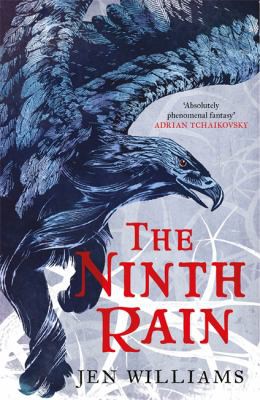
The Ninth Rain straps an archaeological expedition, a vampiric fallen civilization and a returning alien apocalypse into one novel — and makes the combination feel inevitable rather than crowded. Jen Williams’s masterstroke is treating discovery as action: Lady Vincenza “Vintage” de Grazon does not wait for a prophecy to explain the alien wrecks scattered across Sarn. She takes notes, collects samples and hires dangerous people to climb inside them.
The trio is unusually well balanced. Vintage’s curiosity shades into recklessness; Tormalin the Oathless is an Eboran swordsman whose people doomed themselves by swapping their dead god’s sap for human blood; Noon is a fire-witch escaped from the Winnowry, the institution that cages women like her and sells the by-products of their power. They need each other practically long before any of them admits to anything more.
The Winnowry calls its cages protection and its profits religious duty — and Noon has believed it her whole life.
Noon carries the book’s sharpest moral pressure. The Winnowry calls its cages protection and its profits religious duty — and Noon has believed it her whole life. Her arc refuses the easy shame-to-confidence curve: winnowfire saves children, kills enemies and betrays her location, sometimes in the same chapter. Tor’s blood-dependency mirrors her from the other side — appetite dressed as civilization.
The middle is busy — new regions, historical interludes, Winnowry agents, Eboran court scenes — and can feel episodic. But every digression turns out to be load-bearing: when the corpse moon wakes and the Ninth Rain begins, the finale reads as systems converging rather than a monster arriving on cue.
By the last page the genre itself has shifted from ruin-crawl to open war: the Jure’lia queen returns, the tree-god wakes just enough to matter, and Noon’s fire births the war-beast Vostok. Hope, in this series, is a salvaged and partial thing — which is exactly why it works.