The Book in Brief
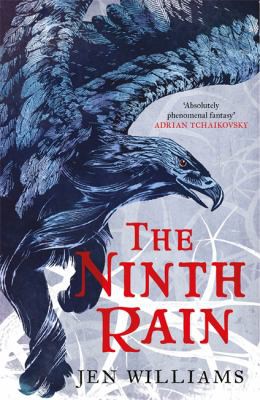
Scholar Vintage de Grazon hires the exiled Eboran swordsman Tormalin to guard her expeditions into the wrecks of the Jure’lia — the insectile hive that has invaded Sarn eight times — and the pair pick up Noon, a fire-witch escaped from the Winnowry. Their finds prove the invaders never died. While Tor’s sister Hestillion communes with the dormant tree-god Ygseril in ruined Ebora, the corpse moon wakes and the Ninth Rain begins: Ygseril releases the silver pods that once grew war-beasts, the Jure’lia queen seizes Hestillion and a pod, and Noon’s winnowfire births the dragon Vostok — a weakened defense against a returned enemy.
Important Characters
Lady Vincenza “Vintage” de Grazon: A wealthy scholar, explorer, and collector of Jure’lia evidence. Her curiosity drives the expedition and her letters provide a record of its discoveries.
Tormalin “Tor” the Oathless: An Eboran swordsman and exile. He protects Vintage while managing dependence on human blood and the onset of the crimson flux.
Fell-Noon: A powerful fire-witch who escapes the Winnowry. Her fear of her own abilities gradually changes as she uses them to protect people she has chosen.
Hestillion: Tor’s sister, one of the Eborans remaining in their ruined city. Her attempt to understand Ygseril draws her into direct contact with the returning Jure’lia.
Aldasair: An Eboran survivor pushed toward leadership as human delegates gather in Ebora.
Nanthema: An explorer, scholar, and Vintage’s former lover. Vintage’s letters to her connect past intimacy to the present investigation.
Agent Lin: A Winnowry operative sent to recover Noon. Her pursuit shows how the institution turns former victims into instruments of control.
Father Stanz and the Winnowry authorities: Leaders who justify imprisoning fell-witches through fear, religion, and the economic value of their power.
Ygseril: Ebora’s vast tree-god, dormant since the previous Rain. Its damaged awakening produces the pods needed to create war-beasts.
Vostok: The war-beast born through Noon’s winnowfire and Ygseril’s power. She represents both restored defense and a new kind of bond.
The Jure’lia Queen: The intelligence directing the hive invasion. Her return converts archaeological warnings into immediate war.
Chapter 1
Tormalin leaves decaying Ebora, rejecting the ceremonial decline of his people. He takes his sword, his dependence on blood, and the knowledge that the crimson flux will eventually kill him.
Chapter 2
Vintage investigates a strange site in the vine forest with Tor as protection. Her careful notes and willingness to enter danger establish that Jure’lia remains are the organizing purpose of her life.
Chapter 3
At the Winnowry, Noon survives confinement among other fell-witches. The institution controls the women through fear, punishment, and akaris while insisting that imprisonment protects the outside world.
Chapter 4
The history of Ebora explains Ygseril, the sap that once sustained the Eborans, and the war-beasts that fought earlier Rains. The present city’s beauty is inseparable from its abandonment.
Chapter 5
Noon experiences dreams and disturbances associated with the corpse moon. Her winnowfire reacts to fear, reinforcing the lesson that any loss of control will justify harsher confinement.
Chapter 6
Vintage and Tor continue their search through unstable terrain. Their long partnership is affectionate but transactional: she pays for protection, and he conceals how urgently he needs access to human blood.
Chapter 7
Hestillion remains in Ebora and studies the silent Ygseril. Her determination to restore the old relationship between god and people separates her from Eborans who have accepted extinction.
Chapter 8
The Winnowry assigns Agent Lin to recover the escaped Fell-Noon. Lin’s familiarity with the institution’s cruelty makes her obedience more complicated, not less dangerous.
Chapter 9
Noon’s escape carries her into a world for which the Winnowry has deliberately left her unprepared. She avoids capture while discovering that ordinary people fear fell-witches even when they know nothing about them.
Chapter 10
Vintage, Tor, and Noon converge in Shroom Flats, where a parasite spirit attacks. Noon’s fire saves the others, and Vintage responds to her power with interest rather than immediate condemnation.
Chapter 11
An account of Tomas the Drowned shows how terror of uncontrolled winnowfire shaped public memory. The history helps explain why the Winnowry’s authority survives despite its abuses.
Chapter 12
Hestillion studies signs associated with the previous Jure’lia invasions. Her work suggests that Ygseril’s silence and the enemy’s disappearance may be parts of the same unfinished cycle.
Chapter 13
Records of the Jure’lia queen describe a humanoid intelligence at the center of the hive. The lack of reliable detail makes the queen more alarming: Sarn remembers victory without understanding its enemy.
Chapter 14
Vintage invites Noon to travel with her and Tor. Noon expects exploitation, but the terms offer money, movement, and a chance to define her power outside the Winnowry.
Chapter 15
The new trio adjusts to one another on the road. Tor distrusts the risk Noon brings, while Vintage treats disagreement as another problem to investigate rather than a reason to abandon her.
Chapter 16
Historical material on war-beasts explains that Ygseril’s pods once became specialized living weapons. Their disappearance left later generations with heroic stories but no usable defense.
Chapter 17
Vintage writes to Nanthema about the expedition and the people beside her. The letter reveals longing, guilt, and a habit of turning personal confession into field observation.
Chapter 18
The story returns to the Winnowry and its production of akaris. Milandra Parcs and other historical figures illustrate how the institution converted frightened witches into a controlled resource.
Chapter 19
Agent Lin follows Noon’s trail and studies Vintage’s communications. The pursuit narrows because the expedition leaves records, witnesses, and damage that a trained operative can connect.
Chapter 20
Vintage, Tor, and Noon travel toward the winnowline. Noon experiences ordinary companionship as something fragile, while Tor’s illness and appetite become more difficult to disguise.
Chapter 21
A fallen tree blocks the train route and a worm-touched creature attacks. Tor uses the sword called the Ninth Rain, and Noon’s intervention confirms that the landscape is producing threats linked to older invasions.
Chapter 22
Noon finds unconscious children during the chaos and uses winnowfire to save them. The rescue exposes her location and power, turning a moral victory into a new lead for the Winnowry.
Chapter 23
At the Goddestra Delta during the Fallen Moon festival, Vintage waits for Nanthema and writes another letter. The missed meeting adds personal urgency to the larger evidence that something has gone wrong.
Chapter 24
Agent Lin inspects the wrecked winnowline with senior Winnowry figures. The damage increases pressure on her to recover Noon and shows that the institution values control more than the lives Noon saved.
Chapter 25
In Ebora, Aldasair receives human delegates and struggles to act as a leader. The gathering reflects growing awareness that the old Eboran city may again matter to the survival of Sarn.
Chapter 26
Accounts of Greenslick and Trisladen preserve the devastation of earlier Rains. Vintage’s research places present ruins within a repeated pattern of invasion, resistance, and selective memory.
Chapter 27
The trio crosses country associated with Targus black-eye bats and other altered life. Forced shelter and Tor’s need for blood increase intimacy and unease among the travelers.
Chapter 28
Vintage leads Noon and Tor inside a Behemoth chamber. The organic architecture and preserved mechanisms confirm that the wreck is not merely a dead shell.
Chapter 29
An explosion tears through the site. Vintage is separated from the others and presumed dead, while Noon concentrates on getting the injured Tor out before the structure collapses.
Chapter 30
Noon tends Tor while grieving Vintage and trying to evade pursuit. Freedom now means responsibility for another person, not simply distance from the Winnowry.
Chapter 31
Aldasair retreats from the crowded human delegation into Ebora’s neglected gardens. Bern the Younger’s work there offers a small image of restoration amid political fear.
Chapter 32
Tor and Noon navigate caves and difficult country. Dependence erodes their defenses, and practical care develops into a more openly intimate bond.
Chapter 33
Vintage is revealed alive and begins finding a route away from the wreck. Evidence recovered from the Behemoth strengthens her conviction that Nanthema’s disappearance is connected to active Jure’lia machinery.
Chapter 34
Hestillion enters the netherdark and reaches toward Ygseril. The voice that answers her in the netherdark is not Ygseril at all, but the Jure’lia queen held in his roots.
Chapter 35
Noon and Tor reassess their destination after the disaster. Tor argues that Jure’lia fluid may be capable of waking Ygseril, connecting his hope of saving Ebora to the evidence Vintage uncovered.
Chapter 36
Tor’s wounds and flux worsen as he prepares to return home. Noon agrees to go with him despite the risk, choosing an uncertain attempt at repair over continued flight.
Chapter 37
Historical records and Vintage’s correspondence connect Nanthema’s earlier expeditions to the present wrecks. The documents imply that she followed evidence far enough to become trapped by it.
Chapter 38
Noon and Tor cross the mountains under attack from weather and predators. Their physical relationship becomes explicit, but neither mistakes intimacy for a solution to Tor’s illness or Noon’s fear.
Chapter 39
Vintage travels aboard the Lucky Lizard toward Nanthema’s last known location. Material recovered from the wreck—including strange varnish and living traces—indicates that the Behemoths are reactivating.
Chapter 40
Noon and Tor arrive in Ebora and confront its magnificent decay. Noon meets Aldasair and the human delegation, while Tor faces the family and civilization he abandoned.
Chapter 41
Tor explains that Jure’lia fluid may revive Ygseril and restore the old defense. Hestillion continues her dangerous contact with the voice in the roots as signs around the new moon indicate that time is running out.
Chapter 42
Vintage reaches another Behemoth site near Nanthema’s route. She enters despite the awakening structure, prioritizing rescue and evidence over the possibility of retreat.
Chapter 43
Vintage finds Nanthema trapped behind crystalline growth within the Behemoth. Their reunion is constrained by the living machinery around them and the realization that the enemy is returning now.
Chapter 44
In Ebora, Noon breaks confinement as burrowers and Jure’lia forces attack. At the other site, Vintage and Nanthema struggle inside an awakening Behemoth, joining the two plotlines through simultaneous catastrophe.
Chapter 45
Ygseril releases silver pods, but the Jure’lia queen takes Hestillion and one of them. Noon combines her winnowfire with the tree’s power to birth Vostok, giving Sarn its first new war-beast in generations.
Chapter 46
Tor, Aldasair, and the survivors move the remaining pods into Ebora’s abandoned Hatchery. Vostok warns that Ygseril’s weakness has stunted the emerging beasts; elsewhere, Vintage and Nanthema face the invasion’s aftermath as the Ninth Rain becomes open war.
Ending Explained
The title names both Ygseril’s ninth fall of war-beast pods and Tor’s sword — inherited legend and present duty. Ygseril’s awakening is real but partial: the tree can still release war-beast pods, yet many are dead or damaged, and the creatures that hatch will be stunted. Noon’s part in Vostok’s birth reverses the Winnowry’s logic — the fire it caged as contamination becomes an act of creation and bonded defense. Hestillion’s capture hands the Jure’lia queen an Eboran prisoner and a living pod, leaving the enemy better informed than the defenders. Vintage frees Nanthema, vindicating her letters and her scholarship just as the war they predicted begins.
Themes and Analysis
History as incomplete evidence. Letters, ruins, religious accounts, and legends preserve facts while distorting causes. The characters survive by comparing sources rather than trusting one inheritance.
Exploitation disguised as protection. The Winnowry claims to contain danger while profiting from fell-witches. Its language of safety protects the institution first.
Addiction and bodily dependence. Tor’s need for blood and Noon’s relationship to akaris show bodies shaped by systems they did not freely choose.
Found family. Vintage, Tor, and Noon begin as employer, guard, and fugitive. Shared danger creates obligations that exceed their original arrangement.
Decay and renewal. Ebora, Ygseril, the Hatchery, and the Behemoths all contain life inside apparent ruin. Renewal is possible, but it returns altered.
Science fantasy. Archaeological method and biological machinery destabilize the boundary between magic, religion, and alien technology.
Content Notes
This book contains imprisonment and abuse of women, drug dependence and forced sedation, blood drinking, body horror, child endangerment, religious coercion and apocalyptic violence.