Science fantasy is what happens when speculative fiction stops worrying about the border between the laboratory and the temple. Its worlds may contain starships, genetic engineering, artificial intelligence, and planetary ecology, but they are shaped by prophecy, gods, sword-bearing aristocrats, necromancy, or powers that function with the emotional force of magic. The best examples do not merely decorate science fiction with fantasy imagery. They make both traditions essential to the story.
That makes the category difficult to rank. Gideon the Ninth contains literal necromancers aboard interplanetary vessels and qualifies without argument. Dune and Red Rising are more debatable. Neither requires conventional magic, yet both organize futuristic societies through feudal houses, ritual combat, bloodlines, chosen figures, and myths powerful enough to shape political reality. They read like epic fantasy translated into the vocabulary of space opera.
This list uses that broad definition. It favors novels in which the collision of modes creates something neither genre could produce alone. A spaceship merely appearing in a fantasy story is not enough, nor is a sword in an otherwise conventional science-fiction setting. The mixture should determine the atmosphere, institutions, conflicts, or moral questions of the book.
Only individual novels are ranked, although many begin longer series. The position reflects the quality of the listed volume rather than the total achievement of every sequel. That distinction matters most for Red Rising and Empire of Silence, whose later books expand dramatically beyond the comparatively narrow worlds of their openings.
Accessibility also matters, but it is not the controlling value. Some books below offer immediate momentum. Others demand patience, rereading, or a willingness to remain confused. A top-ten list that measured only ease would exclude several works that define the possibilities of science fantasy. The ranking instead balances imagination, execution, thematic depth, influence, emotional force, and the success of the science-fantasy fusion.
10
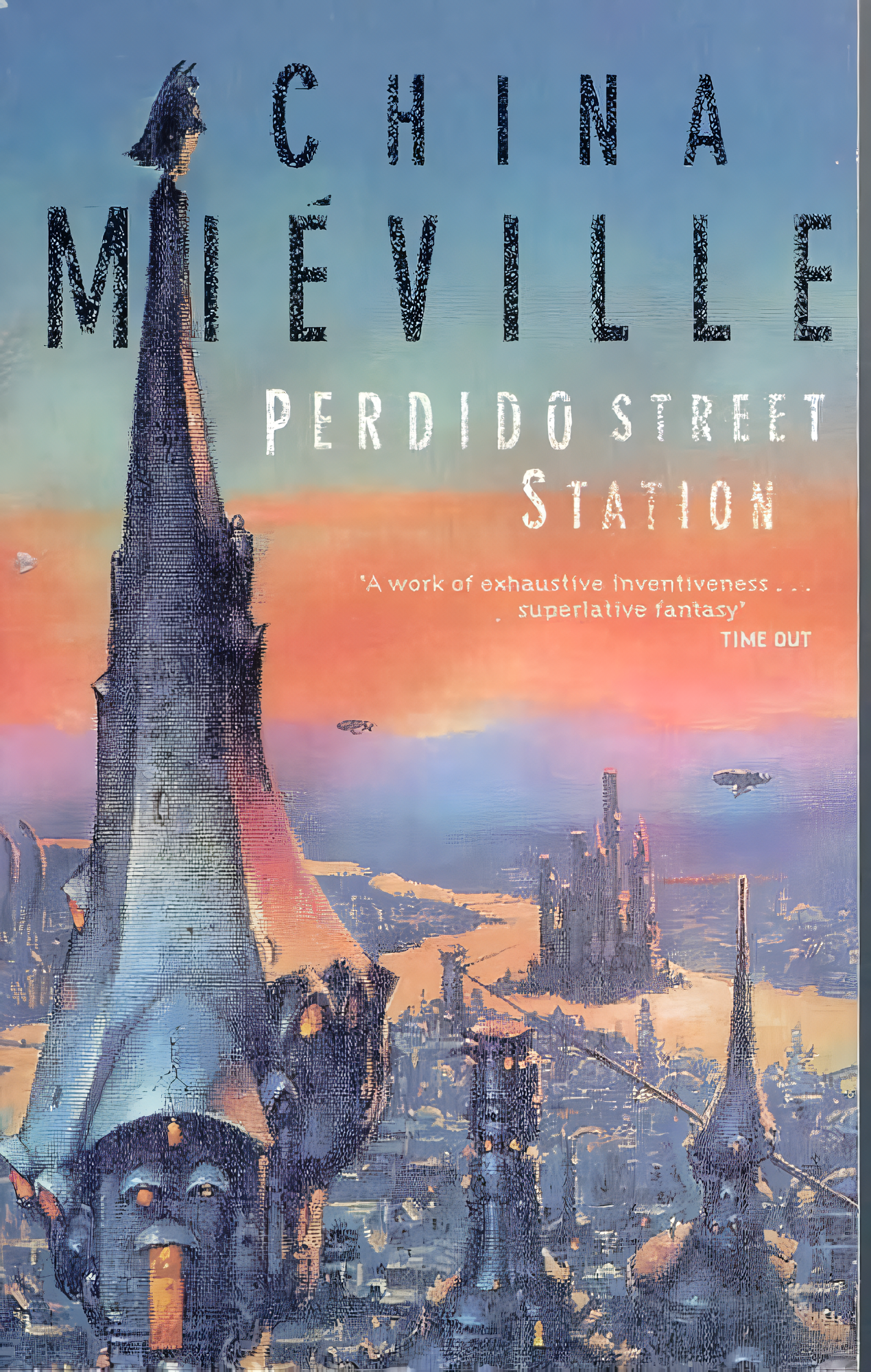
Perdido Street Station
China Miéville · 2000 · Bas-Lag, Book 1
Best for Readers who want grotesque urban fantasy, industrial
technology, and uncompromising imagination
New Crobuzon is less a setting than an ecosystem built from soot, bureaucracy, thaumaturgy, racial tension, experimental science, and bodily transformation. Scientists share streets with alchemists. Artificial constructs develop intelligence in rubbish heaps. A gigantic extradimensional spider treats reality as art. Magic exists, but Miéville approaches it with the obsessive curiosity of an engineer testing dangerous machinery.
That mixture makes Perdido Street Station one of the purest examples of science fantasy on the list. Its world is neither medieval nor futuristic. It resembles an industrial revolution occurring in a universe where supernatural forces can be researched, commercialized, weaponized, and misunderstood. Isaac Dan der Grimnebulin's attempt to help a wingless garuda leads into a catastrophe that combines laboratory error, civic corruption, horror, and metaphysics.
The novel's greatest achievement is density. New Crobuzon feels economically and politically inhabited rather than assembled for an adventure. Labor, policing, organized crime, punishment, art, and scientific ambition all possess material consequences. The same density is also its principal weakness. Miéville can describe decay until the reader almost smells the page, and the novel's enormous middle sometimes values another invention over forward motion. Its ending is morally severe in a way some readers will find powerful and others simply punishing.
It ranks tenth because it is less space-facing than the other selections and because its excess can obscure its characters. Yet few novels demonstrate the freedom of the hybrid genre more completely. Perdido Street Station does not ask whether an idea belongs to fantasy, science fiction, steampunk, political fiction, or horror. It takes whatever it needs and makes the resulting city impossible to mistake for anyone else's.
We reviewed this: read our full review of Perdido Street Station →
9
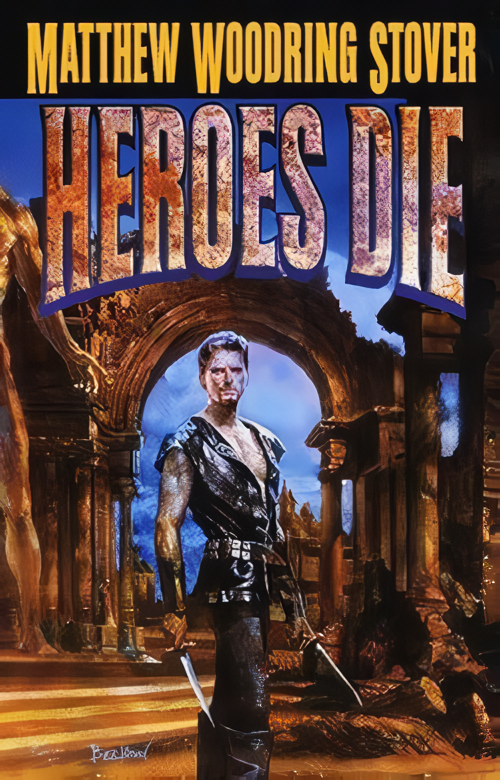
Heroes Die
Matthew Woodring Stover · 1998 · The Acts of Caine, Book 1
Best for Readers who want brutal action with serious ideas about
entertainment, class, and violence
Heroes Die makes the genre divide literal. A dystopian future Earth has discovered Overworld, a parallel realm of magic, gods, and fantasy kingdoms. Corporations send trained "Actors" into that world and broadcast their adventures as immersive entertainment. On Earth, Hari Michaelson is a controlled employee. In Overworld, audiences know him as Caine, an assassin whose violence has made him a star.
The premise could have produced satire with a sword attached. Stover instead treats both worlds as morally real. People in Overworld are not game characters, even when Earth's viewers consume their suffering as content. Hari is not liberated merely because Caine can kill the people who control him. His celebrity, skill, marriage, and rage all bind him more tightly to an industry that understands rebellion as another marketable performance.
The action is exceptional: fast, physical, and unusually attentive to the cost of injury. More importantly, it carries an argument. The book asks why audiences admire violent heroes, how institutions turn resistance into spectacle, and whether a person can use dehumanizing power without being remade by it. Its futuristic caste system and fantasy empire mirror one another rather than serving as simple opposites.
Stover's aggression can be exhausting, and the novel's original marketing did little to signal how strange and intellectually ambitious it is. Some characterization is submerged beneath cruelty and momentum. Even so, Heroes Die deserves a much larger readership. It is one of the rare science-fantasy novels in which the collision between technology and magic is not merely aesthetic; it is the mechanism through which one world exploits another.
We reviewed this: read our full review of Heroes Die →
8
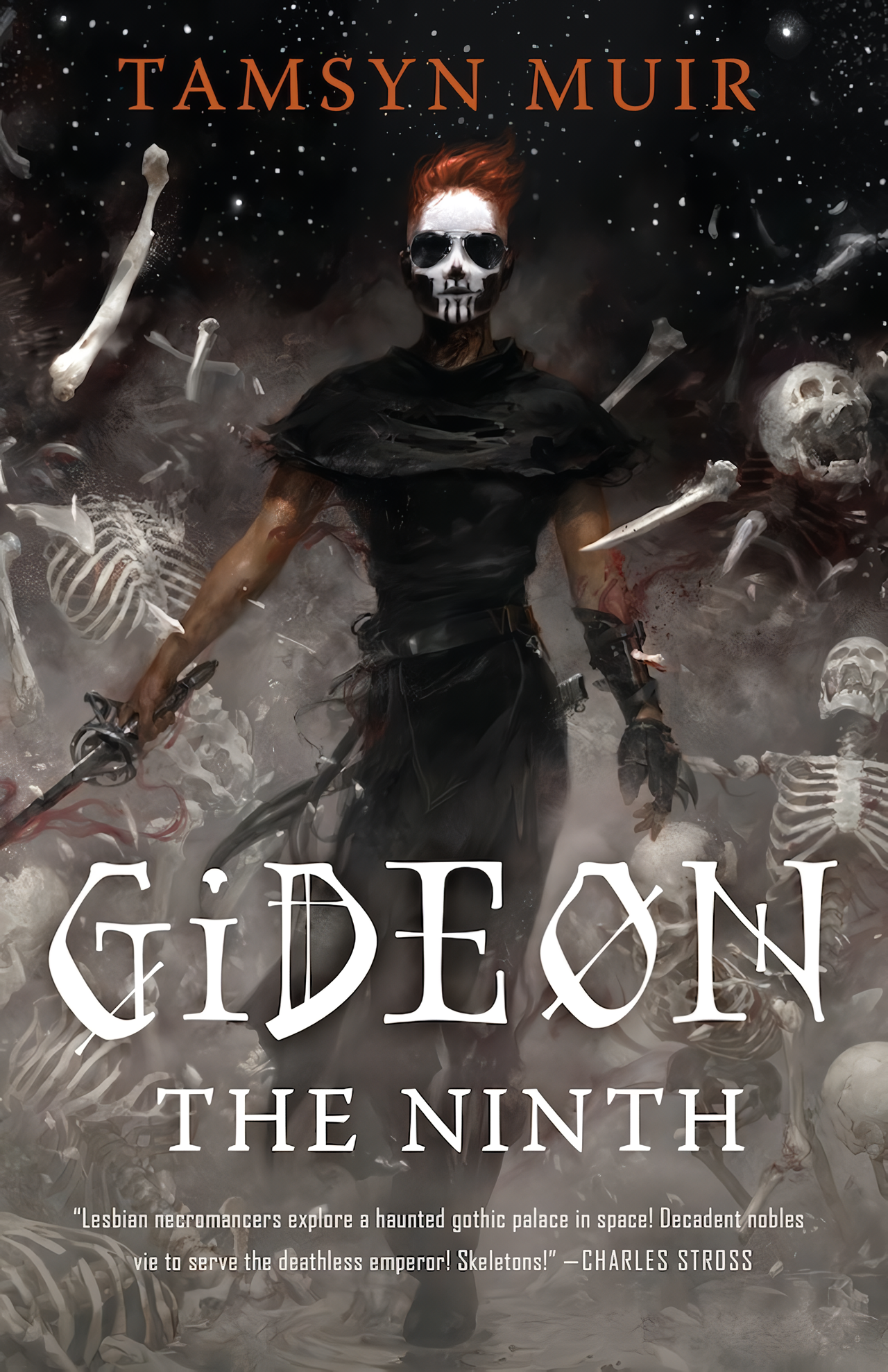
Gideon the Ninth
Tamsyn Muir · 2019 · The Locked Tomb, Book 1
Best for Readers who want necromancers in space, locked-room
mysteries, swordplay, and abrasive humor
The easy description of Gideon the Ninth---necromancers exploring a decaying palace in space---is accurate and still fails to communicate how peculiar the book feels. Nine planetary Houses practice distinct forms of death magic beneath an immortal Necrolord. Their heirs and sword-bearing cavaliers gather to compete for transformation into Lyctors, the near-immortal saints who serve their emperor.
The result combines a haunted-house mystery, a laboratory puzzle, an aristocratic tournament, and a comedy about two young women who can barely tolerate one another. Gideon's irreverent voice collides with the setting's gothic solemnity. Harrowhark's bone magic can be grotesque, elegant, and scientifically procedural within the same scene. Skeletons perform practical labor while ancient technology remains half understood.
Muir's greatest strength is control of information. The reader enters a complex society through a protagonist who has little interest in explaining it. Names, titles, relationships, and necromantic disciplines arrive in a rush. Confusion becomes part of the experience because every character is concealing a different piece of the structure. When the locked-room plot begins resolving, apparent jokes and background oddities acquire new weight.
That method makes the novel less accessible than its marketing suggests. The large cast can blur together, the contemporary jokes sometimes fracture the atmosphere, and the final explanations come rapidly. It ranks below the books whose ideas and emotions land more consistently on a first reading. Still, no other entry makes space opera feel so morbidly tactile. Gideon the Ninth places bones, blood, rapiers, resurrection, shuttles, and planetary empire into one tomb and locks the door.
We reviewed this: read our full review of Gideon the Ninth →
7
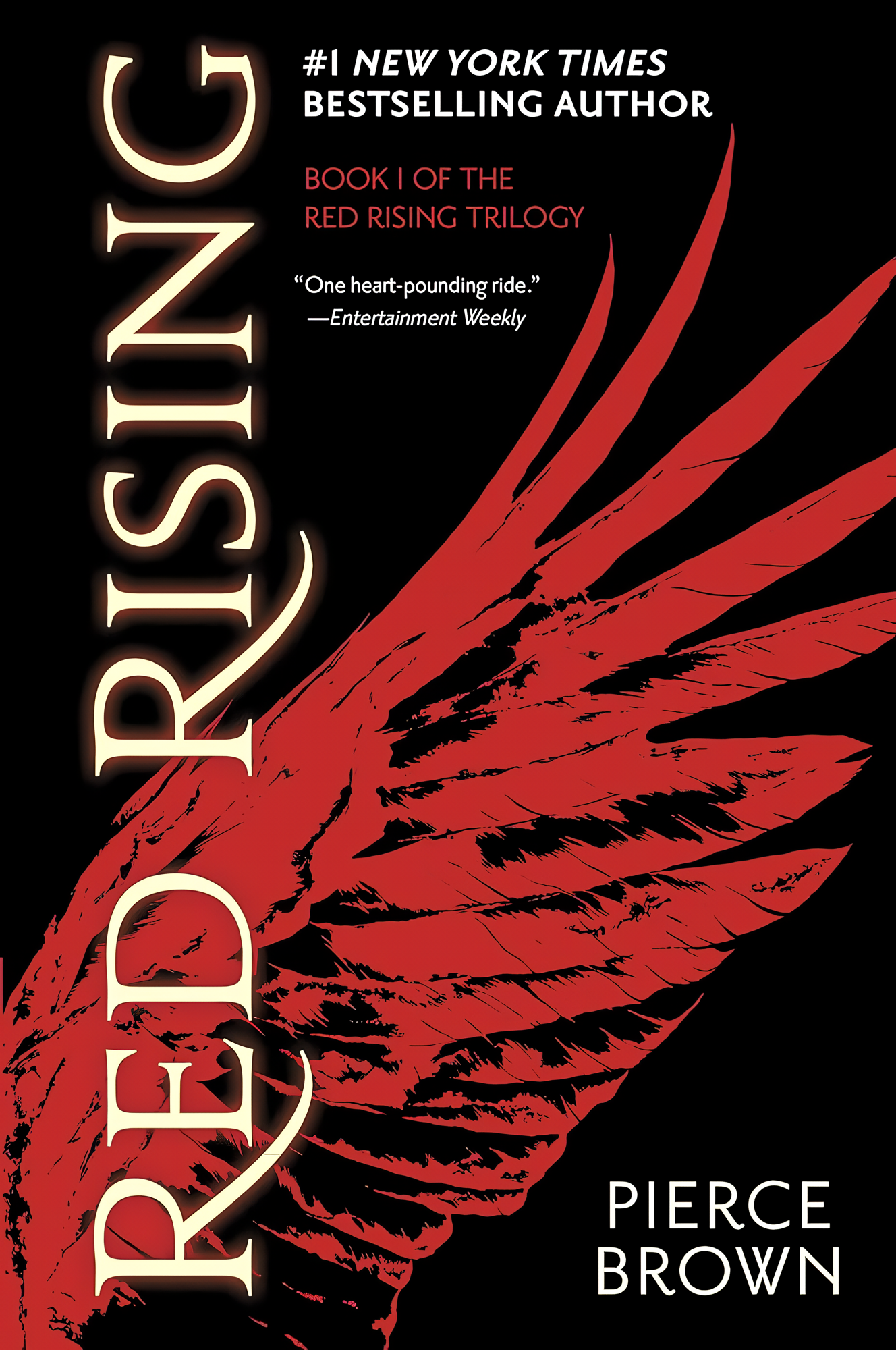
Red Rising
Pierce Brown · 2014 · Red Rising, Book 1
Best for Readers who want rapid pacing, rebellion, deadly
competition, and Roman mythology in space
Red Rising occupies the science-fiction edge of science fantasy. Its powers come from genetic modification rather than magic, its social order is engineered rather than divinely ordained, and Mars is a physical planet rather than a secondary world. Yet the novel thinks in the grammar of epic fantasy: blood-colored castes, ancient houses, ritual duels, legendary weapons, heroic names, betrayal, and a lowborn infiltrator entering the school of a warrior aristocracy.
Darrow begins as a miner who believes his labor is preparing Mars for future generations. After learning that the planet has long been habitable and that the ruling Golds have built their civilization on a lie, he is physically remade to enter their elite Institute. The transformation gives the familiar academy structure real political force. Darrow must master the values of the class he intends to destroy, and competence repeatedly threatens to become identification.
Pierce Brown writes for momentum. Alliances change, armies form, castles fall, and personal loyalties acquire strategic consequences. The novel is especially good at showing leadership as a practical problem rather than an inherited virtue. Darrow cannot win only by being stronger. He must understand what frightened, ambitious, cruel, and hopeful people will follow.
The first book is also narrower and more derivative than the saga it begins. Its Institute resembles a more violent dystopian tournament, female characters initially receive less development than the men around Darrow, and the prose sometimes pushes emotion harder than the scene requires. Later volumes expand into genuine space opera and deepen nearly every limitation. Ranked as a single novel, Red Rising sits seventh. Ranked as an entry point to one of modern speculative fiction's most compulsive sagas, it would rise much higher.
We reviewed this: read our full review of Red Rising →
6
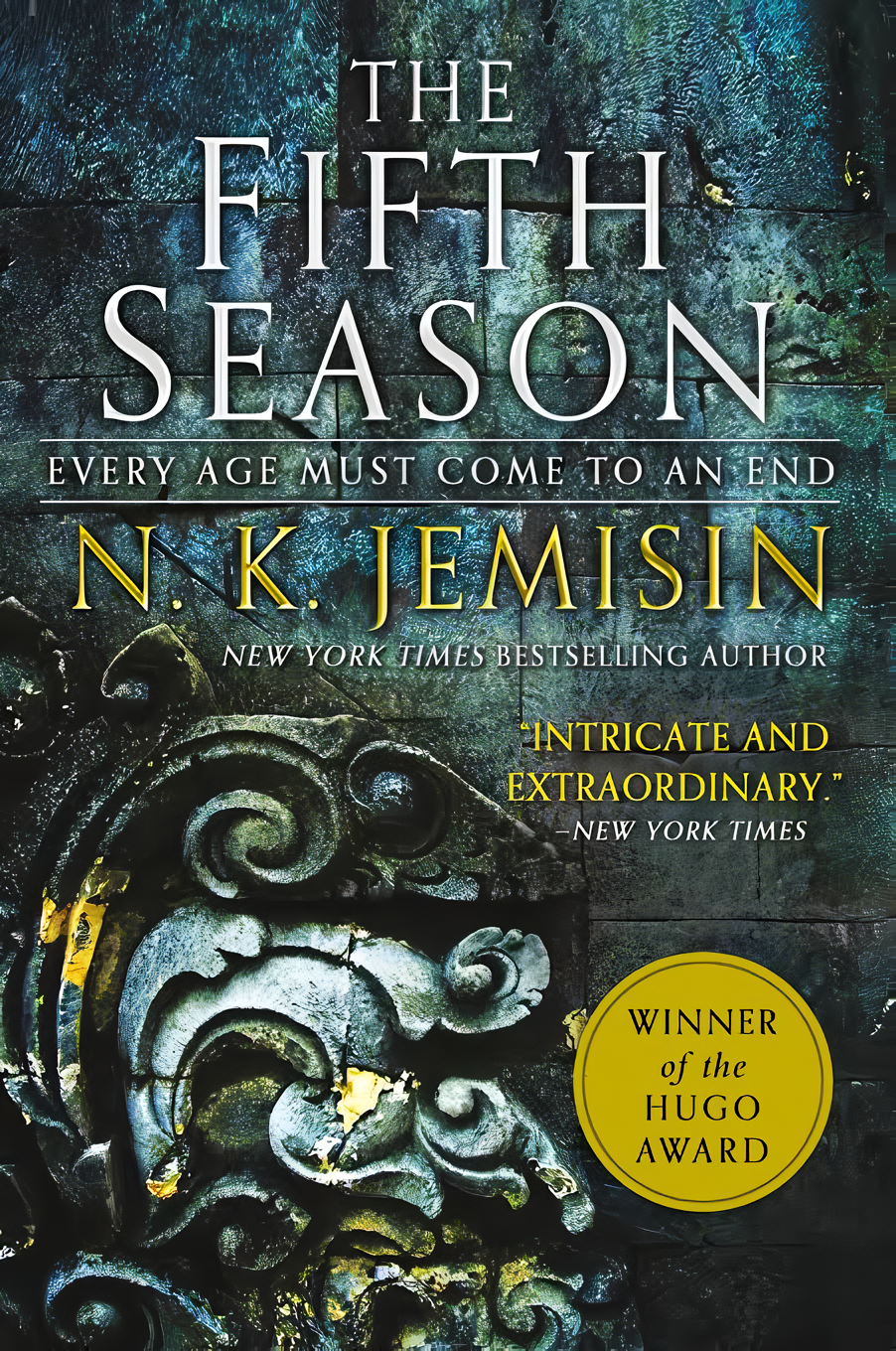
The Fifth Season
N. K. Jemisin · 2015 · The Broken Earth, Book 1
Best for Readers who want apocalyptic geology, structural
invention, anger, and emotionally demanding worldbuilding
The Stillness is a supercontinent trained to expect catastrophe. Earthquakes and volcanic winters repeatedly destroy civilizations, so survival has hardened into social doctrine. Orogenes can control seismic energy, making them essential during disaster and feared at every other moment. The empire captures, trains, breeds, and disciplines them through an institution that calls exploitation protection.
At first, The Fifth Season looks like secondary-world fantasy with earth magic. Its vocabulary, histories, and social systems encourage that reading. Gradually, geology, planetary history, engineered beings, lost technology, and the moon's absence complicate the category. Jemisin does not switch from fantasy to science fiction as though exposing a trick. She reveals that the distinction was inadequate to begin with.
The novel's structure is as important as its setting. Three narratives move through different periods and use different points of view, including a second-person voice that initially feels confrontational. Their eventual relationship turns form into character psychology. The technique is not a decorative puzzle; it expresses the divisions required to survive trauma.
This is the least escapist book on the list. Its violence against children, systemic oppression, ecological terror, and grief make the reading experience heavy. Some secondary characters function more clearly as parts of the thematic architecture than as fully independent lives. Yet Jemisin's control is extraordinary. The Fifth Season transforms planetary catastrophe into an examination of who is permitted to be human, and it makes the end of the world feel both geological and intimate.
We reviewed this: read our full review of The Fifth Season →
5
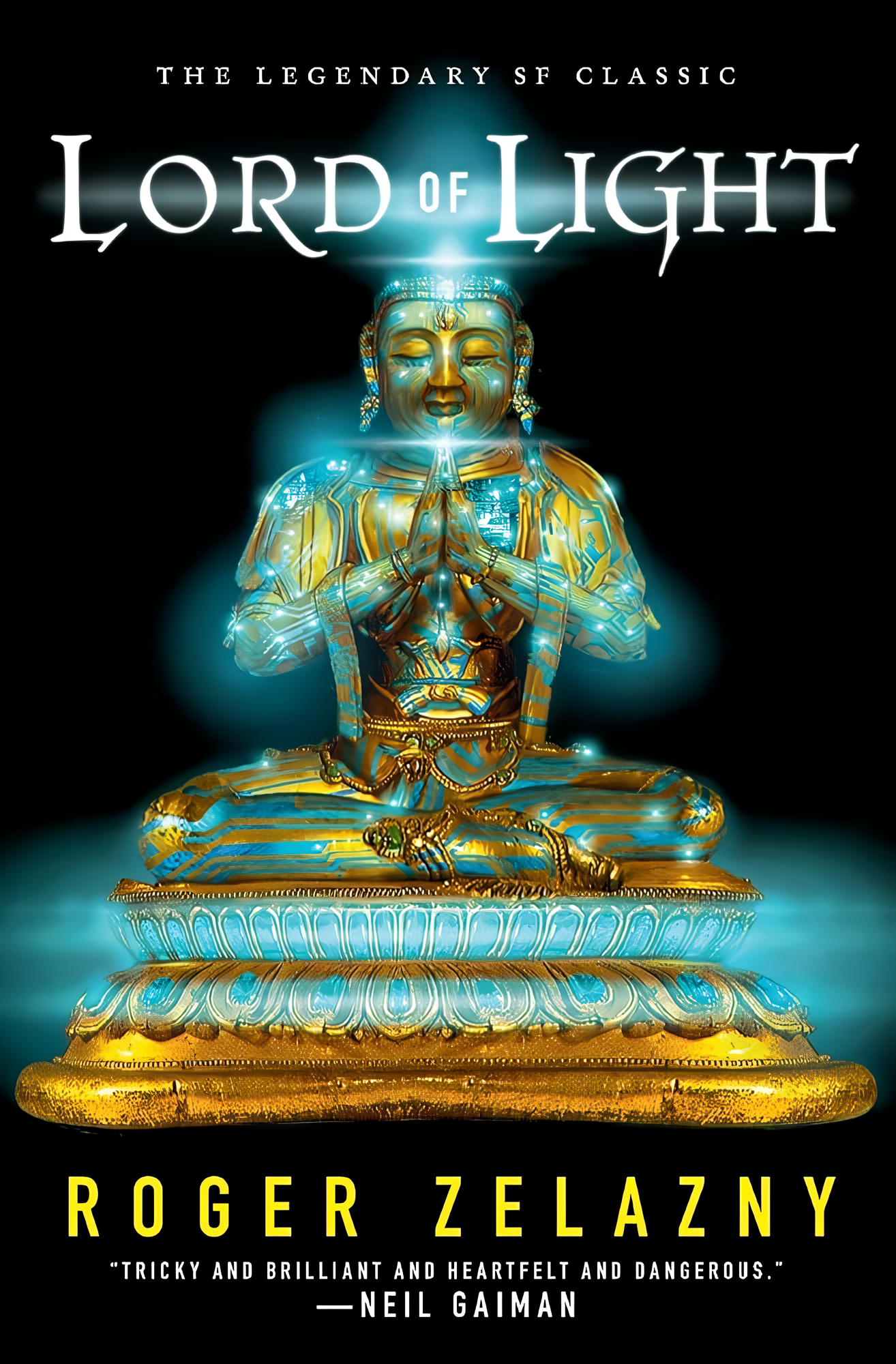
Lord of Light
Roger Zelazny · 1967 · Standalone
Best for Readers who want philosophical conflict, technological
gods, compressed storytelling, and myth used as political power
Human colonists on a distant planet have used technology, body transfer, and engineered abilities to become the Hindu pantheon. They control reincarnation, preserve privilege through religious authority, and prevent ordinary people from accessing the science that sustains their divinity. One dissident, who adopts the role of the Buddha, fights the gods by turning myth against them.
That premise is almost a definition of science fantasy. Weapons appear supernatural because knowledge is controlled. Reincarnation is technological and religious at once. Divine identities are performances, but performances repeated across generations can become politically real. Zelazny refuses to flatten the story into the revelation that gods are merely frauds. Their powers work, their myths organize society, and their adopted roles alter the people wearing them.
Lord of Light is remarkably compressed. It contains revolutions, theological disputes, battles, betrayals, demons, technological history, and jokes without expanding into a multi-volume epic. Its non-linear opening deliberately hides context, requiring the reader to reconstruct the sequence and nature of the world. That difficulty rewards attention, though it also keeps some characters at the distance of legendary figures.
Modern readers should also approach its use of Hindu and Buddhist traditions critically. Zelazny draws on them with imagination and admiration, but he also transforms living religions into material for a largely Western speculative argument. The book remains formally daring and conceptually elegant. Few novels have understood so clearly that technology becomes magical when access is restricted---and that controlling the story told about power may matter as much as controlling the machine.
We reviewed this: read our full review of Lord of Light →
4
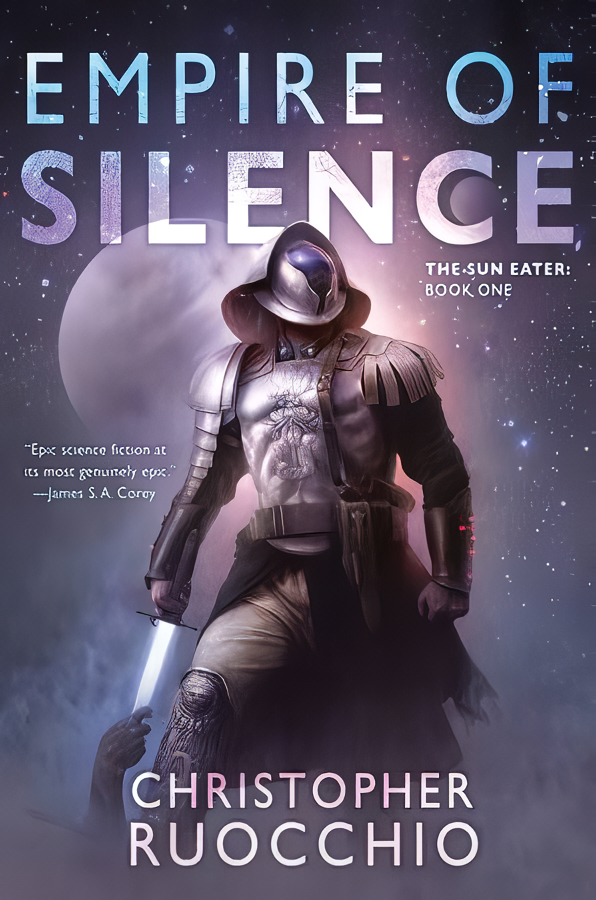
Empire of Silence
Christopher Ruocchio · 2018 · The Sun Eater, Book 1
Best for Readers who want grand space opera, a reflective
first-person narrator, sword-bearing nobility, and the beginning of a very long tragedy
Hadrian Marlowe tells his own story from the far side of history. The reader knows immediately that he will become the Sun Eater, destroy a sun, and be remembered as both hero and monster. Empire of Silence is therefore not driven by uncertainty about the destination. Its power comes from the distance between the young aristocrat Hadrian believes himself to be and the exhausted figure narrating what he became.
The Sollan Empire rules across an immense future while modeling itself on ancient and feudal authority. Noble houses preserve genetically engineered bloodlines. Swords remain culturally important beside starships. Artificial intelligence is treated as a civilizational sin, religion legitimizes hierarchy, and long interstellar journeys make history feel mythic even to the people living inside it. The later series moves further into cosmic and metaphysical territory, but the first novel establishes the conditions that make that expansion believable.
Ruocchio's prose gives the book unusual gravity. Hadrian revises, judges, and sometimes contradicts his younger self. The retrospective voice makes memory an argument rather than a transparent record. His exile, poverty, arena fighting, and encounter with the alien Cielcin become stages in the destruction of inherited certainty.
The obvious weakness is familiarity. Dune, The Book of the New Sun, and The Name of the Wind are visible in the foundations, and the first half can feel slow for a novel promising galactic catastrophe. Hadrian's self-importance is intentional but still tiring. Empire of Silence ranks fourth because it is more beginning than culmination. As the entrance to the completed Sun Eater sequence, however, it offers one of the most ambitious journeys in modern space opera: a personal confession stretched across theology, empire, alien war, and the end of a star.
We reviewed this: read our full review of Empire of Silence →
3
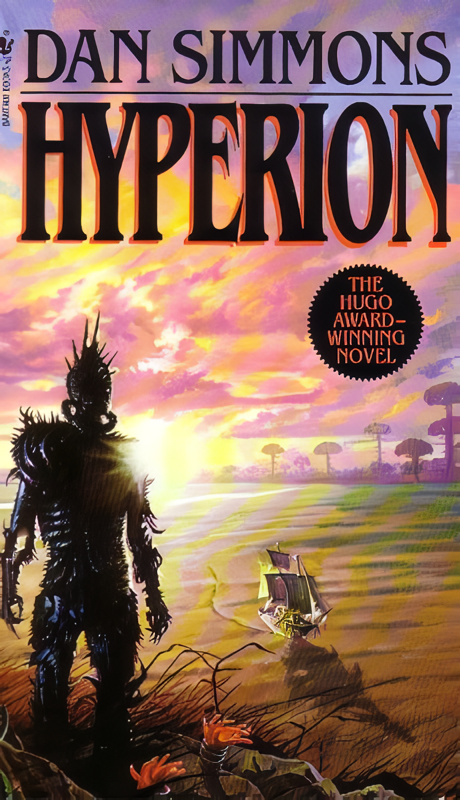
Hyperion
Dan Simmons · 1989 · The Hyperion Cantos, Book 1
Best for Readers who want literary structure, cosmic mystery,
horror, pilgrimage, and radically different stories inside one novel
Seven pilgrims travel toward the Time Tombs on Hyperion while war approaches. Each has a private connection to the Shrike, a metallic being worshipped as a god, feared as a monster, and entangled with structures moving backward through time. During the journey, the pilgrims tell the stories that brought them there.
The Canterbury Tales structure allows Hyperion to change genre repeatedly. One account is military science fiction, another body horror, another a detective story, another a study of faith and parental grief. Farcasters, artificial intelligences, interstellar politics, time dilation, resurrection, prophecy, and pilgrimage share a frame without collapsing into a single explanatory system.
The finest sections make cosmic scale emotionally precise. Technological wonders matter because of what they do to a marriage, a child, a belief, or a body. The Priest's Tale and the Scholar's Tale are especially difficult to forget. The Shrike works because explanation never fully contains it. It is machine, judgment, weapon, icon, and narrative terror at once.
The novel's structure also creates its limitation: it is an assembly of beginnings that ends before the pilgrimage resolves. Some voices are much stronger than others, and the treatment of sex and gender occasionally feels dated. The Fall of Hyperion is necessary for narrative completion. Even so, Hyperion earns third place because its incompleteness feels like a door opening onto impossible depth. Few space operas contain this many modes of storytelling without losing their central atmosphere of approaching revelation.
We reviewed this: read our full review of Hyperion →
2
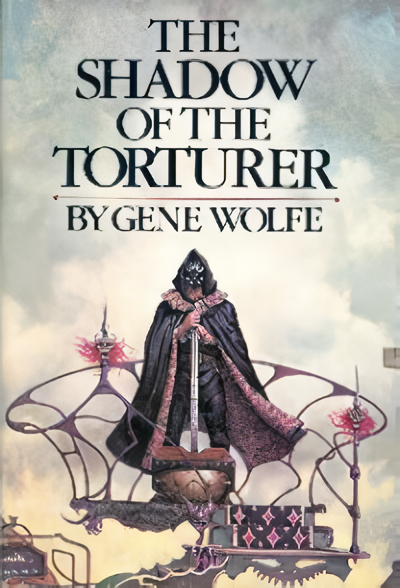
The Shadow of the Torturer
Gene Wolfe · 1980 · The Book of the New Sun, Volume 1
Best for Readers who enjoy unreliable narrators, dying-earth
settings, hidden technology, symbolism, and books that improve on rereading
Severian is an apprentice in the guild of torturers who claims to possess perfect memory. He is also the person controlling the account, selecting details, defending choices, and using precision to conceal as often as reveal. After showing mercy to a prisoner, he is exiled from the guild and begins a journey through a world he understands less completely than he believes.
Wolfe presents the distant future as fantasy because time has buried the categories required to recognize it. Towers may be ancient spacecraft. Monsters may be engineered organisms. Religious objects, alien artifacts, decaying machines, and genuine wonders occupy the same cultural space. Severian calls things by the names available to him, leaving the reader to infer what history has transformed.
The book's difficulty is purposeful. Wolfe rarely pauses to identify a clue, settle an ambiguity, or confirm that a contradiction matters. The surface plot can seem episodic, and Severian's treatment of women is often disturbing even when the narrative understands more than he does. Readers looking for immediate clarity may experience the novel as evasive.
For readers willing to participate, that evasiveness becomes the achievement. Every object seems to possess a past beyond the page. Every confident statement can be examined for motive. The science-fantasy blend is not merely part of the setting; it is the reader's interpretive problem. The Shadow of the Torturer ranks second because it turns genre recognition into archaeology. The world feels magical not because science has vanished, but because history has become too deep for any one person to read correctly.
We reviewed this: read our full review of The Shadow of the Torturer →
1
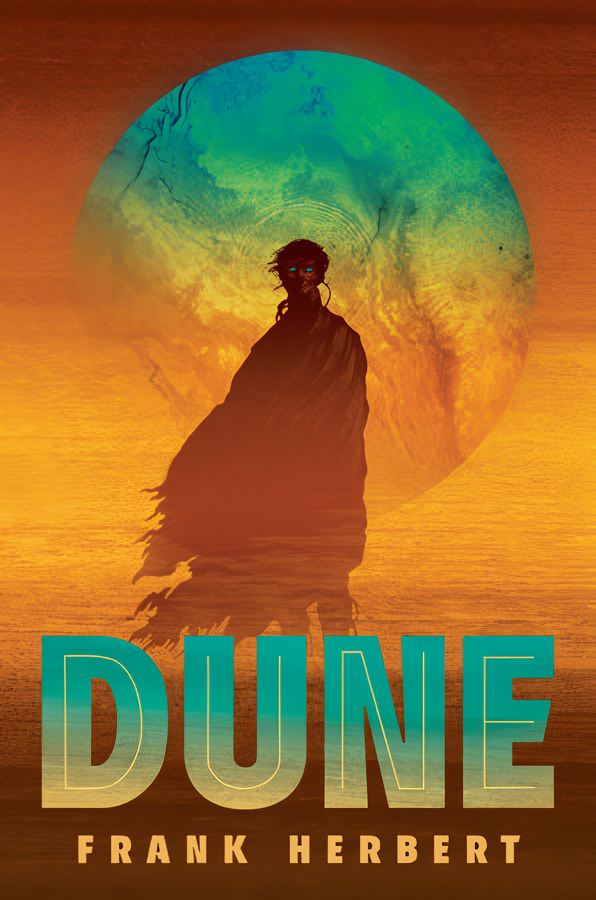
Dune
Frank Herbert · 1965 · Dune, Book 1
Best for Readers who want political tragedy, planetary ecology,
prophetic power, dynastic conflict, and the foundational modern science-fantasy epic
Dune remains the central science-fantasy novel because almost every element exists in two registers at once. The Bene Gesserit create legends through political design, yet their breeding program produces abilities that exceed ordinary explanation. Spice is an ecological resource, an economic foundation, a religious sacrament, and a means of seeing possible futures. The sandworms are animals, gods, engines of empire, and the hidden center of a planetary system.
Paul Atreides enters Arrakis as the heir to a feudal house operating within an interstellar civilization. His family possesses advanced technology, but ritual combat, hereditary rule, vendetta, prophecy, and marriage politics govern their lives. When House Atreides falls, Paul joins the Fremen and becomes entangled with myths deliberately planted before his birth. The novel's crucial insight is that a manufactured prophecy can still become real in its effects.
Herbert's worldbuilding is not a warehouse of facts. Ecology, economics, religion, and politics exert pressure on one another. Whoever controls spice controls interstellar travel. Whoever understands the worms understands spice. Whoever commands belief can turn an oppressed population into a force capable of remaking the empire. Every system contains the mechanism of its own instability.
The book has genuine limitations. Its opening is dense with terminology, its perspective shifts can be abrupt, and some emotional relationships receive less space than political calculation. The Fremen draw heavily from Middle Eastern and North African cultures while the narrative centers an aristocratic outsider, a choice that deserves scrutiny. Readers can also mistake Paul's ascent for uncomplicated wish fulfillment if they ignore the warnings embedded throughout the novel and its sequels.
Those problems do not diminish the scale of the achievement. Dune is an adventure, an ecological argument, a critique of charismatic leadership, a dynastic tragedy, and a study of how institutions manufacture the sacred. It ranks first because its science and fantasy elements cannot be separated without breaking the novel's central systems. The technology needs myth, the myth needs ecology, and the hero's apparent triumph needs the catastrophe he can already see coming.
We reviewed this: read our full review of Dune →