Adventure
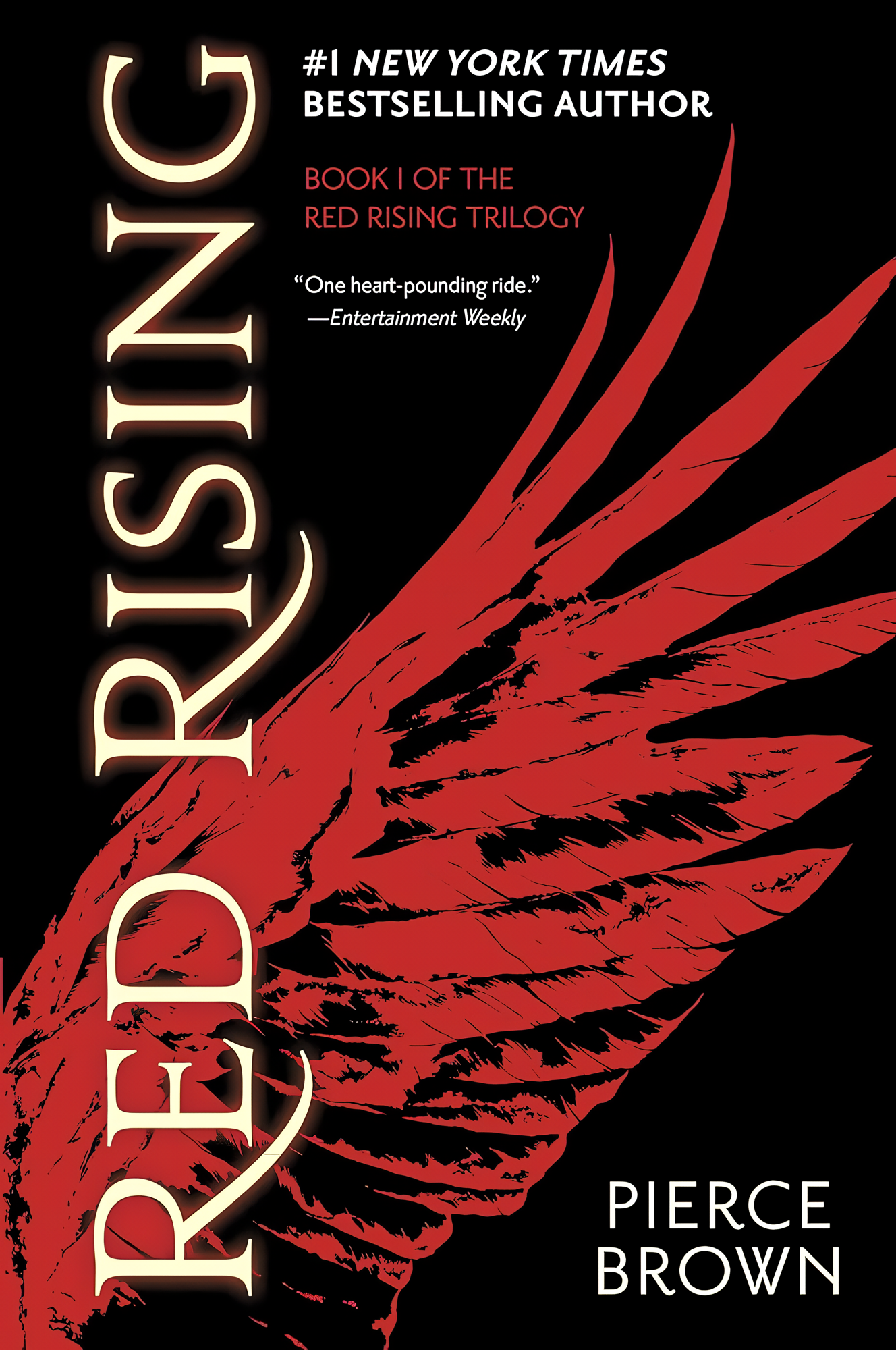
Pierce Brown begins Red Rising underground, where sixteen-year-old Darrow believes his hands are helping to terraform a dead Mars for generations he will never meet. The lie is almost perfect. It gives brutal labor a heroic purpose, turns neighboring mining clans into rivals, and makes survival feel like service. When Darrow reaches the surface and sees a living world built by people whose comfort depends on his ignorance, the novel acquires its governing idea: oppression lasts most efficiently when it controls the story people tell about their suffering.
The opening in Lykos is, for me, the book at its rawest and best. Brown writes hunger, family obligation, dangerous work, and adolescent marriage with enormous velocity. Eo's execution is designed to create a revolutionary symbol, but it also exposes a tension the series will have to keep confronting. Darrow loves the person; the Sons of Ares need the martyr. Her song gives her agency, yet the narrative converts her almost immediately into the emotional fuel for a man's transformation.
That transformation is literal. Mickey's Carving rebuilds Darrow from Red into Gold through bone replacement, muscle grafting, genetic alteration, and prolonged agony. It is the most grotesque version imaginable of passing into a ruling class. Darrow cannot simply imitate privilege; his body must be destroyed and reconstructed to meet the fiction that Gold superiority is natural. Brown's worldbuilding is broad rather than subtle, but the physical logic of the Carving makes its politics memorable.
Once Darrow enters the Institute, Red Rising changes shape. The mining dystopia becomes a lethal school competition in which privileged teenagers are sorted into Roman houses and encouraged to conquer one another. The shift invites comparisons to other young-adult survival stories, and the book does not always escape them. Yet the Institute is not merely an arena. It is a laboratory for manufacturing rulers, teaching Gold children that domination is merit and that the people carrying their standards are property.
Darrow's central contradiction keeps the contest alive. He must become excellent at the very behavior he intends to overthrow. Leadership gives him a language for solidarity, but victory repeatedly rewards deception, coercion, and spectacular violence. His most important successes come when he changes the rules—freeing slaves, recruiting defeated enemies, and punishing abuse even within his own army. His most troubling successes come when people follow the image of the Reaper rather than the frightened young man beneath it.
The supporting characters prevent the Institute from becoming a board covered with house colors. Cassius is vain, affectionate, and genuinely wounded; his friendship with Darrow matters because Darrow knows it rests on a concealed murder. Mustang combines strategic intelligence with moral limits that Darrow badly needs. Sevro turns apparent comic grotesquerie into fierce loyalty and tactical brilliance. Roque supplies an elegance the prose sometimes lacks, while Pax provides warmth inside a culture that mistakes gentleness for weakness.
Brown writes in a compressed first-person present tense that makes hesitation feel dangerous. The style is full of short declarations, violent reversals, and phrases built to sound like vows. It is extremely readable and occasionally exhausting. Secondary cultures arrive as bold traits, antagonists can become monstrous before they become complex, and the Institute's geography sometimes feels less solid than the momentum carrying Darrow across it.
The book's Roman vocabulary gives the Society grandeur while showing how thoroughly it has aestheticized hierarchy. Golds call themselves gods, divide children into martial houses, and turn conquest into education. The symbolism is not quiet, but quietness would work against the novel's operatic energy. Red Rising wants the reader to feel the seduction of heroic violence before asking who benefits from the hero being made.
The ending is therefore a victory with poison in it. Darrow defeats the rigged game by attacking the people administering it, yet his reward is a place beside Nero au Augustus, the man who ordered Eo's death. Infiltration demands intimacy with the enemy, and success makes that intimacy harder to distinguish from corruption. Darrow rises, but he rises deeper into Gold power.
As an opening volume, Red Rising is more interested in ignition than resolution. Its politics will need greater scale and complication, and its treatment of women sometimes leaves them carrying symbolic weight that the men are permitted to act through. Even so, the novel has the confidence of a story that knows exactly when to cut the cable. It turns grief into momentum, then makes momentum morally unstable.