The Book in Brief
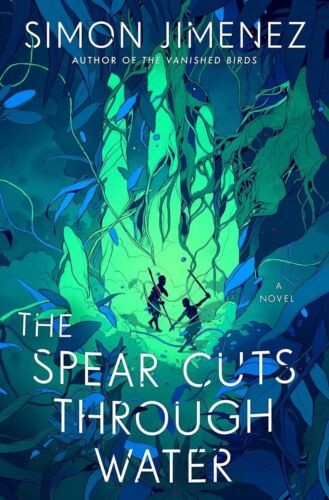
Inside the Inverted Theater, a descendant hears the story of Jun and Keema escorting the dying Moon goddess across the Old Country. Jun helped her escape the Moon Throne; Keema carries Commander Uhi Araya’s spear. Pursued by the Three Terrors, they survive until the goddess kills the first two and asks them to eat her body, gaining power. At the Divine City they confront the shapeshifting Third Terror while Water comes for the goddess’s bones. Water spares the city, Jun and Keema survive and become lovers, and the spear passes through Shan’s descendants to the listener.
Important Characters
Keema: a one-armed fighter entrusted with Uhi Araya’s spear.
Jun: son of the First Terror, complicit in imperial violence and capable of choosing another life.
The Moon goddess: imprisoned empress whose escape begins the fall of the Moon Throne.
Uhi Araya: commander whose sacrifice and family spear connect the tale to its future listener.
The Three Terrors: the emperor’s sons and instruments of dynastic brutality.
Shan: Araya’s daughter and ancestor in the spear’s line.
The grandchild / listener: second-person figure whose family memory completes the story.
Prelude: The Inverted Theater
A grandchild shaped by diaspora enters the dreamlike Inverted Theater carrying a family spear and hears a story assembled from Lola’s memories, performers and ancestral voices.
Day One: Escape from the Moon Throne
Jun, favored son of the First Terror, helps the imprisoned Moon goddess kill Emperor Magaam Ossa and flee the palace, breaking the order his family enforces.
Day Two: Tiger Gate
At Tiger Gate, Commander Uhi Araya entrusts one-armed Keema with her ancestral spear. Jun, Keema, the dying goddess and the Defect escape as the Red Peacocks destroy the garrison.
Day Three: The Road and the Tortoise
The fugitives cross the Old Country while the psychic tortoise network carries pursuit around them. Distrust between Jun and Keema becomes reluctant intimacy through shared protection of the goddess.
Day Four: The Three Terrors
Second Terror Luubu, empowered by devouring the tortoise god, captures the party. The goddess escapes, kills the First and Second Terrors, and asks Jun and Keema to consume her body so they can oppose the last Terror.
Intermission: The Moon’s Body
In the theater and dream, the moonlit body explains that Water will destroy the Old Country to recover the Moon goddess’s bones. The watching descendant gives the ancestral spear back into the story.
Day Five: The Divine City
Jun and Keema reach the Divine City and meet Shan. The emperor’s bird reveals itself as the Third Terror, who loves Keema. A duel and dance hold the Terror outside the city until Water arrives and retrieves the goddess.
Coda: The Story Returned
Shan finds Jun and Keema alive. Jun tries to leave from shame over his crimes, but Keema follows; they choose a life together. The spear passes through Shan’s descendants until the listener carries it into the theater.
Ending Explained
The ending closes a temporal loop rather than simply revealing survival. The spear the listener brings to the Inverted Theater is handed backward into the performed story, taken up by Keema and delivered to Shan, whose descendants pass it forward. Jun and Keema’s apparent drowning becomes transformation: Shan finds them alive, Jun tries to exile himself because of his crimes, and Keema chooses him without pretending those crimes did not occur. The story can be called a love story because love appears as continued choice inside inherited violence—not because violence is erased.
Themes and Analysis
Storytelling as inheritance. The whole novel is a tale performed for a grieving descendant, insisting that stories are how a scattered people keep their dead within reach.
Diaspora and ancestral memory. Jimenez writes conquest as displacement, and the Inverted Theater becomes the place where a lost country is remembered into being.
Love joined to accountability. Jun and Keema's romance is inseparable from what Jun has done, and the book refuses to let tenderness excuse the violence behind it.
Bodies as archives of violence. Wounds, scars and the dying goddess's flesh all carry history in this novel, where power is quite literally consumed and inherited.
Theater, myth and nonlinear truth. By staging its epic as performance, the book treats myth as something enacted and revised rather than fixed, truth arriving out of sequence.
Content Notes
This book contains graphic violence, cannibalism, torture, war crimes, family abuse, animal death and sexual content.