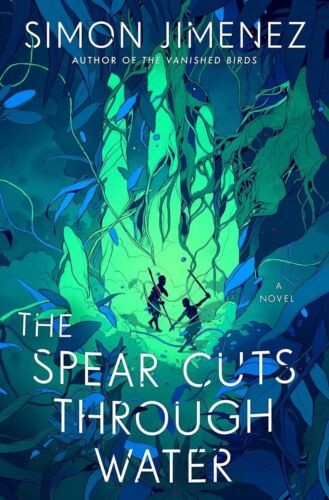
The Spear Cuts Through Water is the most formally daring book on this list and one of the most rewarding. Simon Jimenez frames an epic quest inside the Inverted Theater, a dream-space where a grieving descendant watches — and is sometimes addressed as — the story of two young men escorting a dying goddess across a conquered land.
The narration slips between second person, chorus and memory, and the book's argument is that stories are how a diaspora carries its dead.
That framing could be a gimmick; instead it is the point. The narration slips between second person, chorus and memory, and the book's argument is that stories are how a diaspora carries its dead. Jun, a guard of the tyrannical Moon Throne, and Keema, a one-armed outcast, are given a romance that is patient, physical and genuinely moving.
The prose is lush and demands attention, and readers who prefer a linear line will have to meet it halfway. When it works — and it usually does — the sensory writing and the mythic structure produce passages of real beauty, with violence and tenderness held in the same hand.
The ending closes a time loop rather than merely revealing survival: the spear the listener carries into the theater is handed backward into the tale and forward through generations. It is an ambitious standalone that treats form as feeling, and it lingers longer than most conventional epics.