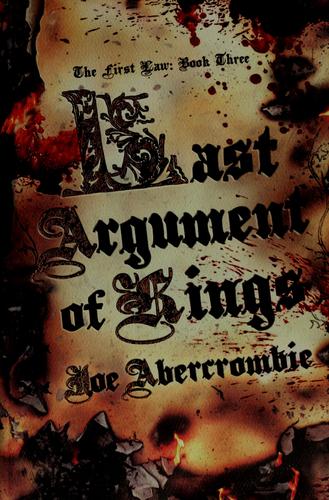
Joe Abercrombie ends his original First Law trilogy by giving almost everyone what they thought they wanted. Jezal receives a crown. Logen returns to the North and defeats Bethod. Glokta rises to the highest office in the Inquisition. Ferro gains the power to pursue revenge. The joke, if a joke this bleak can still be called one, is that each apparent victory completes a trap. Last Argument of Kings is not a novel about quests failing. It is about quests succeeding in ways that expose who designed them.
It is his ability to make ownership look like mentorship.
The book’s strongest thread is power. Kings, generals, bankers, priests and magi speak different political languages, but the underlying transaction is the same: someone pays so that someone else can choose. Bayaz’s great talent is not magic. It is his ability to make ownership look like mentorship. Jezal’s public image, the Open Council election and even the Union’s debts have been arranged until the result appears natural. By the time Jezal understands the throne, he cannot leave it.
Glokta is the novel’s best observer because he assumes every institution is corrupt and is still surprised by its scale. His contest with Sult begins as professional survival and becomes an inquiry into who actually rules the Union. Abercrombie makes the answer both fantastical and mundane. Bayaz can destroy armies, but Valint & Balk, contracts and compound interest are the machinery that will keep working when he is absent.
Logen’s northern campaign is the most painful character arc. He insists that he wants to be a better man, yet he repeatedly chooses the road that rewards the Bloody-Nine. His reunion with Dogman, Tul, Grim and Dow is moving because it restores a fellowship the trilogy has taught readers to value. It is also dreadful because returning to them means returning to the identity Logen claims to hate. Bethod’s final accusation—that Logen’s appetite for violence helped create the war—does not excuse Bethod, but it prevents Logen from treating himself as a passive victim of his reputation.
The battle in the High Places is a superb extended sequence. Its seven-day structure captures exhaustion better than a single heroic clash could. Walls fail by inches, wounds accumulate and command becomes an exercise in deciding which friends can be spent. The duel with Fenris the Feared, which comes later and elsewhere, is thrilling but deliberately stripped of chivalric purity: Logen fights in the Circle at Carleon while Dogman, Dow and Grim hunt the witch Caurib through the city, and the Bloody-Nine wins through animal brutality once her protection fails. Victory belongs to teamwork, treachery, sorcery and luck before it belongs to courage.
Jezal’s development is crueler and subtler. The vain officer from The Blade Itself has genuinely improved. He wants to ease suffering, repair Adua and behave decently toward Terez. Those impulses matter even though they cannot overcome the system around him. His arc rejects the comforting idea that becoming a better person automatically grants the power to make things better. Character growth is real; political freedom is not.
Ferro is essential to the climax but remains the least fully developed principal viewpoint. She spends long stretches away from the narrative, then returns as the one person able to handle the Seed. Her fury, suspicion and loneliness are consistent, and her final supernatural transformation is haunting. Even so, the book uses her more often as the key to Bayaz’s weapon than as the center of her own story. The imbalance is especially noticeable beside the rich attention given to Glokta and Logen.
The siege of Adua turns the trilogy’s distant Gurkish threat into street-level catastrophe. Abercrombie refuses to make the Union morally clean merely because it is defending itself. The Hundred Words are monstrous, but Bayaz’s answer kills civilians, poisons survivors and leaves the city’s poorest districts shattered. The title’s argument is literal force, and the novel’s bitter insight is that the side with the larger weapon controls the history of its use.
The ending is famous for its circularity. Several characters finish in positions that echo where they began: Logen falls, Glokta sits in a chair and asks why he does what he does, and Jezal is again humiliated by a stronger authority. This is not simple nihilism. Dogman chooses responsibility, Ardee negotiates a survivable future, and Jezal retains a desire to help people. Change is possible, but it is local, costly and rarely protected by institutions.
The book can feel overextended in the middle. The High Places battle, royal marriage and northern settlement each receive lengthy treatment before the Gurkish invasion becomes the dominant plot. Ferro’s intermittent chapters and a few investigation beats seem positioned for later revelations rather than satisfying in themselves. The closing third, however, repays the accumulation with a chain of reversals that redefines the whole trilogy.
Last Argument of Kings is a controlled anti-epic. Its coronations, duels, siege and magical climax all ask the same question: who controls the story afterward? The punishing answer makes an unforgettable finale for readers who value character, black humor and political consequence.