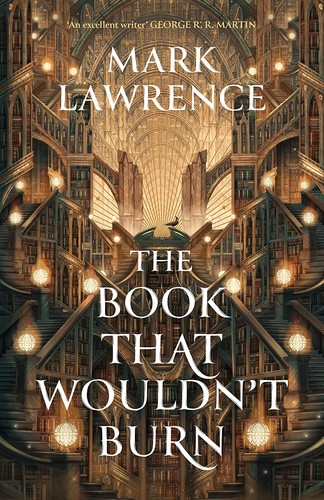
The Book That Wouldn’t Burn is a library fantasy with no coziness in it: Mark Lawrence’s vast underground archive imprisons its keepers, outlives its founders and quietly keeps a two-species war running. Livira, a desert child orphaned by a “sabber” attack, talks her way into the librarians’ training in the city of Crath. Evar has spent his whole life sealed inside a library chamber with four strange siblings. A door that should not exist lets them meet.
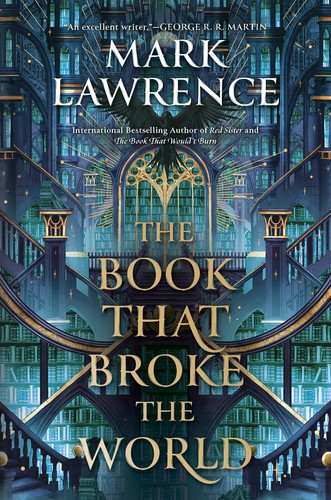
The library itself is the book’s great creation — physically endless, bureaucratically absurd, metaphysically unstable. The Exchange moves people between centuries, books cross timelines, and ghostly assistants execute commands from creators nobody remembers.
Every institution in the novel uses its archive the same way: not to grow wiser, but to give old grievances a longer memory.
The central reversal — Evar and his siblings are canith, the very “monsters” who destroyed Livira’s home — lands because Lawrence never softens it into easy equivalence. Every institution in the novel uses its archive the same way: not to grow wiser, but to give old grievances a longer memory. Both species hold true records of their own victimhood, and partial archives make each new retaliation feel like justice. The romance survives the revelation by becoming what the book is about: learning to read someone the record has taught you to hate.
It demands patience. Chronology is withheld, scenes repeat from altered angles, and terms arrive before their explanations; the short chapters generate momentum while fragmenting the emotional peaks. The confusion is the point — the reader’s limited access mirrors the characters’ — but the middle will test anyone who wants their mysteries paid on schedule.
The ending refuses the expected reunion: Livira’s own book turns out to be the unburnable volume Evar has always carried, and saving her friends inside the burning library costs her embodied existence. What remains is a love story conducted across absence, and a trilogy with genuinely hard work left to do.