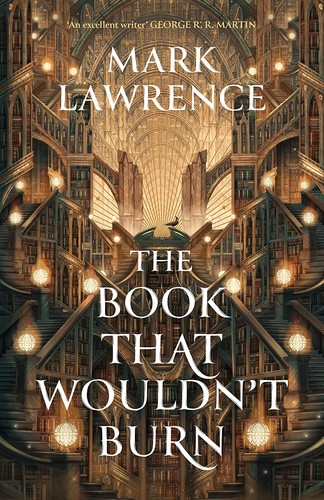
The book cannot burn because it is a loop: Livira writes the volume Evar has always carried, and its copies converge across the Exchange until no single version can be destroyed. She and Evar never lived at the same time — the library overlapped their eras through the door and the Exchange. Evar and his siblings are canith, the “sabbers” of Livira’s childhood horror, and Yute and Yamala are surviving instruments of the library’s founding quarrel between Irad and Jaspeth. Livira is not simply dead: when the Assistant is damaged she loses her body, not her presence, and Evar leaves with her marked book, unable yet to see that she remains beside him.
Themes and What the Ending Means
Knowledge Without Wisdom. The library contains vast information, yet its people continue inherited wars. Preservation alone cannot produce moral understanding.
History as a Weapon. Humans and canith each possess a record of victimhood. Partial archives make retaliation feel like justice.
Institutions and Forgotten Commands. The library’s servants and hierarchies continue purposes established by absent creators. Old intentions become dangerous when no one can question them.
Reading as Relationship. Livira and Evar know one another through stories, comparison, and eventually the book itself. Reading becomes a way of recognizing a person whom history labels an enemy.
Identity Beyond Assigned Function. Trainee, soldier, librarian, sabber, Assistant, and Mechanism-trained specialist are roles that promise purpose while narrowing choice. The characters’ growth depends on using skills without becoming reducible to them.
Cycles, Copies, and Causality. The book’s structure resists a single origin. Meaning is produced through repetition with difference, just as history can either repeat violence or revise it.