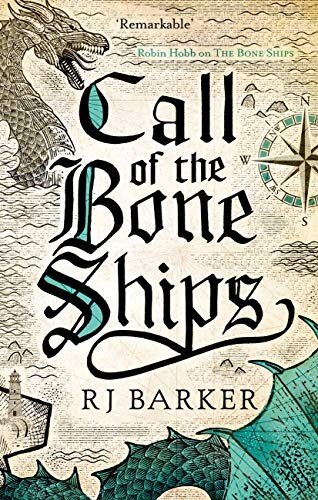
The Bone Ships opens with a drunk captain losing his command in a beach duel, and builds from that humiliation one of modern fantasy’s best studies of earned authority — aboard a ship built of dragon bones. Joron Twiner commands the condemned black ship Tide Child in name only until “Lucky” Meas Gilbryn takes his two-tailed hat, spares his life and appoints him deckkeeper. The hunt that follows — for the first living sea dragon seen in generations — is really the story of Joron learning what command costs.
R. J. Barker’s Hundred Isles are deliberately disorienting: warships built from arakeesian bone, birdlike gullaime driving the wind while being treated as equipment, a caste system built on fertility and “perfect” bodies, a child sacrificed for every ship’s corpselight. The unfamiliar vocabulary — shipwife, deckkeeper, deckchilder — creates real friction early, and it is worth it; this is never the Royal Navy with fantasy trim.
Naval combat here is a problem of wind, sail, formation, morale and damage, not a string of duels.
Meas is the commanding presence — tactically brilliant, politically disgraced, explaining nothing — and Joron’s outsider view keeps her human-sized. His relationship with Dinyl, companion and planted spy at once, gives the mission its cruelest edge. Naval combat here is a problem of wind, sail, formation, morale and damage, not a string of duels, and the set pieces improve exactly as the crew does.
The dragon changes the moral weather. Meas’s peace faction means to kill it in secret so neither nation can build new fleets — pragmatic, until the creature demonstrates intelligence and saves the ship. From that moment the poisoned bolts in the hold stop being strategy and become a test of what this crew is for.
The slow, glossary-dense opening will lose some readers, and Barker never hurries. But the ending — Joron choosing the dragon over Dinyl, Meas choosing purpose over orders — completes a real transformation while leaving the trilogy’s war wide open. It deserves the British Fantasy Award it won.