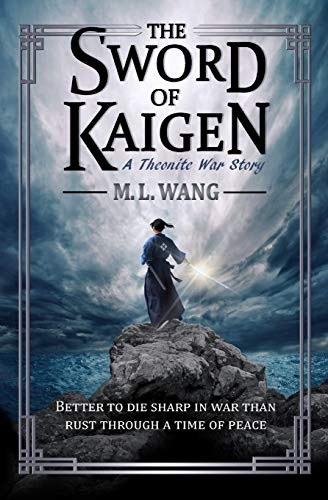
The Sword of Kaigen is billed as military fantasy and delivers one of the genre's most devastating battle sequences, but its real subject is a family. M. L. Wang uses the impending invasion of the Kaigenese village of Takayubi to pry open a marriage, a mother's buried past and a nation's official lies.
Then the invasion arrives, and the book earns its reputation.
Misaki is the reason the book endures. Once a formidable fighter abroad, she has spent years as a dutiful wife in a cold arranged marriage, and Wang lets her competence surface slowly and painfully. Her relationship with her son Mamoru — whom she secretly trains as he begins to doubt his country's propaganda — gives the first half its quiet tension.
Then the invasion arrives, and the book earns its reputation. The combat is brutal and precisely choreographed, and Wang is willing to make heroism cost everything; the losses are not softened. Readers should know the middle turns genuinely harrowing.
What makes it more than a war story is the aftermath. The government suppresses the truth of the battle, and the novel's final movement is a duel and a first honest conversation between Misaki and Takeru — grief forcing open a marriage that duty had sealed. It is a standalone that treats survival, not victory, as the hard part.