Avatar Aang: The Last Airbender arrives on Paramount+ on July 25, 2026, returning to Aang after the Hundred Year War rather than simply retelling the animated series. That timing creates an unusually good opening for adult readers who want the same combination of elemental power, occupied cultures and difficult peacekeeping but have already exhausted the obvious franchise tie-ins. The movie is the traffic anchor; the reading need is much more specific.
This list therefore avoids generic “chosen one” fantasy. Every ranked book has at least two of the elements that make Aang’s world distinctive: magic tied to land or natural forces, an empire whose damage survives the battlefield, young people burdened with public roles, cultures trying to recover what conquest suppressed, or peace that demands more than defeating one villain. Several are much darker than Avatar, because adult fantasy often follows liberation into compromise, revenge and reconstruction.
The ranking rewards thematic closeness before fame. The highest books combine spectacular elemental combat with the moral weight of inherited conflict. Lower entries may emphasize occupation, diplomacy or mythic storytelling more than literal bending. All ten are adult novels, all come from different authors, and none requires knowledge of an existing media franchise. If what you miss is Aang’s conviction that restoring balance is harder than winning a war, these are the strongest places to begin.
Selection note. These books are ranked for adult readers seeking elemental magic, cultural survival and the unstable work of making peace after conquest. They are not ranked by sales, adaptation potential or superficial resemblance to animated adventure.
10
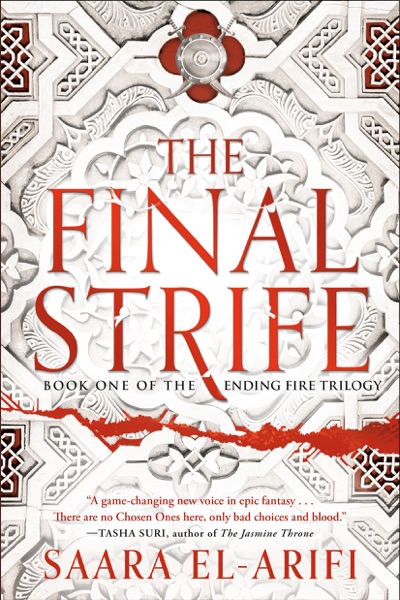
The Final Strife
Saara El-Arifi · 2022
Elemental or cultural core Blood-based magic supports a rigid caste system built by conquest
Closest Avatar connection Three young women challenge an empire that turned inherited identity into political destiny
Main difference A brutal revolutionary fantasy whose institutions are harsher and whose heroes are far less idealistic
Best for Readers who want a fast, angry epic with competition scenes, female rivals, revolutionary politics, queer relationships and a large conspiracy unfolding across a trilogy.
Sylah was raised to become a weapon for the Sandstorm, a rebel group planning to overturn an empire that assigns status by blood. Years after catastrophe destroys that purpose, she is surviving through addiction and underground fighting. Anoor, an apparently privileged Ember, has been demeaned inside the ruling class, while Hassa belongs to the Ghostings, a mutilated servant caste whose apparent invisibility conceals vital knowledge.
El-Arifi earns the tenth position by making the social structure inseparable from the magic. Like bending, blood is both an ability and a label society uses to decide who belongs where. Training, competition and rebellion give the novel forward motion, but the deeper match is its interest in stolen history. It ranks lower because the book ends as the opening movement of a trilogy and deliberately withholds much about the system. The violence, addiction and caste cruelty also place it far from Avatar’s family-accessible tone.
Know before you start. The novel includes addiction, self-harm, enslavement, mutilation, racism modeled through fantasy castes, torture and graphic violence. It ends with major questions open.
9
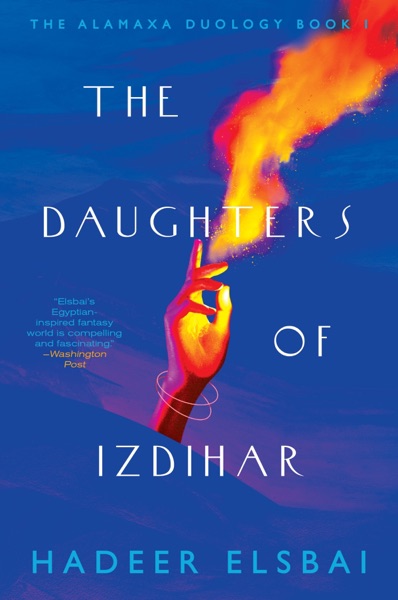
The Daughters of Izdihar
Hadeer Elsbai · 2023
Elemental or cultural core Water-, earth-, air- and fireweavers live under laws that restrict both women and magical education
Closest Avatar connection Elemental talent becomes inseparable from social status, political protest and the right to choose a life
Main difference An Egyptian-inspired feminist fantasy focused on suffrage, marriage and organizing rather than travel
Best for Readers who want elemental magic, sapphic longing, Egyptian-inspired society, women’s suffrage, class conflict and a completed two-book political fantasy.
Nehal is a wealthy waterweaver who wants formal training instead of the marriage arranged to protect her family’s finances. Giorgina is a bookseller’s employee, an earthweaver and a member of a women’s-rights organization. Their lives intersect through Nehal’s new household and the Daughters of Izdihar, whose campaign for legal equality places women from very different classes beside one another.
Elsbai offers the most direct four-element system outside the top two, but the novel’s real strength is institutional. Possessing power does not give a woman permission to study, work or control property. Protesters disagree about respectability and risk while police and family authority attempt to contain them. It ranks ninth because political meetings and domestic constraints matter more than adventure, and the duology’s larger national conflict develops gradually. Adult Avatar fans interested in how bending access might intersect with gender and class will find a sharp new angle.
Know before you start. The novel includes forced marriage, misogyny, sexual harassment, police violence, class prejudice and homophobia. The first volume ends with the struggle unresolved.
8
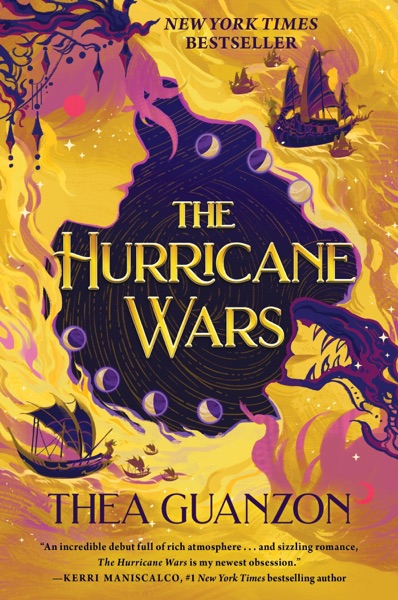
The Hurricane Wars
Thea Guanzon · 2023
Elemental or cultural core Light and shadow magic power rival nations at the end of a devastating war
Closest Avatar connection Enemies raised on opposite sides must consider whether cooperation can interrupt inherited conflict
Main difference A romance-forward arranged-marriage fantasy built around attraction between battlefield opponents
Best for Readers who want elemental battle scenes, Southeast Asian–inspired settings, enemies-to-lovers romance, political marriage and a continuing fantasy series.
Talasyn is a soldier whose light magic makes her valuable to the Sardovian resistance. Alaric is the Night Emperor’s son, armed with shadow magic and conditioned to carry the empire’s war forward. Their clashes reveal an unusual interaction between their powers. Political necessity eventually places them in a marriage neither trusts, while a larger magical threat makes continued division increasingly dangerous.
Guanzon provides the most immediate light-versus-dark spectacle on this list, including aerial combat, storms and powers that meet visibly in the body. The stronger Avatar connection arrives after the fighting: peace requires people who have made one another into symbols to negotiate as human beings. The novel ranks eighth because romance and mutual attraction drive more of the page count than postwar governance, and it treats enemies-to-lovers tension with genre-sized intensity. Readers looking for Zuko-style conflict between indoctrination, duty and possible change may consider that a feature rather than a drawback.
Know before you start. The book includes warfare, death, grief, colonial violence and coercive political arrangements. Its central romantic arc develops gradually and remains unresolved at the end.
7
Range of Ghosts
Elizabeth Bear · 2012
Elemental or cultural core Different realms live beneath different skies, and political legitimacy is written into the heavens
Closest Avatar connection Young heirs cross culturally distinct lands while war threatens to erase the balance among them
Main difference A dense Silk Road–inspired epic with court intrigue, steppe warfare and cosmic politics
Best for Readers who want expansive world-building, steppe cultures, competent women, slow-burn alliances, political heirs and a completed trilogy with increasingly large stakes.
Temur survives a battlefield where relatives have destroyed one another in a succession struggle. Samarkar, once a princess, has chosen the dangerous path of becoming a wizard. Their routes converge as a hidden power exploits civil conflict, steals women and uses sorcery to build an empire. The journey moves through steppe, city and mountain cultures whose religions and skies possess visibly different rules.
Bear’s world does not reduce cultural difference to costumes around a common magical system. The moon changes with political allegiance; borders alter what the heavens contain; and every traveling character must learn that local knowledge matters. That makes Range of Ghosts one of the list’s best matches for the Four Nations as functioning societies rather than color-coded powers. It ranks seventh because its magic is subtler than bending and its ensemble requires patience. The reward is a serious exploration of pluralism in which no single tradition owns the entire truth.
Know before you start. The novel includes war, sexual violence, forced marriage, pregnancy loss, abduction and death. Names, titles and political relationships arrive quickly.
6
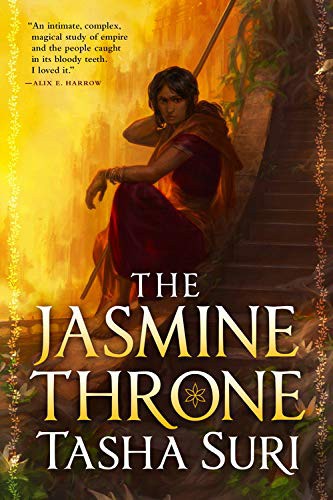
The Jasmine Throne
Tasha Suri · 2021
Elemental or cultural core Sacred plant magic survives beneath an empire that tried to burn its practitioners out of history
Closest Avatar connection Occupied people, hidden spiritual traditions and conflicted heirs turn personal loyalty into resistance
Main difference A slow, politically intricate adult fantasy centered on two women with dangerous ambitions
Best for Readers who want sapphic tension, Indian-inspired epic fantasy, occupied nations, morally complicated heroines, religious magic and a completed trilogy.
Malini’s brother, emperor of Parijatdvipa, imprisons her in the Hirana, a ruined temple in conquered Ahiranya. Priya enters as a maid but carries knowledge of the temple’s lost magic and a connection to the resistance outside it. Their alliance begins as mutual use. Each woman wants freedom, but neither means the same thing by it, and both are willing to make choices an Avatar hero might reject.
The plant-based magic is tactile and costly, rooted in bodies, water and a religious community nearly destroyed by imperial rule. Suri’s sharpest connection to Avatar is the refusal to treat liberation as one unified cause. Rebels disagree about tactics; collaborators possess understandable fears; and the people most capable of changing the system may also hunger for power. It ranks sixth because the pace is deliberate and court-centered, with less traveling adventure than most entries. The book’s moral and political complexity makes it ideal for readers who have grown up with Aang’s world and now want harder questions.
Know before you start. The novel includes immolation, imprisonment, colonial violence, misogyny, homophobia, body horror and abusive family relationships.
We reviewed this: read our full review of The Jasmine Throne →
5
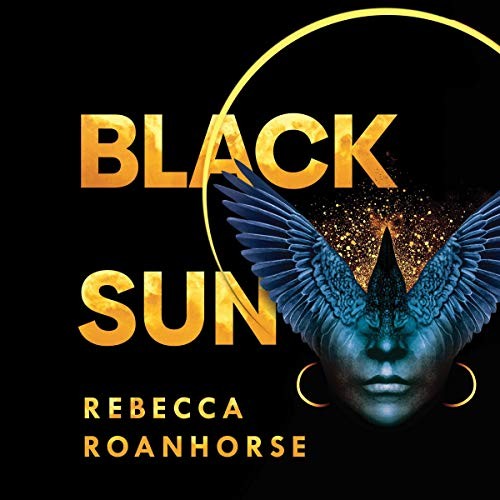
Black Sun
Rebecca Roanhorse · 2020
Elemental or cultural core Sea magic, prophecy and celestial ritual converge in a world inspired by pre-Columbian civilizations
Closest Avatar connection Several cultures approach the same spiritual crisis with incompatible histories and political interests
Main difference An adult epic moving toward a predicted upheaval rather than rebuilding peace after a finished war
Best for Readers who want Indigenous American–inspired world-building, queer characters, sea voyages, prophecy, religious politics and multiple viewpoints converging on one event.
Xiala, a Teek sea captain whose Song can influence water and people, agrees to transport a blind passenger named Serapio to the holy city of Tova before a solar eclipse. In Tova, Sun Priest Naranpa attempts to preserve an institution whose authority is already fractured. The approaching convergence links personal trauma, suppressed clan history and a prophecy that may be liberation to some and catastrophe to others.
Roanhorse ranks fifth because the world feels spiritually organized without becoming tidy. Xiala’s relationship with the sea is intimate rather than mechanical, while celestial cycles affect ritual and legitimacy on a civic scale. Like the best Avatar stories, the novel lets transportation, food, architecture and religious practice establish culture before conflict tests it. This first volume ends at a moment of transformation, so readers must continue the trilogy for consequences. It is also more violent, sensual and politically ambiguous than the animated model.
Know before you start. The book includes ritual scarring, child abuse, murder, addiction, sexual content and mass violence. The first volume ends on a substantial cliffhanger.
4
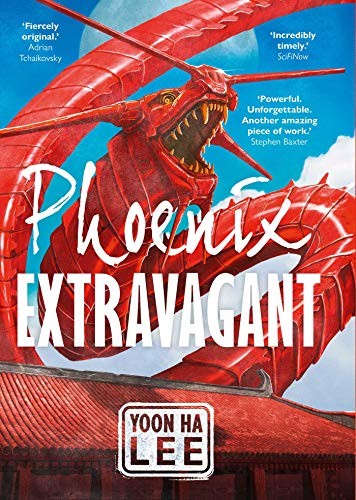
Phoenix Extravagant
Yoon Ha Lee · 2020
Elemental or cultural core Magical pigments animate military constructs in an occupied, Korea-inspired city
Closest Avatar connection An artist forced to serve an empire discovers that cultural work can become both weapon and resistance
Main difference A compact standalone with a nonbinary protagonist and a mechanical dragon
Best for Readers who want a brisk standalone, nonbinary representation, mechanical dragons, art magic, occupation politics and humor inside serious stakes.
Jebi wants an artist’s life, not a political one. The occupying Razanei government instead recruits them to produce magical sigils for its automata. Jebi’s work brings them into contact with Arazi, an enormous dragon machine whose consciousness does not fit the military’s plans. Their attempt to survive implicates Jebi’s collaborator sibling, a duelist from the occupying power and a resistance that does not automatically trust artists who compromised.
The magic makes colonial extraction unusually literal. Artworks from the conquered culture are destroyed to create pigment for machines used against that culture, turning heritage into fuel. Arazi supplies the exhilarating giant-creature energy, but Lee never lets spectacle erase the question of who pays for it. The novel ranks fourth because its tight scope cannot develop a world as broad as Avatar’s. Within that scope, it offers a superb adult parallel to stories about Fire Nation machinery, stolen traditions and ordinary people deciding when accommodation becomes complicity.
Know before you start. The novel includes colonial violence, cultural destruction, torture, execution, family conflict and alcohol use. Its ending resolves the central plot while leaving the wider struggle open.
3
The Unbalancing
R. B. Lemberg · 2022
Elemental or cultural core A restless star beneath the sea destabilizes an island whose magic depends on deepnames, tides and inherited stewardship
Closest Avatar connection Saving balance requires spiritual attention, communal responsibility and acceptance that not every loss can be reversed
Main difference A lyrical, queer Atlantis-like standalone centered on a starkeeper, an autistic poet and ecological collapse
Best for Readers who want nonbinary and neurodivergent protagonists, ecological fantasy, lyrical magic, ancestors, queer romance and a complete Birdverse entry requiring no prior knowledge.
Ranra Kekeri has recently become starkeeper of Gelle-Geu and inherits an emergency her predecessor failed to resolve. Tremors are increasing around the Star of the Tides beneath the islands. Erígra Lilún, a reclusive poet and gardener, is pressed by their ancestor Semberí to accept a role in waking or calming the star. When Ranra and Lilún meet, their magical deepnames reveal both an unexpected connection and the scale of the danger.
Lemberg treats balance as relationship rather than a static cosmic setting. Magical skill, civic authority, consent and cultural memory all affect what the protagonists can ask of one another and of their home. The novel ranks third because it most directly examines the responsibility hidden inside Aang’s title: knowing a disaster is coming does not guarantee that a community will act in time, and saving people may not mean preserving every structure. The action is smaller and the prose more poetic than a conventional epic, but its spiritual and ethical match is exceptional.
Know before you start. The book includes earthquakes, grief, displacement, historical complicity and large-scale destruction. Its ending is bittersweet, and its magic remains deliberately poetic rather than rule-driven.
2
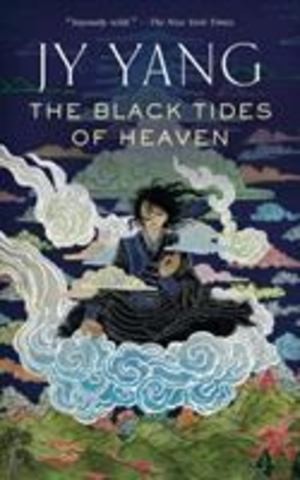
The Black Tides of Heaven
Neon Yang · 2017
Elemental or cultural core Practitioners manipulate elemental Slack while an authoritarian state controls family, gender and technology
Closest Avatar connection Gifted siblings split over whether duty, reform or rebellion can answer imperial abuse
Main difference A compressed adult novella spanning years and treating gender as self-determined within its society
Best for Readers who want a quick entry point, nonbinary and trans-inclusive world-building, elemental magic, sibling tragedy, resistance politics and a linked novella series.
Twins Mokoya and Akeha are children of the Protector, whose regime uses prophecy, surveillance and force to secure its rule. Raised in a monastery where children choose and confirm their genders when ready, the twins develop different relationships to their magical gifts and political inheritance. Mokoya’s visions make her valuable to the state. Akeha increasingly sees how power manufactures consent and moves toward the Machinists’ resistance.
Elemental Slackcraft supplies the direct bending parallel, but Yang’s more important match is the sibling divide. Love does not prevent two people from reading the same empire differently, and rebellion carries losses that cannot be corrected by mastering a stronger technique. The novella ranks second because it fits an enormous emotional and political arc into a short form; that compression can feel abrupt, especially across time jumps. Its fusion of technology, elemental practice, queer identity and revolutionary compromise makes it an unusually precise choice for adult Avatar fans.
Know before you start. The book includes authoritarian abuse, child exploitation, death, pregnancy loss, war and family estrangement. Its chronology advances in large jumps.
1
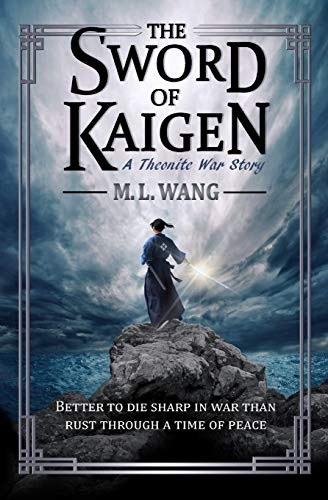
The Sword of Kaigen
M. L. Wang · 2019
Elemental or cultural core Warrior families shape water into blades and defend an isolated coastal community
Closest Avatar connection Elemental combat, inherited nationalism and family grief force characters to reconsider the story their nation taught them
Main difference A devastating adult family epic whose central perspective belongs to a mother and former fighter
Best for Readers who want spectacular elemental duels, parent-child perspectives, antiwar themes, family repair, cultural duty and a largely self-contained emotional story.
Mamoru Matsuda has been raised to honor Kaigen and the water-wielding bloodline that protects his mountain peninsula. Information from an outsider begins to contradict what school and family taught him about the nation’s recent wars. His mother, Misaki, understands more than she says. Before marriage confined her to a rigid household, she fought criminals abroad and imagined a different life. When invasion reaches their village, both must confront the difference between heroic history and lived cost.
No book on this list matches the physical pleasure of bending as closely. Fighters freeze, shape and launch water with disciplined martial technique; other families command different elemental abilities; and combat reflects training as much as raw gift. Yet the novel earns first place after the spectacle. Wang follows battle into mourning, domestic reckoning and the slow dismantling of silence. Victory cannot restore the dead or excuse the husband who treated Misaki as an instrument of lineage.
That combination makes The Sword of Kaigen the strongest adult companion to Aang’s later life. It understands that patriotism can contain genuine love while sheltering propaganda, and that peace inside a household can be as morally demanding as peace between nations. The structure is unconventional and its wider world includes modern technology alongside feudal social patterns, but the emotional resolution is powerful enough to make those seams secondary.
Know before you start. The novel includes child death, wartime atrocities, sexual violence in backstory, domestic emotional abuse, graphic combat, grief and pregnancy loss.
We reviewed this: read our full review of The Sword of Kaigen →
Which Adult Avatar Read-Alike Should You Read First?
Where to start. Start with The Sword of Kaigen if elemental combat is nonnegotiable. It delivers water-based martial magic and then pushes beyond battle into propaganda, bereavement and family accountability. Choose The Black Tides of Heaven when you want the fastest route to elemental practice, authoritarian politics and siblings pulled toward opposite futures.
Read The Unbalancing for the deepest treatment of balance as ecological and communal responsibility. Phoenix Extravagant offers the best compact mix of art, machinery, resistance and a memorable dragon. Choose Black Sun or Range of Ghosts when you want a broader world in which geography, religion and the sky itself change across cultures.
For romance, begin with The Hurricane Wars. For a darker rebellion, choose The Final Strife or The Jasmine Throne. Pick The Daughters of Izdihar when literal elemental abilities and women’s political rights matter more than a traveling quest.
Aang’s lasting appeal is not simply that four elements look thrilling in motion. His power belongs to a discipline, a community and moral choices; victory means imagining a future that does not erase the defeated nation.
These novels take that problem into adult territory. The Sword of Kaigen asks what patriotic myth costs a family. The Black Tides of Heaven divides love from political obedience, and The Unbalancing makes preserving life more important than pretending every cherished structure can survive. Their heroes cannot restore balance by mastering one more move. They have to decide what justice should leave standing—and how people trained by crisis might learn to live after it.