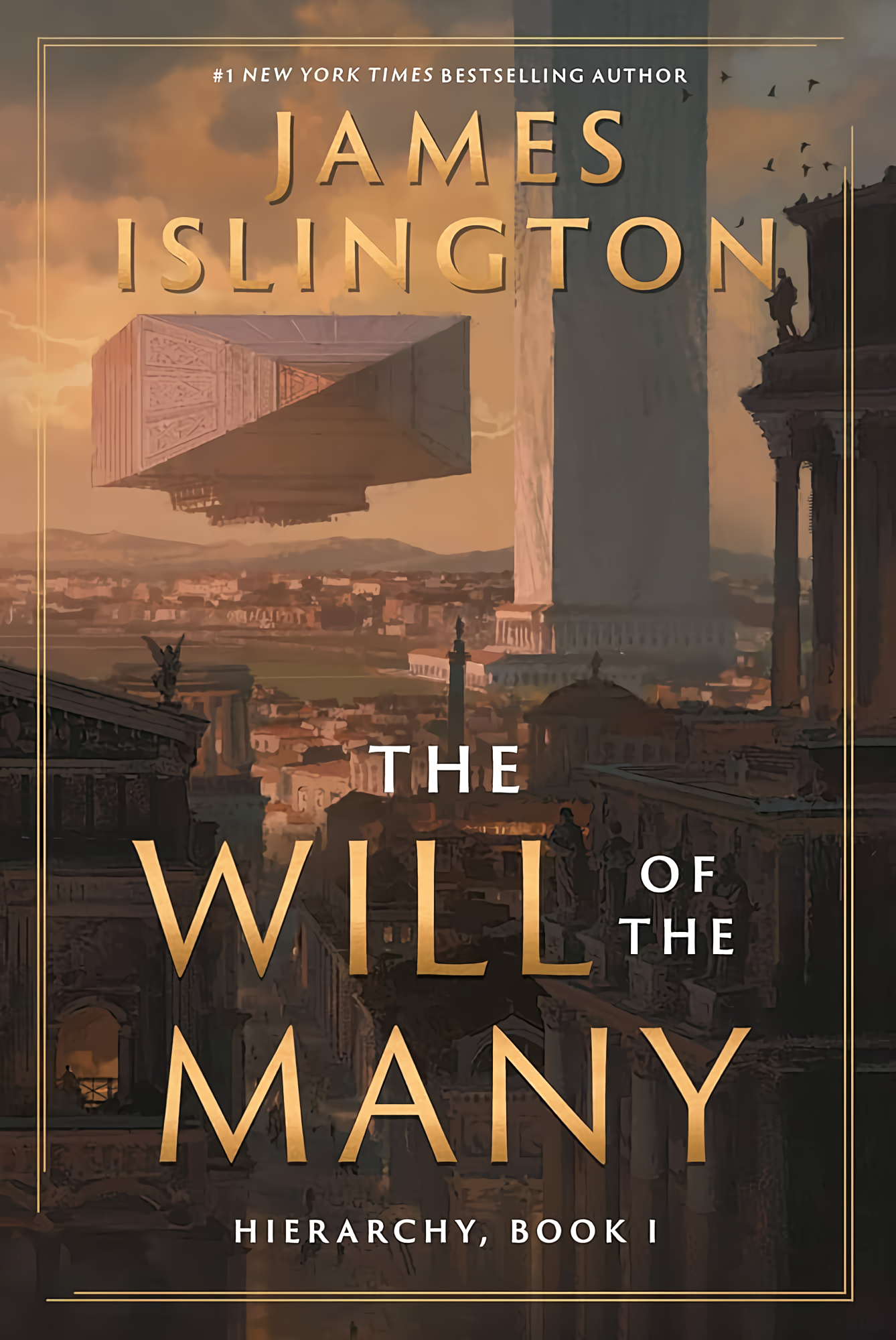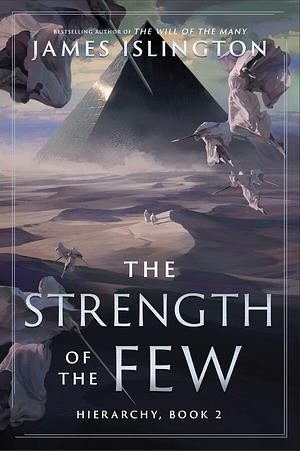
The Strength of the Few begins by refusing the easiest sequel James Islington could have written. The Will of the Many ended with Vis crossing the Labyrinth and apparently splitting across three worlds. Instead of quickly reuniting those threads, the sequel commits to three first-person, present-tense lives: Vis in Roman-inflected Res, a one-armed stranger called Deaglán in Celtic-inflected Luceum and a copy known as Siamun in Egyptian-inflected Obiteum. The result is more difficult, more ambitious and ultimately more revealing than a conventional academy-and-rebellion continuation.
The central formal achievement is that the three narrators are recognizably the same person without remaining interchangeable. Res-Vis is a public hero trapped inside the Hierarchy he hates. Luceum-Vis is physically damaged, taken in by a farming family and gradually offered a community not built on ceding. Obiteum-Vis is stranded with Caeror in a dead world where human bodies can become controlled iunctii. Each version carries the same habits—strategic observation, distrust of authority, instinctive protection of the vulnerable—but different relationships begin changing the choices he makes.
Islington’s worldbuilding expands from political dystopia into science fantasy. Will, vitaerium, the Aurora Columnae, the Concurrence and the Synchronous are parts of a system whose metaphysics increasingly resemble engineering. The book is strongest when revelation changes moral context rather than merely adding terminology. The lives of iunctii make the Hierarchy’s familiar practice of ceding look less like a local injustice and more like one expression of a multiversal technology of control.
The Res plot retains the pleasures of the first book: examinations, status competition, hidden facilities and dangerous alliances. The chariot Placement is a particularly effective action sequence because Vis must solve a public problem while concealing capabilities that could expose him. His relationships with Aequa, Eidhin, Livia and Emissa keep the political machinery personal. Callidus’s absence is constantly felt; the sequel understands that grief changes the temperature of every old friendship.
Luceum initially feels like a separate novel. Its language, kings, druids, warbands and local obligations arrive before the reader knows how they connect to Caten. That delay is intentional but demanding. Once Vis reaches Loch Traenala, his training with Tara and Lir gives the thread its own momentum. The rural interlude with Gráinne, Onchú, Róisín and Tadhg is among the book’s warmest material, demonstrating what Vis might become if survival stopped requiring deception.
Obiteum is the strangest and most conceptually important strand. Caeror is affectionate, withholding and frighteningly practical. His explanations of Cataclysms, Gleaners and the Concurrence turn the novel into an argument about whether entire worlds can be sacrificed to save others. Vis’s growing ability to command iunctii is useful in every immediate crisis and horrifying in principle. Islington repeatedly makes the power he needs indistinguishable from the system he opposes.
The biggest weakness is density. The three worlds contain parallel titles, organizations, languages and versions of familiar people. Several chapters end on a new proper noun whose importance is not clear until much later. Readers who enjoy building theories will be rewarded; readers who chiefly want the emotional and institutional continuity of the Academy may find the first half disorienting.
Pacing is similarly uneven. Res advances through public tests and conspiracies, while Luceum pauses for recovery and local custom and Obiteum spends long stretches explaining survival systems. The alternation can interrupt a climax for dozens of pages. Yet the structure becomes the point: Vis cannot see how his choices echo across worlds, while the reader gradually can.
The final third is exceptionally bold. Aequa’s death, the destruction of Caten, Vis’s reunion with his resurrected father and the separate confrontations with Ka create three different answers to the same question: what can a person justify to prevent catastrophe? The book does not close those answers into a single doctrine. Ka may be telling the truth that Cataclysms save two worlds, but his plan still depends on sacrifice and an army of the dead.
The Strength of the Few is a sequel about scale and fragmentation. It sacrifices some of the first novel’s clean institutional momentum for a much larger design, then earns that gamble by making identity itself the battlefield. It is not a good entry point and it does not provide a tidy resolution. For readers willing to track three worlds and accept a major genre expansion, it is one of the most audacious epic-fantasy sequels in recent years.