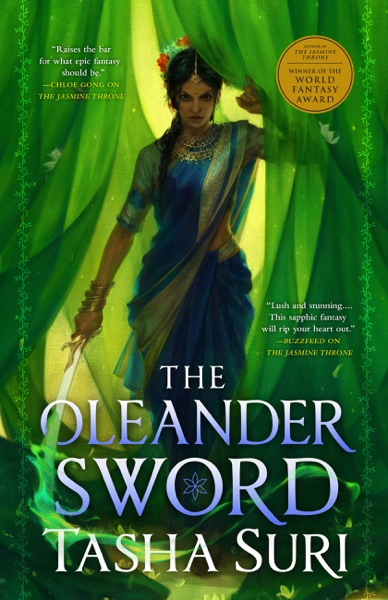
The Oleander Sword is the trilogy’s war book and its sharpest study of betrayal: Malini’s rebellion runs on alliances, grain and priestly approval, and every one of them costs her something she loves. Personal brilliance turns out to be the least useful thing she has.
Suri lets the romance intensify at exactly the rate political compromise becomes impossible.
The reunion is charged because neither woman can return to the private terms of the first book. Priya now speaks for Ahiranya; Malini needs Ahiranyan power while still picturing a unified empire. Suri lets the romance intensify at exactly the rate political compromise becomes impossible, which makes the whole middle ache.
The war itself is unglamorous in the right ways — famine, religious coercion, a coalition held together by nothing sturdier than a shared enemy, and Prince Aditya waiting in the wings as the claimant Malini’s own generals would prefer.
The expanded cast slows a few marches, and readers wanting the first book’s claustrophobic focus will feel the sprawl.
The ending is devastating and earned. Aditya thrusts his hand into the Mother’s flame inside the Maze Fort and wins the battle with his life; Malini buys the priesthood by promising to mount the pyre herself one day; Bhumika trades her memories to a yaksa for the knowledge to destroy them; and Priya, coerced by Mani Ara and refusing to betray her people, puts a knife in Malini and runs for home. Empress and betrayer, made in the same war.