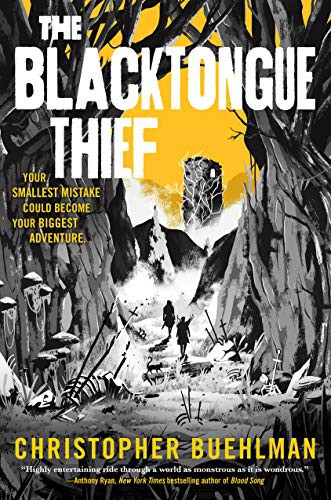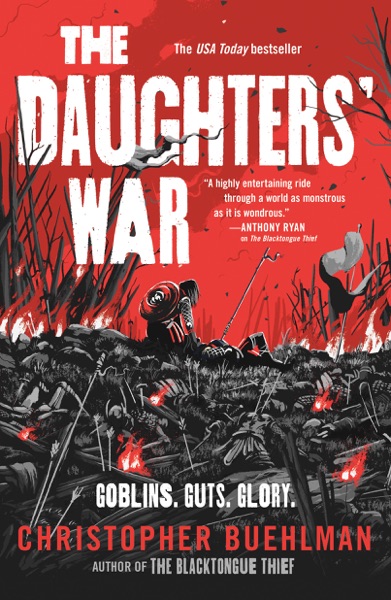
The Daughters’ War is not a lighter companion to The Blacktongue Thief but its bleak foundation: the goblin war that turned a young Spanth noblewoman into the severe knight Kinch would later meet. Galva tells it herself, years after, and the retrospection is the cruelty — you know the war produces her, you just do not know which of these friendships it spends to do it.
You know the war will produce the knight from the later book. You do not know which of these friendships it spends to do it.
The corvid cavalry is the reason to be here, and Buehlman treats the giant flightless war birds — bred from ravens to replace the exterminated horses — as training, logistics, animal partnership and moral responsibility rather than a striking image. Galva’s bond with Dalgatha is the clearest relationship in a story where military institutions spend women and creatures with the same arithmetic.
The war itself is genuinely frightening. The goblins are not orc-shaped brutes but tactically ingenious, breeding humans as livestock and having already exterminated the horses — which is precisely why anyone would try to militarize birds the size of a cart.
The middle campaign is intentionally exhausting, and anyone who came for Kinch’s comic rhythm should adjust expectations severely.
That tonal difference is the point. The ending explains Galva without reducing her to trauma — the crown orders the birds destroyed the moment the enemy falls, Galva smuggles Dalgatha alive into her own skin, and refuses to hurry to her father’s summons — keeping love, guilt, discipline and anger as active choices rather than symptoms.