The Book in Brief
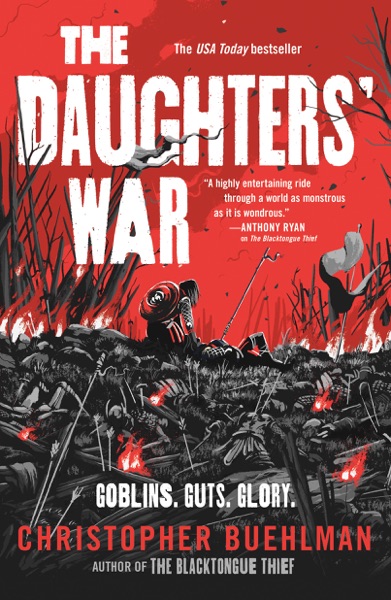
During the goblin wars, Galva joins the all-female First Lanza of His Majesty’s Corvid Knights, bonded to giant flightless war corvids while her three brothers serve elsewhere in the army, befriending Inocenta and falling in love with Mireya as she learns to ride and fight with Dalgatha. The goblins’ ingenuity and their destruction of the horses have driven the human kingdoms to desperate tactics, and the birds become essential even as traditional commanders resent them. Galva’s corvid Bellu is killed on her brother Migaéd’s order; at Goltay the battle called the Kingsdoom collapses the campaign, taking her brother Amiel, Inocenta and Nouva. Mireya’s weather magic and Galva’s rebuilt corvid force finally break the Horde — and the king orders the birds destroyed.
Important Characters
Galva: A soldier and corvid knight whose discipline is shaped by love, class, family, and accumulated loss.
Dalgatha: Galva’s bonded war corvid, partner in battle and the life Galva refuses to let the crown erase.
Mireya: The Infanta of Ispanthia and Galva’s lover, whose usurped throne will drive The Blacktongue Thief.
Inocenta: Galva’s closest friend in the unit and a measure of the communal life destroyed by Kingsdoom.
Amiel and Migaéd: Galva’s youngest and eldest brothers — a poet assigned to guard the wizard Fulvir, and a drunkard whose command turns monstrous.
Bellu: Galva’s second war corvid, whose killing on Migaéd’s order exposes what the army thinks its creatures are worth.
Pol: Galva’s second-oldest brother, a terce-general broken when their father coerces him into endorsing a lie.
What to Remember from the Previous Book
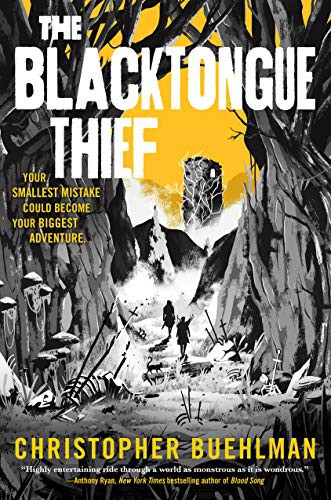
This novel is a prequel to The Blacktongue Thief. It can be read first, but readers of the later-set novel will recognize Galva as the disciplined Spanth warrior who travels with Kinch na Shannack.
The Corvid Knights
Chapter 1
Galva enters the women’s corvid program as the goblin war consumes the men and horses once reserved for cavalry.
Chapter 2
Training with the birds teaches that command depends on trust, handling, and accepting an intelligence unlike a horse’s.
Chapter 3
Galva bonds with Dalgatha and discovers a partnership that does not fit the army’s language of equipment.
Chapter 4
Inocenta becomes Galva’s friend as the recruits build solidarity under contempt from traditional soldiers.
Chapter 5
Galva’s brothers remain close enough to make military hierarchy inseparable from family expectation.
Chapter 6
Mireya’s arrival introduces magic and attraction into a life Galva thought war had narrowed to duty.
Chapter 7
The trainees witness evidence of goblin experimentation and understand the enemy as organized cruelty rather than folklore.
Chapter 8
Galva’s first true ride on Dalgatha gives her a mobility that makes separation increasingly unimaginable.
Chapter 9
Commanders debate whether the unit is a weapon, a symbol, or an embarrassment to be discarded after use.
Chapter 10
Galva and Mireya begin a relationship under conditions that make every private promise temporary.
Chapter 11
The unit receives orders for active service before training has made anyone feel ready.
Campaign and Kinship
Chapter 12
The corvid riders scout terrain emptied by raids and learn how completely goblins have reorganized civilian life.
Chapter 13
Galva’s first battle replaces training confidence with the sensory confusion of real killing.
Chapter 14
Dalgatha protects Galva without waiting for a clean command, proving the bond works in both directions.
Chapter 15
Inocenta and Nouva keep the unit’s social life alive between missions that reduce people to casualty numbers.
Chapter 16
Amiel’s presence gives Galva comfort while increasing the number of loved people exposed to every order.
Chapter 17
Migaéd’s unfitness for command grows harder to ignore, and rank keeps settling questions that competence should.
Chapter 18
The Gallardian campaign grinds on, and the corvids keep proving their worth in an army that still regards them as an experiment it might yet discard.
Chapter 19
Galva’s faith in her brother wears thinner, and the gap between family loyalty and what she owes her unit becomes harder to straddle.
Chapter 20
Mireya uses magic in ways that save soldiers but make commanders covet control of her.
Chapter 21
The army advances toward the abandoned Gallardian capital of Goltay despite intelligence showing a trap.
Chapter 22
Galva enters the major campaign with bonds strengthened personally and left unprotected institutionally.
Kingsdoom
Chapter 23
At Goltay the force meets a goblin plan larger and more disciplined than command expected.
Chapter 24
Corvid scouts identify danger, but hierarchy delays the response until retreat becomes chaos.
Chapter 25
Galva and Dalgatha fight through collapsing formations while searching for the rest of their unit.
Chapter 26
Word comes that Amiel was killed trying to bring Galva the shield, turning strategic failure into irreversible family loss.
Chapter 27
Inocenta and Nouva disappear amid the destruction, leaving Galva without certainty or bodies to mourn.
Chapter 28
Dalgatha carries Galva out when discipline and human command can no longer save her.
Chapter 29
The aftermath exposes officers seeking explanations that protect rank rather than account for the dead.
Chapter 30
Galva encounters deserters whose flight threatens survivors still depending on organized defense.
Chapter 31
She leaves the killing to the goblins she summoned, an act that stays morally painful however defensible.
Chapter 32
Migaéd arrives with royal chainsmen demanding the stolen shield. Bellu stands between them and Galva, and Migaéd orders the corvid killed while Galva is held back — the price of everything Amiel set in motion.
Chapter 33
Galva rings a village bell to draw a goblin foraging party onto Migaéd and the deserters, and rides away.
Chapter 34
The remnants leave Goltay knowing the war will continue after the life they fought for has already ended.
Victory’s Price
Chapter 35
Galva helps train thousands of new riders and birds from the fragments of the original experiment.
Chapter 36
Mireya’s snow and weather magic create the opening the rebuilt force needs against the Horde.
Chapter 37
The corvid cavalry breaks the goblin advance, converting a mocked unit into a decisive arm of the war.
Chapter 38
Victory makes the birds politically frightening to the same crown that depended on them.
Chapter 39
The king orders the corvids destroyed rather than allow the riders to retain an independent military bond.
Chapter 40
Galva preserves Dalgatha through a tattoo, refusing the command to make their partnership disappear.
Chapter 41
Galva’s father coerces Pol into endorsing a lie about the Pragmatist’s strategy, and Pol takes his own life.
Chapter 42
The compressed end of the war records victory as a sequence of further losses rather than a clean restoration.
Chapter 43
Galva returns to the Braga estate and visits Idala, the old blind mare who survived the Stumbles.
Epilogue
Summoned to her father, Galva watches the sunset instead and refuses to hurry — the hard autonomy that will define her when she later meets Kinch na Shannack.
Ending Explained
The destruction order confirms the state’s real relationship to the corvids and their riders: an exceptional partnership is celebrated only while it stays controllable, and the moment the enemy falls, autonomy becomes the new threat. Galva disobeys the order and brings Dalgatha to Fulvir, who tattoos the living bird into her skin — preservation rather than memorial, and the reason Dalgatha can still be called out of her arm years later. Her rejection of the arranged future her father offers connects the prequel directly to The Blacktongue Thief: she does not become emotionally empty, she becomes unwilling to let family, crown or lover define her recovery for her.
Themes and Analysis
War and institutional use. The army invites women and corvids into power during emergency, then attempts to erase them when that power threatens the old order.
Animal partnership. Dalgatha is neither mount nor metaphor alone; the bond is a relationship with reciprocal agency.
Grief without closure. Missing bodies, compressed histories, and political scapegoats deny survivors the clean endings official victory requires.
Autonomy after survival. Galva’s final refusals protect the self that remains without claiming that survival repaired her.
Content Notes
This book contains graphic war violence and mass death, animal death and the threatened destruction of bonded animals, sexual content, misogyny and military abuse, suicide, family death and severe grief.