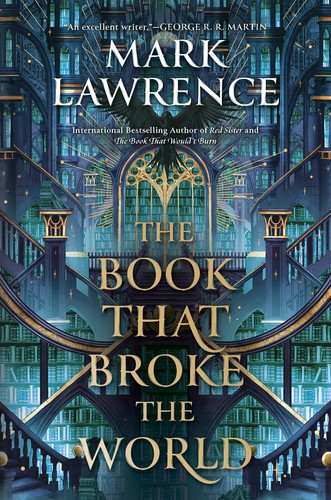
The Book That Held Her Heart closes the Library Trilogy by turning its temporal puzzle into an argument about care — what a civilization keeps, and who it decides belongs inside its future. The machinery remains vast — worlds, ages, chambers — but the final choices are measured in relationships.
Livira and Evar stay the emotional center, and the finale makes their bond openly political: a system built to preserve culture must decide whether people classified as enemies can belong inside its future. Celcha’s aftermath supplies the necessary moral resistance — the narrative neither forgets the causes of her rage nor dissolves the scale of her act into redemption.
Curation, the finale argues, is an active moral practice: keeping knowledge, people and possibilities together without pretending they are harmless.
Lawrence is unusually willing to explain his architecture this time. The Library, the Assistant and the time-linked books become genuinely legible, though the accumulated terminology still demands attention.
A few solutions lean on metaphysical rules established late, and the big ensemble means some reunions get less space than their emotional weight deserves.
The ending succeeds because it refuses the Library’s old false choice between preservation and destruction. Curation, the finale argues, is an active moral practice: keeping knowledge, people and possibilities together without pretending they are harmless. It is a worthy close to one of the decade’s most ambitious fantasy trilogies.