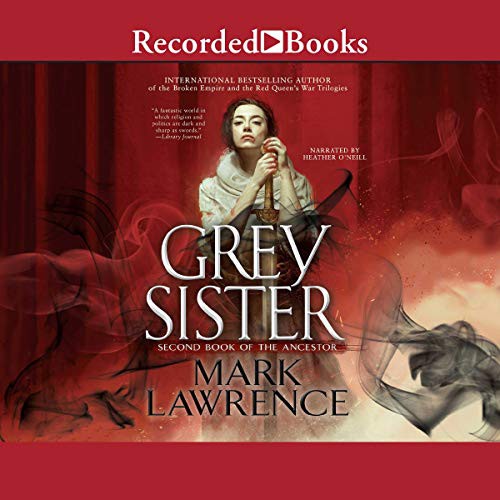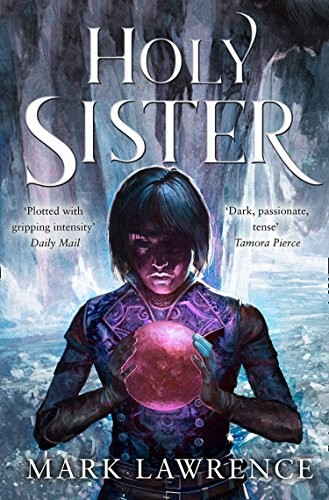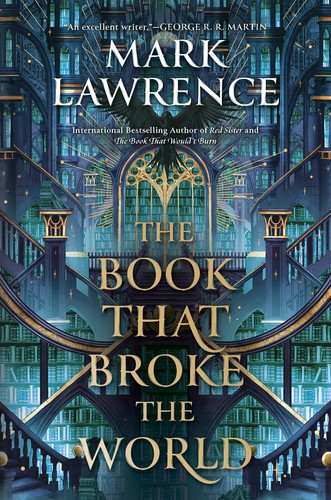
The Book in Brief
The survivors of the Breaking are scattered by damaged routes, political hostility and the fallout of Celcha’s destruction, while Livira and Evar keep seeking each other through books and the Library’s temporal machinery. Factions battle to control the Library and to define which peoples deserve preservation, as Yute confronts evidence that the institution’s oldest safeguards also maintain its oldest exclusions. Livira’s descent into the deep architecture behind the Library and the Assistant finally connects the trilogy’s loops — and the last conflict is resolved by changing the Library’s purpose, with Livira and Evar’s reunion as proof that absolute categories can be revised.
Important Characters
Livira: A librarian whose insistence on connection becomes a program for reforming the institution.
Evar: Livira’s partner across time and culture, challenging every inherited definition of enemy.
Celcha: A ganar complicit in the genocide her brother planned, on a centuries-long quest to atone for it.
Hellet: Celcha’s brother, whose vengeance plan caused the genocide she spends centuries atoning for.
Yute: A librarian forced to decide whether preserving the Library requires transforming it.
The Assistant: The intelligence or guide whose role links the trilogy’s architecture and temporal loops.
Irad and the Library’s factions: Authorities competing to define knowledge, danger and belonging.
What to Remember from the Previous Book
The Book That Held Her Heart directly follows The Book That Broke the World. The new volume assumes the earlier relationships, betrayals and world rules are already familiar. The opening chapters supply context through action, but they do not retell the prior novel in full.
Ending Explained
The Library survives by changing: its old mission treated preservation as value-neutral, and the finale insists that every act of keeping, classifying or excluding is already a moral choice. Livira and Evar’s reunion is more than romantic closure — their bond disproves the categories used to justify the war and creates understanding neither side could reach alone. Celcha’s future is tied to accountability rather than erasure, allowing continued life without asking readers to forget mass harm — an appropriately difficult answer for a trilogy about who controls history.
Themes and Analysis
Care as Curation. The title reframes preservation as an act of responsibility rather than possession.
Accountability Without Erasure. Celcha’s history explains her action but cannot cancel its victims.
Love Across Categories. Livira and Evar make supposedly natural divisions appear constructed and revisable.
Institutions That Learn. Survival is worthwhile only if the Library can change the rules that produced exclusion.
Time and Responsibility. Closed loops do not remove agency; they reveal how choices become another person’s inherited world.
Content Notes
This book contains war and mass-casualty aftermath, enslavement and persecution, fantasy violence and death, grief, moral injury, coercion and institutional abuse.