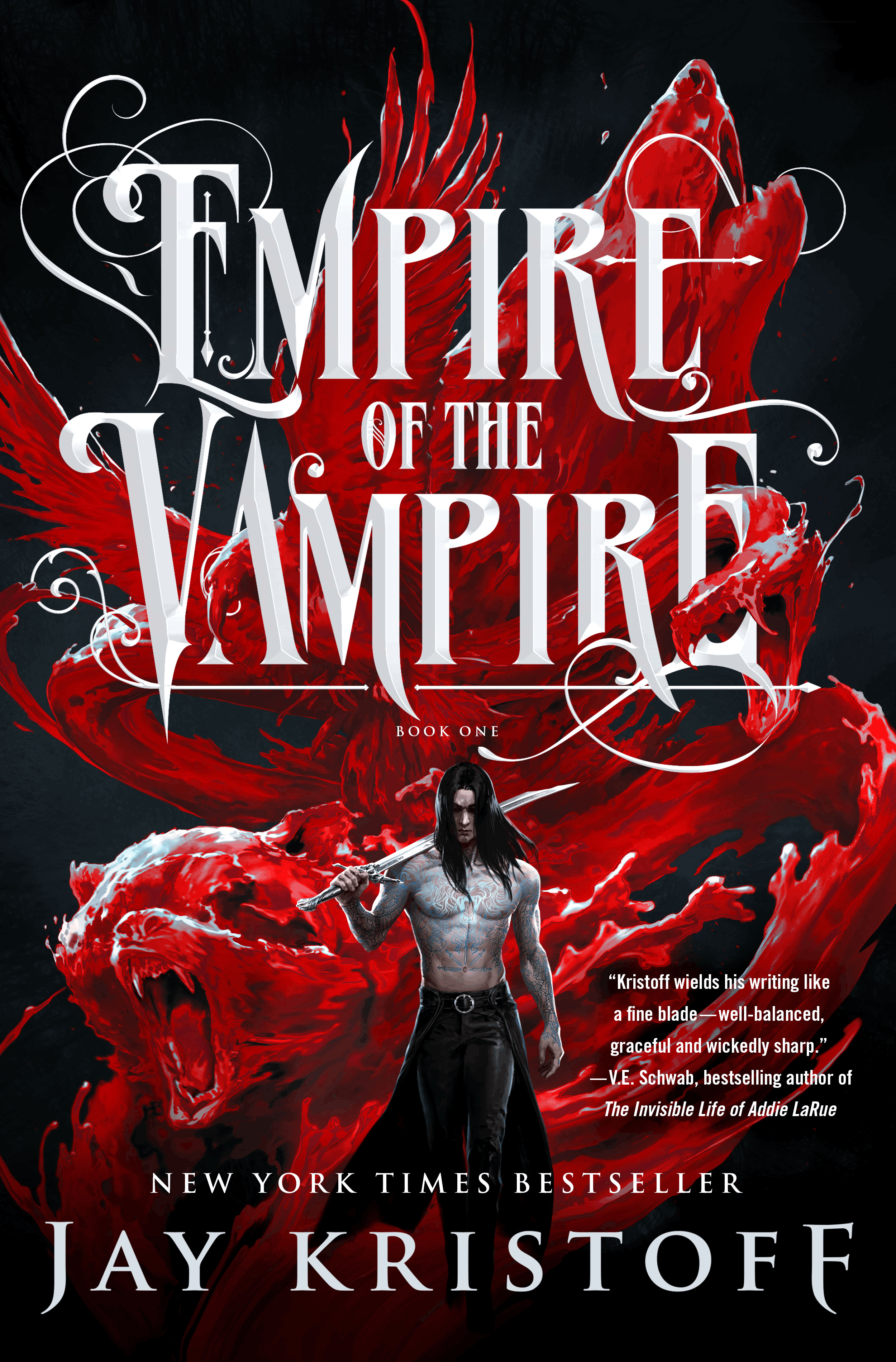
The first volume of Jay Kristoff's vampire trilogy is a 700-page act of maximalist commitment: a framed confession, a dead sun, a holy order modeled on the Templars, a Holy Grail that turns out to be a fifteen-year-old girl.
Kristoff makes a high-risk structural choice — three interlocked timelines told by an unreliable narrator chained in a vampire's tower — and the choice works because Gabriel de León is built with unusual care. He is ruined, bitter, profane, sentimental in the places he refuses to admit, and, crucially, funny. The framing device, which could easily have curdled into gimmick, instead becomes the book's central engine: every reveal lands twice, once in the timeline where it happens and once in the cell where Gabriel has to dredge it back up for the vampire taking notes.
The action set pieces (the Twins pass, the cathedral massacre, Heaven's Bridge) are choreographed with a cinematographer's eye; the moments of stillness — Gabriel teaching Dior to read at a campfire, Astrid inking his Aegis at San Michon — earn the reader's heart and then break it. Kristoff's worldbuilding is dense without being homework-heavy: the five vampire bloodlines, the silver Aegis tattoos, the holy-day theology of the One Faith, the running rivers that vampires cannot cross — all of it serves story rather than glossary.
Bon Orthwick's interior illustrations elevate the book into object-art territory. Aggressive on-page violence, sexual content, and one of the cruelest endings in the genre will not be for everyone, but readers who can stand the heat will find a debut volume that bears comparison to The Name of the Wind and Interview with the Vampire without flinching from either.
A trilogy-defining opening salvo.