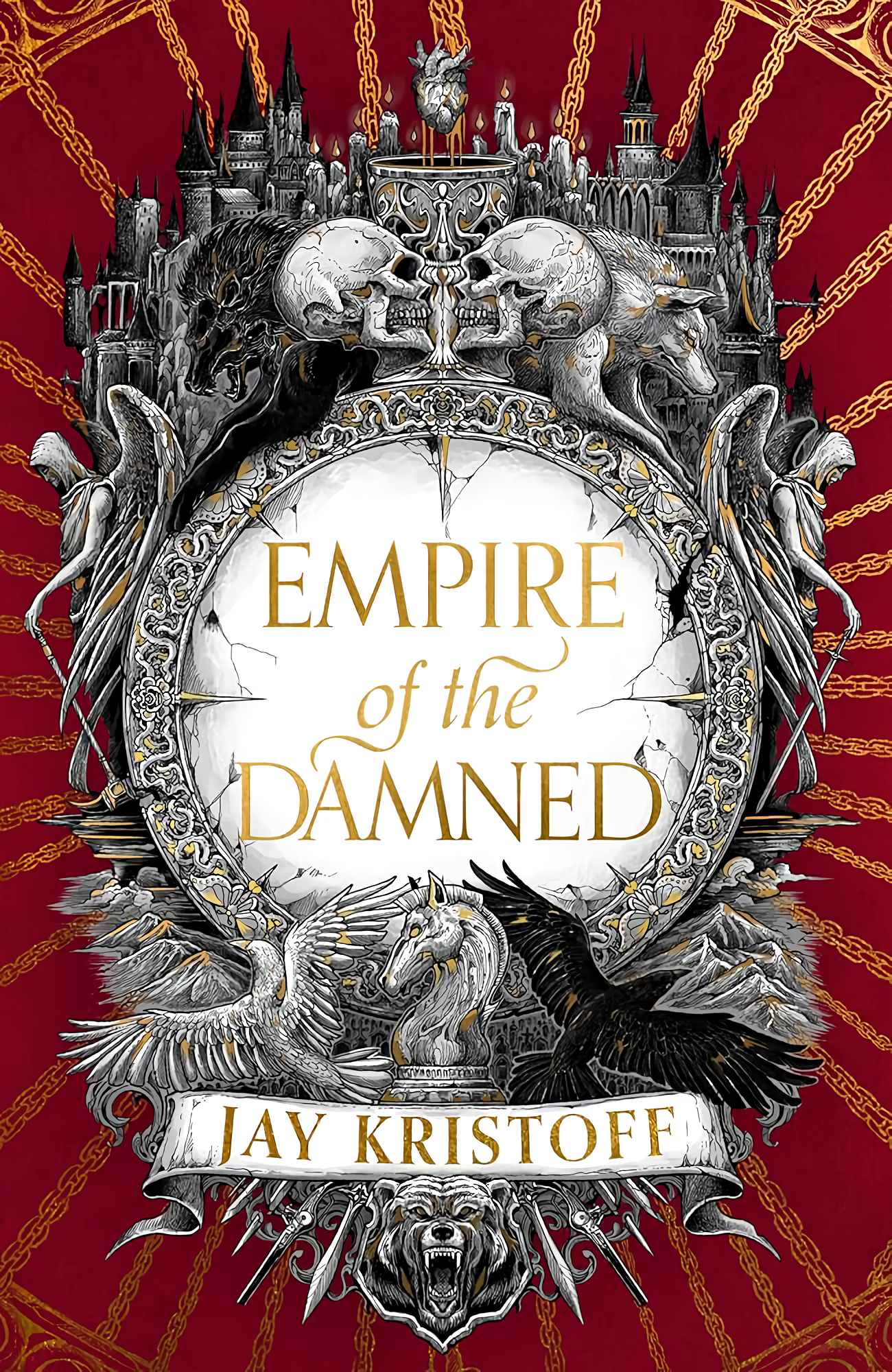
The middle volume of a fantasy trilogy is usually where the air leaks out. Not this one.
Kristoff splits his cast — Gabriel falls into a river, Dior is taken north to the Dyvok seat at Dún Maergenn, Celene is dragged into the cell next door — and gambles that the resulting parallel narration, told by two siblings who openly contradict each other, will hold a reader for 736 pages. It does. The decision to bring Celene into the framing device as a second narrator is the book's sharpest decision: where book one was an unreliable confession, Damned becomes an actively contested one, with Jean-François the historian increasingly aware that he is being lied to by experts.
The book runs hotter than its predecessor. The Wolfmother's hall is the most claustrophobic stretch Kristoff has ever written; Aaron de Coste's turning is genuinely devastating; and the duskdancer reveal cracks the trilogy's world open in a way the first volume only hinted at. Phoebe is a superb addition — flinty, grieving, the only character in Gabriel's life who treats him like an adult.
The Book Six theological gut-punch — the carving on the chapel wall, the truth about what the Redeemer's killers became — recontextualizes the entire faith Gabriel has been dying for. It is the rare worldbuilding reveal that retroactively improves book one. The Wulfric reveal lands, the Battle of Dún Maergenn is brilliantly staged, and the closing two chapters set up book three with a quiet menace that earns its cliffhanger.
The brutality is heavier here than in Empire of the Vampire, and on-page sexual assault and child endangerment will keep some readers out. For those who can stay with it, this is a middle volume that advances rather than treads.
Brilliant and bleak in equal measure.