The Book in Brief
At a revived Twelfth Night wassail in Ledwardine, elderly farmer Edgar Powell shoots himself beneath an ancient apple tree. The gathering was organised largely by Terrence and Caroline Cassidy, wealthy newcomers hoping to revive the village’s cider trade and turn its traditions into a festival attraction. Local historian Lucy Devenish had warned that importing guns into the ritual was a dangerous distortion. The Reverend Merrily Watkins, visiting the parish anonymously before deciding whether to accept the vacant post, is sprayed with Edgar’s blood. The horror convinces her that rural ministry will not be the safe retreat others imagine, and she accepts the appointment.
Merrily moves into Ledwardine’s vast, decaying vicarage with her fifteen-year-old daughter Jane. The house immediately unsettles her. She dreams of discovering an impossible third floor and senses a presence in its cold passages. She is also struggling with the memory of her husband Sean, who died in a car crash beside his lover. Jane claims the upper rooms as her territory and begins exploring a village divided between newcomers such as the Cassidys and families, including the Powells and Bull-Davieses, who have controlled local life for generations.
Nearby, former musician Lol Robinson prepares to kill himself. Lucy interrupts his plan and continues the severe, practical guardianship that has repeatedly kept him alive. Lol once performed with Alison Kinnersley in the folk-rock act Hazey Jane. His career and reputation were destroyed after a sexual offence involving an underage girl was attached to his name. He lives with depression, fear and the certainty that Ledwardine knows him only through his record.
Merrily is drawn into an argument over an “Old Cider” festival and a proposed play about Wil Williams, a charismatic seventeenth-century clergyman associated with poet Thomas Traherne. Wil was accused of witchcraft and sexual depravity before being found hanged in the orchard. Playwright Richard Coffey and actor Stefan Alder believe that Wil was persecuted for forbidden sexuality. Stefan becomes intensely identified with the dead priest. James Bull-Davies and other representatives of Ledwardine’s old families oppose the production, claiming that it insults the village and the church. Their anger suggests that the story threatens something more substantial than local dignity.
Jane befriends the Cassidys’ rebellious daughter Colette and is drawn into an illicit night of strong cider and teenage bravado. Drunk and disoriented, she enters the orchard, sees small golden lights and experiences the old apple tree as something conscious. She sleeps among its roots and wakes without the expected hangover. Lucy explains this as sympathetic magic: the orchard has taken back what came from it. Merrily is alarmed by Lucy’s influence, while Jane begins painting the tree across the walls of her rooms in the vicarage.
The parish prepares for Merrily’s formal induction. Hostility to a woman priest comes from several directions, especially the repellent organist and early-music expert Dermot Child and people who prefer a compliant cleric. During the service Merrily suffers constriction across her chest, nausea and a violent collapse. At first the incident can be read as illness, poisoning or panic. Later evidence suggests that she may have momentarily shared Wil Williams’s physical terror: the pressure of bindings across a concealed female body and the memory of sexual violence in front of ancestors whose descendants still fill the church.
Lol’s former associate Karl reappears and torments him, even injuring Lol’s cat Ethel. The cruelty forces Lol to confront the history he has tried to survive by becoming invisible. It emerges that Karl committed the offence for which Lol has carried the disgrace. Lol’s passivity and manipulated loyalty allowed the public version to harden around him. A confrontation finally breaks Karl’s hold, although Lol does not receive a neat public exoneration. Karl dies from his injuries, leaving Lol legally exposed but emotionally less captive to him.
As the festival approaches, Colette disappears. Because of Lol’s record and his peripheral place in the community, suspicion readily moves toward him. The investigation exposes how efficiently a village can convert rumour into evidence when it wants an outsider to blame. Lol cuts his hair and adopts a clerical disguise to move through the festival unnoticed, discovering that people often see only the social role they expect.
Lucy continues researching the orchard, Wil Williams and the connections among Ledwardine’s old families. She realises that the historical story and the modern danger overlap. Before she can make everything public, she is killed in what appears to be a road accident involving a sheep. Details at her home, including clothing that should not be there, imply that the scene was staged. Merrily learns that Lucy recently made her an executor of her will, evidence that Lucy anticipated danger. Jane is devastated, while Lol loses the abrasive protector who had prevented him from disappearing into despair.
Alison Kinnersley returns to the village and becomes involved with James Bull-Davies. She believes James is her half-brother and uses the sexual relationship to enter the family house and search for evidence about her mother’s death. She also uses Lol’s lingering attachment to her as cover and access. The eventual papers reveal that the assumed family relationship is not what Alison believed, but this does not make her scheme less destructive: she knowingly entered what she thought was an incestuous relationship in pursuit of revenge.
The documents Alison finds help expose a pattern of exploitation linking the Bull-Davies and Powell families. The story of Wil Williams has been deliberately misrepresented. Wil appears to have been assigned female at birth and to have lived and ministered as a man. The hostile men of the village discovered the secret, sexually assaulted Wil, killed him and staged the hanging as suicide or punishment for witchcraft. Stefan’s theory of persecution contains an emotional truth but projects a modern explanation onto a more complicated life. Merrily’s collapse during the induction can now be interpreted as contact with the bodily memory of Wil’s assault.
The play proceeds amid the festival, forcing the village to watch a version of the history it has suppressed. Gomer Parry, a digger driver and one of Merrily’s most reliable allies, notices practical details others dismiss. The celebrated new cider is not right, and the old cider house contains spaces, smells and signs of concealment that undermine the Cassidys’ heritage fantasy. The orchard has not merely preserved folklore. The Powells have used its privacy and the community’s deference to hide victims.
Jane follows the clues left by Lucy and ends up trapped in the old cider house. In the loft she finds the source of a sweet, corrupt smell: Colette’s body, hidden in straw. The discovery confirms that Colette was murdered rather than running away. The same structure contains a concealed opening associated with watching sexual activity below, another image of the village’s long tradition of turning women and girls into objects while powerful men protect one another.
Garrod Powell and his son Lloyd are revealed as the principal modern agents of violence. Evidence and implication connect them to Colette’s death, Lucy’s staged accident and an intended second road killing. The dead sheep in their vehicle suggests that Merrily may have been the next target. The plot is not presented as a perfectly itemised police confession; Rickman lets physical evidence, family history and behaviour converge. What becomes clear is that the Powells have treated the orchard as inherited territory in which violence can be hidden and repeated.
Lol confronts Lloyd and, for once, refuses the role of helpless scapegoat. Lloyd later dies from his injuries, but Lol is not charged. Garrod dies in a sudden road collision that mirrors the trap used against Lucy, an ending that feels like poetic or supernatural retribution without proving either. Merrily, Lol and Gomer converge on the cider house while Jane finds air near the hidden opening. She survives, although Rickman leaves the exact mechanics of her escape partly obscured and colours her perception with the orchard’s uncanny presence.
The criminal pattern is exposed, Colette is found and the immediate Powell threat ends. The supernatural questions remain open. Merrily may have channelled Wil, Jane may have encountered a living spirit in the orchard, Stefan may have been psychically connected to the role he played, or traumatic history may have shaped all of them through suggestion and belief. The novel does not force a choice.
Lol emerges wounded but more capable of choosing life, and he recognises that he is falling in love with Merrily. Merrily has survived her first trial as Ledwardine’s priest not by mastering the village but by listening to people it had taught itself to disregard. The final mood is deliberately unfinished. Ledwardine’s official story has cracked, yet its church, orchard and old houses still contain more than anyone can comfortably explain.
Important Characters
The Reverend Merrily Watkins: A widowed, newly ordained priest who becomes priest-in-charge of Ledwardine. Her compassion and uncertainty make her receptive to testimony that more confident authorities dismiss.
Jane Watkins: Merrily’s fifteen-year-old daughter. Rebellious, observant and fascinated by pagan belief, Jane forms a close bond with Lucy and experiences the orchard more directly than her mother does.
Laurence “Lol” Robinson: A former musician living with severe depression and an undeservedly simplified criminal reputation. His movement from suicidal passivity toward self-defence forms the novel’s strongest secondary arc.
Lucy Devenish: An eccentric local historian, shopkeeper and guardian of Ledwardine’s folk memory. She mentors Jane, protects Lol and investigates the secrets surrounding the orchard until she is murdered.
Gomer Parry: An elderly contractor and digger driver with a practical eye for land, machinery and human dishonesty. He becomes an invaluable ally to Merrily and Jane.
Colette Cassidy: The Cassidys’ teenage daughter and one of Jane’s first acquaintances in Ledwardine. Her disappearance turns the village’s buried violence into an urgent present-day mystery.
Terrence and Caroline Cassidy: Prosperous newcomers who want to revive Ledwardine’s cider industry and traditions as a tourist attraction. Their confident reinvention of the past helps awaken conflicts they do not understand.
Garrod Powell: A farmer and county councillor from one of Ledwardine’s entrenched families. His public respectability protects a tradition of coercion and concealed violence.
Lloyd Powell: Garrod’s son. Cruel and intimidating, he becomes the immediate physical threat when the investigation reaches the Powell family.
Edgar Powell: Garrod’s elderly father, whose violent death at the wassail opens the novel. His apparent suicide suggests guilt, terror or a desire to rupture the false pageant around the orchard.
James Bull-Davies: Heir to another old Ledwardine family and a determined opponent of the Wil Williams play. His relationship with Alison and his family papers expose the sexual and social bargains behind the village’s public history.
Alison Kinnersley: Lol’s former musical and romantic partner. She returns to Ledwardine pursuing revenge and evidence about her mother, using both Lol and James in a morally ruinous scheme.
Stefan Alder: The actor chosen to play Wil Williams. His physical resemblance to Wil and intense identification with the role blur performance, obsession and possible spiritual contact.
Richard Coffey: The playwright who reimagines Wil Williams as a victim of sexual and religious persecution. His version is incomplete, but the production forces Ledwardine’s suppressed history into public view.
Wil Williams: A seventeenth-century Ledwardine cleric accused of witchcraft and found hanging in the orchard. Evidence suggests Wil lived as a man after being assigned female at birth and was raped and murdered when local men discovered the secret.
Dermot Child: Ledwardine’s organist, a composer and early-music expert whose cultural influence shields his resentment and sexually predatory behaviour toward Merrily.
Karl: A figure from Lol’s musical past and the actual offender behind the scandal attached to Lol. His return and cruelty finally force Lol to resist him.
Ted Clowes: Merrily’s uncle and a senior churchwarden. He helps her inspect the vicarage and explains some of the village politics surrounding Edgar Powell’s death.
Prologue: Twelfth Night
Ledwardine’s prosperous newcomers revive the orchard wassail as part of a campaign to market the village and its cider heritage. Lucy Devenish objects to the inclusion of shotguns, arguing that the organisers have assembled a theatrical copy of a tradition without understanding what it means. Merrily, still only considering the vacant parish, attends anonymously.
Terrence Cassidy publicly presents the Powell family and their Pharisees Red apples as the link to authentic local cider. Edgar Powell appears detached from the ceremony. When the guns are fired beneath the old tree, Edgar turns his weapon on himself and is killed. Merrily is covered in his blood, and the orchard celebration ends as a grotesque inversion of blessing and renewal.
Part One
Chapter 1: Third Floor
In April, Merrily and Jane inspect the enormous seventeenth-century vicarage with Merrily’s uncle Ted Clowes. Its real third storey uncannily resembles Merrily’s recurring dream about discovering forbidden rooms in a familiar house. Jane immediately claims the upper floor as a semi-independent flat, while Merrily sees expense, cold and responsibility.
Ted discusses Edgar Powell’s death. Garrod Powell insists it was an accident, although Edgar’s long familiarity with guns makes that explanation difficult. Merrily admits that witnessing the death influenced her decision to accept Ledwardine: the event destroyed the idea that a village parish would be an escape from serious suffering. She and Jane remain at the Black Swan while work on the vicarage limps forward.
Chapter 2: Black-eyed Dog
Laurence “Lol” Robinson plans his suicide with meticulous care. He closes the curtains, arranges the house so that discovery will be less complicated and chooses Nick Drake’s Five Leaves Left as the last record he will hear. The ritual reveals both the depth of his depression and his desire to minimise inconvenience even while dying.
Lol’s plan is interrupted before it can become final. Lucy Devenish’s practical involvement in his life is established as a rough form of rescue rather than gentle consolation. The chapter positions him beside the orchard and outside ordinary village society: Ledwardine knows his history, but almost nobody sees the vulnerable man behind it.
Chapter 3: Local History
Merrily begins learning the factions she has inherited. The Cassidys want a highly visible festival, restored cider production and cultural events that can sell Ledwardine’s past to visitors. Old families distrust the newcomers but are prepared to cooperate when money or prestige is available. Lucy rejects both the sanitised tourist version and the village habit of concealing unpleasant facts.
The story of Wil Williams enters the foreground. The seventeenth-century cleric was accused of witchcraft and scandal before being found hanging in the orchard. A proposed play will reopen the case, and Merrily realises that permission to use the church is not a neutral administrative decision. Every account of Wil already belongs to someone’s present-day grievance.
Chapter 4: Straight Shooter
Questions surrounding Edgar’s death continue. Garrod Powell defends the accident explanation and treats challenges to it as attacks on his family. Gomer Parry and other villagers provide a less polished view of local loyalties, showing Merrily how reputation can carry more weight than evidence.
The Powell men project the blunt confidence of people accustomed to being believed. Their connection to the orchard gives them practical influence over the cider revival, while Edgar’s death gives them a reason to resist scrutiny. Merrily cannot prove anything sinister, but she sees that the official version depends upon accepting the family’s authority.
Chapter 5: Buds
Spring begins to transform the orchard, encouraging the Cassidys’ belief that their festival and cider venture will restore the village. The hopeful imagery is undercut by Edgar’s death and by Lucy’s conviction that the orchard has been treated as scenery rather than as a place with a dangerous memory.
Lol remains precarious but alive. His contact with Lucy reveals the unusual community that exists beneath Ledwardine’s public hierarchy: damaged people, eccentrics and practical outsiders who keep one another functioning without calling it charity. The chapter also begins linking personal recovery to the orchard’s seasonal renewal, a comparison the novel will repeatedly complicate.
Chapter 6: Cold in the House of God
Merrily encounters resistance inside the church. The debate over Richard Coffey’s play exposes anxieties about a woman priest, the use of sacred space and the possibility that Wil Williams was condemned by the ancestors of current parishioners. Dermot Child’s cultural influence makes him especially difficult to oppose.
The church feels physically cold and emotionally unwelcoming. Merrily senses that people expect her either to approve their plans or absorb their anger without changing anything. Her instinct is to listen, but hesitation is interpreted as weakness. The building that should confirm her vocation instead intensifies her doubt about whether she can lead the parish.
Chapter 7: Dirty Video
Jane’s introduction to Ledwardine’s teenage world removes any remaining picture-postcard innocence. Colette Cassidy performs sophistication and treats risk as entertainment, while boys use sex, humiliation and gossip as social currency. The village’s adults may package tradition politely, but its younger inhabitants have already learned the same habits of watching and judging.
Merrily confronts the distance between protecting Jane and controlling her. Jane resents being treated as an extension of the vicar, and Merrily knows that moral panic will only make secrecy more attractive. The episode foreshadows the novel’s later connection between voyeurism, sexual coercion and the protection of powerful men.
Chapter 8: The After-hours Social Club
Jane spends time with Colette and the local teenagers after the respectable part of village life has gone to bed. The Black Swan and the revived cider culture provide a setting in which adults’ commercial ambitions and adolescents’ desire to transgress overlap. Strong cider moves easily into hands too young to manage it.
Colette draws Jane toward a wilder version of Ledwardine, one that feels more exciting than the cold vicarage and more honest than the heritage displays. Jane wants to establish that she is not frightened or sheltered. Her decision leaves Merrily unaware of how quickly a night of showing off is moving toward the orchard.
Chapter 9: A Night in Suicide Orchard
Intoxicated and separated from ordinary supervision, Jane enters the orchard where Edgar died. The place is frightening but also intensely alive. She becomes aware of lights among the branches and of the old apple tree as a presence rather than an object. Rickman never settles whether she is experiencing magic, drunkenness, suggestion or an interaction among all three.
Jane eventually curls up within the orchard and sleeps. The danger is real even if the vision is not: she is fifteen, vulnerable and missing at night. Yet the scene is not framed only as punishment for disobedience. It becomes Jane’s private initiation into a landscape whose meaning cannot be contained by the church or the festival.
Chapter 10: Mistress
Stories of sexual secrecy begin to overlap. Merrily’s grief remains inseparable from the fact that Sean died beside another woman. Lol’s memories of Alison Kinnersley mix love with manipulation and disgrace. The historical discussion of Wil Williams also depends upon allegations about forbidden intimacy whose sources may have been hostile.
For Merrily, ministry requires receiving other people’s secrets while she has not resolved her own. The chapter deepens the novel’s refusal to treat public respectability as evidence of private virtue. “Mistress” can mean lover, powerful woman or accusation, and each meaning is used to define women without allowing them to define themselves.
Chapter 11: Pious Cow
Merrily’s unconventional manner is judged from opposite directions. Traditionalists believe a woman cannot properly embody priestly authority, while others expect a female cleric to be endlessly mild, grateful and accommodating. Her smoking, swearing and uncertainty become evidence for people who had already decided she was unsuitable.
Jane sees the hypocrisy more clearly than Merrily does and resents the way parish politics enter their home. Merrily tries to distinguish humility from surrender. The hostility is often comic in its smallness, but it also creates the conditions in which men such as Dermot Child can behave abusively while presenting themselves as guardians of standards.
Chapter 12: Sympathetic Magic
Lucy speaks with Merrily about Jane’s night in the orchard. Jane woke without the hangover she deserved, and Lucy explains the result through sympathetic magic: because the drunkenness came from apples, sleep at the centre of the orchard allowed like to cure like. Merrily remains sceptical but cannot dismiss Jane’s experience without also dismissing Jane.
Lucy also discusses Laurence Robinson, using his full name and forcing Merrily to look beyond the village shorthand attached to “Lol.” The walk establishes Lucy as a difficult guide. She gives Merrily genuine knowledge, but only in fragments, expecting the priest to decide whether trust is itself a form of evidence.
Part Two
Chapter 13: The Feudalist
James Bull-Davies embodies the survival of feudal power inside a modern village. He may no longer possess legal authority over Ledwardine, but family land, money and habit give his objections exceptional force. He opposes the play and treats Merrily’s willingness to consider it as evidence that she does not understand the parish.
The conflict is not simply old residents against newcomers. Bull-Davies dislikes the Cassidys’ commercial reinvention of tradition, yet both sides assume the village is material they may control. Merrily begins to recognise that Wil Williams matters because the dead cleric’s story threatens the moral legitimacy of families whose prestige depends upon continuity.
Chapter 14: Grown Women, or What?
Jane and Colette present themselves as mature enough to make their own decisions, but their performances of adulthood conceal very different needs. Colette uses sexual confidence and contempt to maintain status. Jane is more uncertain, drawn to Colette’s freedom while disturbed by the cruelty that accompanies it.
Merrily’s effort to set boundaries becomes another argument about trust. Jane wants to be treated as a person rather than “the vicar’s daughter,” and Merrily knows that Ledwardine will judge Jane’s mistakes as evidence against them both. The chapter refuses to romanticise teenage rebellion, but it also shows why adult hypocrisy makes rebellion attractive.
Chapter 15: Hazey Jane
Lol’s musical past is opened up through Hazey Jane, the act he shared with Alison Kinnersley. Music once gave him an identity and a way of connecting with other people, but the partnership also placed him within reach of personalities stronger and less scrupulous than his own. Alison’s memory carries desire, humiliation and the promise of a life that was taken from him.
The history explains why Lol has accepted the village’s contempt. He has internalised the idea that resisting other people will only make matters worse. His Nick Drake records are not merely a soundtrack for depression; they represent the honest, fragile music he still values beneath the public scandal.
Chapter 16: Like Lace
The boundaries among orchard, churchyard and vicarage seem increasingly thin. Sounds, shadows and patterns in the old house create the impression of something delicate laid over ordinary reality. Merrily can explain each sensation separately, but their accumulation makes rational dismissal feel as dogmatic as superstition.
Jane’s account of the orchard and Lucy’s folklore supply one possible pattern. Merrily’s recurring third-floor dream supplies another. The chapter advances atmosphere more than evidence, showing how haunting works through repetition: no single event proves a presence, yet the house no longer feels empty.
Chapter 17: Whiteout
Pressure from the parish, the vicarage and memories of Sean overwhelms Merrily’s ability to keep every part of her life separate. Her perceptions become unreliable under stress, and moments of blankness suggest exhaustion, panic or an influence she cannot name. The absence of clear sight is more frightening than a conventional apparition.
Elsewhere, village factions continue preparing their preferred versions of the festival. Public energy increases while private communication fails. Merrily’s uncertainty leaves her vulnerable to people who interpret confidence as truth, even when their confidence is only inherited privilege.
Chapter 18: The Little Green Orchard
Lucy introduces Jane to a more intimate conception of the orchard: not a commercial plantation or a spooky tourist story, but a bounded world shaped by seasonal labour, burial, story and memory. The old practices matter because they describe a relationship between people and place, not because every supernatural claim must be literally accepted.
Jane is delighted to possess knowledge that her mother lacks. Her interest becomes more serious than adolescent rebellion, although Lucy’s secrecy ensures that it also creates distance between mother and daughter. The “little green orchard” begins to function as an alternative map of Ledwardine, one centred on what official history excludes.
Chapter 19: The Nighthouse
After dark, the vicarage becomes a different building. Its unused stairs and multiple entrances make every sound difficult to locate. Merrily senses movement and the possibility of an observer, but the house offers practical explanations alongside supernatural ones. Someone could enter unseen; something could remain from the past; fear itself could animate the rooms.
The chapter turns domestic space into a threat. Merrily cannot simply leave because the house is part of her office and calling, while Jane has made the upper floor a declaration of independence. Their home therefore reproduces the larger problem of Ledwardine: they live inside a structure whose history they do not control.
Chapter 20: Hysterical Women
When Merrily and other women voice alarm, men with institutional or social power reduce it to nerves. The label “hysterical” allows legitimate questions about the house, the orchard and parish behaviour to be dismissed without being answered. Lucy’s reputation as a witch performs the same function in a more folkloric form.
Merrily sees how gendered contempt links past and present. Accusations against Wil, rumours about Lucy, judgments of Jane and resistance to a woman priest all rely upon defining inconvenient testimony as disorder. The recognition does not give her an easy response, but it helps her understand that politeness will not make hostile people fair.
Chapter 21: Tears
Merrily approaches her formal induction carrying grief she has never neatly resolved. Thoughts of Sean, Jane and the possibility that her vocation may be inadequate make the ceremony feel less like a confirmation than a test. The title connects personal sorrow to the phrase that gives the novel its name: tears, rather than cider, are the true wine of angels.
The preparations also expose how many people regard the service as a contest over ownership of the parish. Merrily hopes to promise herself to the community, but others want the ceremony to confirm their preferred version of her. The emotional strain leaves her unusually open to whatever happens next.
Chapter 22: I, Merrily ...
During the induction service, Merrily begins the formal declaration of her commitment to Ledwardine. She is suddenly seized by tightness across her chest, nausea and an overwhelming sense of distress. She vomits and collapses before the congregation, turning what should have established her authority into public humiliation.
Immediate explanations compete. Someone may have tampered with her drink; anxiety may have made her ill; the hostile atmosphere may have triggered a physical response. Later discoveries give the experience another meaning. The pressure across her chest resembles the binding Wil Williams may have used to conceal a female body, and Merrily’s terror resembles an intrusive memory of Wil’s assault and murder.
Chapter 23: Black-eyed Dog II
Karl enters Lol’s isolated world and reasserts the cruelty of their shared past. He attacks the things Lol loves because he knows Lol has been trained not to resist. His abuse of Ethel, Lol’s cat, is especially vicious: it converts an almost private companion into a weapon against her owner. Ethel survives, but the violation strips away any remaining possibility that Karl’s return is harmless.
The “black-eyed dog” of depression is no longer only internal. Karl gives it a face and a history. Lol’s fear is understandable, yet the reader can also see the first pressure toward change. Remaining passive will not protect either him or the vulnerable creatures around him.
Chapter 24: Uh-oh ...
The consequences of Merrily’s collapse and Karl’s return spread through the village. Merrily realises that public embarrassment has been converted into gossip about her competence and spiritual fitness. Lol understands that Karl will continue escalating if nobody stops him. In both plots, shame becomes a tool that aggressors use to keep their targets quiet.
Jane’s secrecy about the orchard also begins producing consequences at home. The chapter’s comic title captures the brief instant when several characters recognise that private trouble can no longer be contained. None yet understands how closely those troubles are connected.
Chapter 25: Carnival
The coming festival gives Ledwardine the restless atmosphere of a carnival: ordinary roles loosen, strangers arrive and performance becomes more important than identity. Coffey and Stefan prepare the Wil Williams production, the Cassidys promote cider, and opponents look for ways to turn disorder against Merrily.
At the vicarage, Merrily sees or imagines a figure standing in shadow on the landing. Boards at a secondary entrance have been disturbed, leaving open the possibility of a human intruder. The moment is effective because every explanation is threatening. A ghost would confirm the house is haunted, while an intruder would mean someone in the village is deliberately entering her home.
Chapter 26: The Mondrian Walls
Merrily discovers that Jane has transformed the walls of her upper rooms with a large, geometric image of the apple tree. The design resembles a network or grid, imposing modern pattern on the form Jane encountered in the orchard. What Jane calls art looks to Merrily like evidence of obsession.
The argument brings their competing beliefs into the open. Jane thinks Merrily refuses experiences that do not fit Christianity; Merrily fears Lucy and the orchard are exploiting Jane’s need to belong. Neither is entirely wrong. The painted tree also makes the vicarage and orchard visually inseparable, as if the landscape Jane entered has now rooted itself inside their home.
Part Three
Chapter 27: High Flier
Festival excitement intensifies Colette’s tendency to perform recklessness. She moves among adults, teenagers and visitors with the confidence of someone who expects attention, but her independence leaves her exposed to people who do not see her as a child worth protecting. Jane becomes increasingly uneasy about the situations Colette treats as games.
By the end of the chapter, Colette’s movements are difficult to account for. What initially looks like another dramatic disappearance begins to feel dangerous. The orchard, already associated with Edgar’s suicide and Jane’s vision, becomes the obvious place onto which everyone projects fear.
Chapter 28: Our Kind of Record
Colette is reported missing, and attention turns quickly toward Lol. His criminal record provides the village with an explanation that requires no understanding of the man himself. His solitary cottage, musical past and discomfort around people are reinterpreted as signs of predation.
Merrily and Lucy resist the easy story, though doing so risks their own credibility. The chapter shows how records preserve institutional facts while losing coercion, context and unequal power. What is “on record” about Lol is not wholly invented, but it is arranged to conceal Karl’s responsibility and Alison’s part in his collapse.
Chapter 29: Cogs
Police procedure, parish gossip and festival management begin operating like interlocking cogs. Each system protects itself: the investigation follows the available suspect, organisers try to contain bad publicity, and old families close ranks. Colette risks becoming less a missing girl than a problem processed by institutions.
Lol is questioned and treated as though his past has already decided the present. He is frightened enough to appear evasive, reinforcing suspicion. Merrily sees the trap but has no evidence that can immediately free him. The search also establishes that Colette was last moving toward the part of Ledwardine everyone prefers to describe through folklore rather than ownership.
Chapter 30: Affliction
The truth behind Lol’s disgrace finally emerges. Karl, not Lol, committed the sexual offence that destroyed the Hazey Jane partnership and left Lol carrying the public stain. Lol’s fear and loyalty were exploited until silence looked like guilt. The revelation explains his passivity without pretending it has been harmless.
Lol confronts the man who has continued to torment him. Karl dies from injuries arising from the confrontation, ending the immediate abuse but leaving Lol afraid that the law will once again turn a complicated event into a simple record against him. His secret is exposed, yet vindication remains incomplete.
Chapter 31: Accessory
The aftermath of Karl’s death raises questions of responsibility. Lol may not have committed the original offence, but years of concealment have entangled him in other people’s crimes. Merrily listens without offering false absolution, and their conversation deepens the trust between them.
Lucy, meanwhile, pushes her investigation beyond folklore toward living suspects. She understands that Colette’s disappearance threatens anyone who knows how the orchard and its buildings have been used. By arranging her affairs and placing Merrily in a position of responsibility, Lucy quietly signals that she expects retaliation.
Chapter 32: Bastard God
Lucy is killed on her moped in what appears to be a rural road accident involving a sheep. The randomness is almost believable, but the timing and physical details suggest a prepared obstruction rather than chance. Jane loses the adult who took her experiences seriously; Lol loses the person who repeatedly kept him alive.
Merrily’s anger is directed at both human cruelty and a God who seems absent when courage is punished. The chapter does not resolve her crisis of faith. It makes rage part of faith rather than its opposite, allowing Merrily to continue acting without pretending that Lucy’s death belongs to a comforting plan.
Chapter 33: Superstitious Crap
Officials and sceptical villagers dismiss connections among the orchard, Wil Williams and the recent deaths as superstition. Some dismissal is reasonable: folk belief is not forensic evidence. Yet contempt for “superstitious crap” also becomes a convenient way to ignore Lucy’s research and Jane’s observations.
Jane responds by clinging more fiercely to what Lucy taught her. Merrily tries to keep the difference between honouring Lucy and accepting every theory Lucy held. The tension demonstrates the novel’s balanced method: superstition can obscure murder, but ridicule can protect murderers just as effectively.
Chapter 34: Demarcation
Boundaries are drawn around the investigation. Police handle accidents and disappearance; church authorities handle Merrily; festival organisers handle publicity; landowners insist upon private property. The divisions make administrative sense while preventing anyone from seeing the complete pattern.
Merrily begins crossing those lines, comparing what Lucy knew with what Jane experienced and what Gomer has noticed on the land. Her role as priest gives her no formal investigative power, but it brings confessions, rumours and grief to the same person. That informal convergence becomes more valuable than official demarcation.
Chapter 35: The Little Golden Lights
Jane returns mentally and physically to the golden lights she saw among the apple branches. After Lucy’s death, the memory feels less like an adventure and more like a message she failed to understand. She wonders whether the orchard was guiding, warning or merely reflecting her intoxicated state.
Her grief sharpens her attention to details adults dismiss. The lights become a symbol of partial knowledge: bright enough to draw the eye, too small to illuminate the whole scene. Merrily does not claim an explanation, but she begins treating Jane’s experience as testimony rather than embarrassment.
Chapter 36: Dancing Gates
Movement around the churchyard and orchard gives familiar boundaries an uncanny animation. Festival structures, open gates and changing routes make it difficult to tell who can enter the orchard unseen. Gomer’s knowledge of tracks and access points begins to matter more than the official map.
Jane experiences Lucy’s absence as if the village itself has shifted. The people who once acted as gates between vulnerable characters and Ledwardine’s cruelty are gone or compromised. Jane, Merrily and Lol must now make decisions without Lucy directing them, an enforced independence that drives the final third of the novel.
Chapter 37: Wil’s Play
The production about Wil Williams moves toward performance. Stefan Alder’s identification with Wil has become intense enough to disturb Merrily; he is not merely representing a historical figure but attempting to inhabit one. Richard Coffey’s interpretation gives the dead cleric a public voice, though it also risks replacing one distortion with another.
Lol cuts his hair and uses clerical clothing as a disguise during the festival. The transformation works because villagers see a role before they see a person. Gomer also tastes or examines the promoted “Wine of Angels” and concludes that something about it is not right, adding a material flaw to the Cassidys’ romantic story of revival.
Chapter 38: Winding Sheet
Alison’s relationship with James Bull-Davies is exposed as part of her search for family evidence. She believes James is her half-brother and has nevertheless become his lover so she can enter the house, inspect papers and investigate the death of her mother. Her pursuit of truth repeats the exploitation she claims to avenge.
Documents begin wrapping the living in the choices of the dead. The old account of Wil’s hanging, the sexual history of Ledwardine’s families and Alison’s assumed parentage all prove less secure than they appeared. The image of a winding sheet suggests not peaceful burial but the way an official story can bind a victim before hiding the body.
Chapter 39: Levels
Gomer approaches Ledwardine through physical levels: churchyard, orchard floor, buried ground, cider-house loft and concealed openings. His practical questions reveal that historical and modern mysteries occupy the same landscape at different depths. The orchard’s reputation has discouraged the ordinary scrutiny that might have exposed its uses.
Merrily and Jane work at emotional and historical levels of the same problem. A ghost story may encode a murder; a family legend may conceal sexual violence; a road accident may be a carefully staged killing. The investigation advances when they stop demanding that an event belong to only one category.
Chapter 40: Bad Year for Apples
The cider revival begins to look fraudulent as well as naïve. Crop, provenance and production do not fully support the story being sold to visitors. What the Cassidys call restoration depends upon the Powells and upon ignoring the condition of the orchard itself.
The poor apples mirror a community that has mistaken continuity for health. Ledwardine has preserved names and customs while allowing the relationships beneath them to rot. Gomer’s suspicions about the cider and land direct attention toward the old cider house, a place the public heritage narrative treats as picturesque machinery rather than a possible crime scene.
Chapter 41: Home Cooking
Dermot Child corners Merrily and exposes himself to her, using sexual humiliation as an assertion of control. His behaviour confirms that the hostility she has faced is not simply theological disagreement. He believes reputation and male authority will protect him from consequences.
Merrily’s disgust is accompanied by a clearer understanding of the culture she is confronting. Child is not the murderer at the centre of the plot, but his entitlement belongs to the same continuum of behaviour that allowed earlier assaults to be hidden. The scene also denies the reader an easy world in which every vile man is part of one criminal conspiracy.
Chapter 42: The North Side
Research into church and burial traditions directs attention toward the north side, historically associated with outsiders, uncertain ground and people denied conventional honour. The geography of burial offers another clue to how Ledwardine assigned shame after death.
Merrily reconsiders Wil Williams not as the scandalous priest of the official legend or solely as Coffey’s persecuted gay martyr, but as a person whose identity may have been deliberately misread. The church building begins to yield a counter-history in which placement, omission and bodily memory matter as much as written accusation.
Part Four
Chapter 43: Meant
Lol recognises that his attachment to Merrily has become love. He does not treat the feeling as a rescue guaranteed to cure him; it is frightening because it gives him something to lose and asks him to imagine a future. Merrily’s ease in speaking with him rests on their shared understanding of shame and survival.
Jane enters Lucy’s house and notices the poncho associated with Lucy’s last journey, a detail that casts further doubt on the road accident. At the same time, the Wil Williams play is underway and Stefan’s resemblance to his role becomes increasingly uncanny. Separate investigations are now converging on the festival, the orchard and the old families.
Chapter 44: Pink Moon
Lol’s emotional recovery is expressed through the music that once accompanied his despair. Nick Drake’s “Pink Moon” evokes a light that is beautiful but ominous, an appropriate image for the festival night. Lol is still frightened, yet he can now use performance, disguise and observation instead of retreating into his cottage.
As darkness settles over Ledwardine, the various performances acquire double meanings. The public sees heritage, theatre and celebration. Merrily, Jane, Lol and Gomer see a village exposing itself through the roles it has chosen to play. The night’s beauty makes the approaching violence more unsettling.
Chapter 45: The Eternal Bull
The Bull-Davies family story is tested against documents and Alison’s investigation. The supposed permanence of bloodlines proves to be another managed narrative. Alison entered her affair with James believing him to be her half-brother, but the evidence eventually shows that the assumed relationship was false.
That correction does not redeem either the family or Alison’s method. She was willing to weaponise her own body and Lol’s feelings to obtain access. The chapter dismantles the idea that ancestry provides moral authority. What endures is not noble blood but a pattern of men controlling women, information and land.
Chapter 46: Pretty Foul
Attention returns to the old cider house, where picturesque surfaces conceal a foul smell. The odour can no longer be explained by apples, animals or abandoned agricultural material. Gomer’s practical instincts and Jane’s knowledge of Colette’s perfume give the sensory clue a terrible specificity.
The festival’s language of authenticity collapses beside physical decay. The building has been admired as heritage while functioning as a hiding place. Jane’s determination to follow the clue places her in immediate danger, because whoever concealed Colette has reason to prevent the loft from being searched.
Chapter 47: False Lover
Alison’s scheme and James’s sexual history are brought into sharper focus. She has played the lover to obtain family papers and revenge for her mother, while James has mistaken access and desire for loyalty. Their relationship repeats the novel’s pattern of intimacy corrupted by secrecy and power.
The recovered material clarifies that Alison’s belief about being James’s half-sister was mistaken. It also points away from a purely Bull-Davies solution and toward the Powells’ more direct role in the village’s violence. A false family story has nevertheless led Alison to genuine evidence.
Chapter 48: Thank You, Lord
Merrily reaches a moment of clarity that is neither proof of divine intervention nor a return to easy faith. Gratitude means that people who were isolated—Jane, Lol, Gomer and Merrily herself—have begun sharing what they know. Their survival depends upon that fragile community rather than upon institutional authority.
The truth about Merrily’s induction also becomes more intelligible. The chest pressure, sickness and terror can be read as contact with Wil’s experience, but Merrily refuses to claim possession or miracle as fact. Her religious response is to honour the victim and act on the human danger still present.
Chapter 49: Badger Baiting
The Powells’ cruelty is revealed as habitual rather than exceptional. Their treatment of animals and vulnerable people shares the logic of baiting: corner a target, make suffering into entertainment and rely on superior strength and local silence. Lol’s previous victimhood makes him especially sensitive to the pattern.
Gomer and Lol push closer to the truth despite intimidation. Evidence around vehicles, sheep and the orchard shows how an apparently ordinary farming environment can supply tools for staged accidents. Lucy’s death begins to look like one instance in a deliberate campaign against people who threatened the family.
Chapter 50: Deep Offence
Lucy’s warning from the wassail is fulfilled in human terms. The offence was not simply firing guns among old trees; it was the assumption that the orchard could be used, repackaged and violated without releasing what had been hidden there. The Powells respond to investigation as though scrutiny itself were an offence against inherited privilege.
Jane is drawn into the cider house and cut off from help. A second dead ewe associated with the Powells suggests that another staged road death was being prepared, probably for Merrily once she followed Jane. The plan aims to remove the people who have connected Lucy, Colette and the orchard.
Chapter 51: Vision
Past and present converge through a sequence of perceptions rather than a conventional confession. Merrily understands Wil as a person who lived publicly as a male cleric after being assigned female at birth. When local men discovered the concealed body, they raped and murdered Wil, then used accusations of witchcraft and a staged hanging to control the story.
Stefan’s resemblance and obsession may be spiritual, psychological or theatrical. Likewise, Merrily’s experience at the induction may have been a vision or a traumatised body finding meaning. What matters for the investigation is that the historical pattern—sexual violence followed by reputational burial—has continued into the present.
Chapter 52: The Loft
Jane is trapped high in the cider house. In the straw she finds Colette’s decomposing body, recognising the perfume beneath the smell of decay. The discovery ends any hope that Colette ran away and confirms that the building has been used to hide murder within sight of the festival’s heritage displays.
Jane climbs into the straw toward a small source of fresh air. Gomer’s references to a hole at the top become literal and potentially lifesaving, although the opening also has a sinister history as a place from which men could watch sexual activity below. Jane’s knowledge and endurance keep her alive while others search for her.
Chapter 53: Watching
The hidden opening brings the novel’s imagery of observation to its climax. Ledwardine has watched and judged women, girls and outsiders for generations while refusing to look directly at powerful men. The cider house converts that social habit into architecture: a concealed watcher can see without being seen.
Merrily, Lol and Gomer close in on Jane and the Powell men. Lol confronts Lloyd rather than yielding to intimidation. Lloyd receives fatal injuries in the struggle, but the circumstances do not result in Lol being charged. Jane survives the loft, though the novel leaves part of her exit deliberately unclear, and Colette’s body can finally be brought into the open.
Chapter 54: Way to Blue
The immediate crisis ends unevenly. Garrod Powell dies in a sudden road collision that echoes the trap used to kill Lucy. The event can be understood as accident, panic, poetic justice or the orchard returning violence to its source. Rickman withholds the satisfaction of a tidy confession and lets converging evidence define the truth.
Lol survives his confrontation and is no longer entirely governed by his record or by the people who abused him. His awareness of love for Merrily offers a “way to blue” that contains melancholy without ending in self-destruction. Merrily remains in Ledwardine, more certain of her responsibility but not of every supernatural explanation. The orchard’s secrets have been disturbed, not exhausted.
Ending Explained
The ending resolves the modern murders more clearly than it resolves the haunting. Colette Cassidy did not run away, and Lol did not harm her. Her body is hidden in the loft of the old cider house, placing the crime within the Powell family’s territory and within the very heritage machinery the festival has romanticised. Garrod and Lloyd Powell are implicated by the building, the concealed body, their campaign of intimidation and the evidence of dead sheep used to create road hazards.
Lucy Devenish’s moped crash was staged. A sheep was used to force or explain the collision, turning an ordinary rural hazard into a murder method. The second dead ewe seen in the Powells’ vehicle implies that the method was going to be repeated. The novel does not provide a written target list, but the most convincing inference is that Merrily was intended to follow Jane and become the next victim, with Lol also vulnerable if he intervened.
Lloyd dies from injuries after Lol confronts him. The important change is not that Lol becomes violent; it is that he finally refuses the identity of passive culprit assigned to him by Karl, Alison and the village. He is not charged, though the false simplification of his earlier record is not magically erased. His ending is therefore hopeful without being a complete restoration.
Garrod’s death mirrors Lucy’s. He rounds a corner and suffers the kind of sudden collision his family used as a weapon. Nothing proves that the orchard supernaturally kills him. The symmetry nevertheless gives the scene the force of judgment. Rickman allows coincidence, panic and retribution to occupy the same moment.
The historical mystery explains Merrily’s collapse during her induction. Evidence indicates that Wil Williams lived as a male priest while concealing a body assigned female at birth. When local men exposed the secret, Wil was sexually assaulted and murdered; the body was hanged so that accusations of witchcraft and sexual scandal would replace the crime. The tightness Merrily felt across her chest corresponds to bindings Wil may have worn, while her nausea and terror correspond to the assault. “Channeling” is a useful interpretation, but the novel does not demand it as the only one.
Stefan Alder’s theory is both insightful and incomplete. As a gay man, he recognises the violence of enforced sexual conformity and gives Wil’s persecution public form. He also projects his own identity onto a person whose experience was different and historically difficult to name. His intense resemblance to and identification with Wil may suggest reincarnation or possession, but it can also be understood as artistic obsession.
Jane’s escape from the cider-house loft is similarly ambiguous. She finds breathable air near the hidden hole and is ultimately recovered, so no supernatural rescue is required. Her sense of the orchard’s presence, however, belongs to a chain of experiences the novel never disproves. The small golden lights and the tree’s apparent awareness may be folklore, intoxication or the accumulated energy of victims buried and concealed nearby.
Edgar Powell’s opening death gains a new context. His suicide can be read as guilt, fear, mental deterioration or a response to the grotesque pageant staged around a place he knew was connected to family crimes. Garrod’s insistence that it was an accident protected the family from the questions a suicide might raise. Edgar’s blood falling over the revived wassail becomes the first eruption of a history the festival hoped to sell without examining.
The final emotional resolution belongs to Merrily, Jane and Lol. Merrily does not defeat evil through certainty; she learns to listen across the boundaries separating religion, folklore, trauma and evidence. Jane survives because her curiosity is joined by practical observation rather than dismissed as rebellion. Lol chooses connection over disappearance. Ledwardine remains morally and spiritually unsettled, which is why the conclusion feels like the beginning of a series rather than the closing of a conventional case.
Themes and Analysis
Who Owns the Past? Almost every conflict begins with someone claiming authority over history. The Cassidys turn folklore into tourism, the Powells treat the orchard as inherited property, Bull-Davies protects family reputation, Coffey rewrites Wil through modern politics and Lucy guards local knowledge as though only she can use it correctly. The novel’s answer is not that the past belongs to the oldest family or the best researcher. It belongs first to the people whose suffering was removed from the record.
Christianity and Folk Belief Merrily and Jane appear to stand on opposite sides of a Christian-pagan divide, but the book steadily complicates that opposition. Merrily’s faith is experiential and uncertain; Jane’s pagan interest is partly spiritual and partly adolescent. Lucy’s folklore can illuminate the landscape, yet it can also manipulate. The orchard and church stand beside one another because both are systems for preserving memory, ritual and moral meaning.
Misogyny, Shame and the Control of Testimony Wil, Merrily, Jane, Colette, Lucy and Alison are very different characters, but each is interpreted through gendered accusation. Women who speak are hysterical, pious, promiscuous, witchlike or unstable. Dermot’s exhibitionism, the cider-house viewing hole and the historical assault on Wil make watching and sexual humiliation part of the same structure. Violence survives because shame is assigned to the victim before facts are considered.
Depression and the Possibility of Agency Lol’s storyline refuses the idea that one brave act cures depression. He begins with a precisely arranged suicide and ends still wounded, socially compromised and frightened. The change is that he can act, care for others and imagine love without assuming that his presence is harmful. His confrontation with Lloyd matters because it reverses a lifelong pattern of accepting other people’s definition of him.
Landscape as Memory The orchard does not need to be literally sentient to function as a memory system. Bodies, customs, crops, buildings and routes preserve actions after official accounts have changed. Rickman makes physical investigation and supernatural perception complementary: Gomer reads soil and structures, Lucy reads folklore, Jane reads sensation, and Merrily reads confession. The truth appears only when those methods are combined.
Performance and Identity The festival asks everyone to perform: villagers perform tradition, Merrily performs authority, Lol performs a clerical disguise, Alison performs love and Stefan performs Wil. Some roles reveal truth; others conceal it. The novel is particularly interested in the danger of assuming that an outward role is false simply because it is constructed. Wil’s clerical identity may have been the truest part of Wil’s life, while the village’s supposedly authentic version is the fabrication.
Content Notes
This novel contains suicide and suicidal ideation; sexual violence and discussion of an offence involving a minor; murder of a teenager and discovery of a decomposing body; animal cruelty and injured or dead animals; misogyny, homophobia and transphobic or gendered persecution; incest believed to be occurring, though the assumed biological relationship later proves false; bereavement, depression and religious crisis.
About the Book
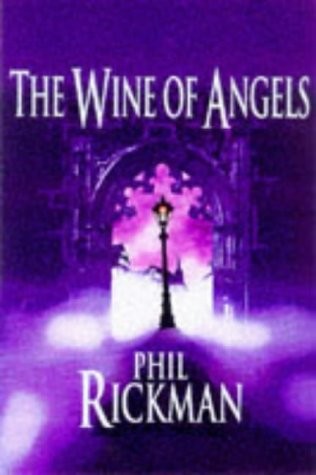
The Wine of Angels was first published in the United Kingdom in 1998 and became the opening novel of Phil Rickman’s Merrily Watkins series. The widely available 2011 Corvus paperback contains 608 pages and carries ISBN 978-0-85789-009-2; the ebook ISBN is 978-0-85789-016-0. Pagination varies across earlier Pan and later digital editions.
The novel contains a prologue and 54 titled chapters divided into four parts. Later books develop Merrily’s work in diocesan deliverance—the Church of England term used in the series for ministry involving alleged hauntings, possession and exorcism—but in this first volume she is primarily a new parish priest learning Ledwardine.
The story draws upon real Herefordshire folklore, especially orchard wassailing and Ella Mary Leather’s The Folk-Lore of Herefordshire. It also uses the poetry of the seventeenth-century Herefordshire cleric Thomas Traherne and the music of Nick Drake as recurring points of reference. Ledwardine and Wil Williams are fictional, allowing Rickman to combine researched regional history with a supernatural mystery.