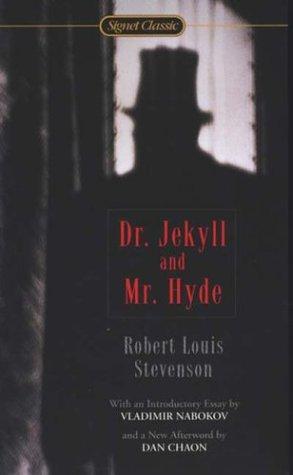
The Book in Brief
Lawyer Gabriel Utterson hears Richard Enfield's account of a repellent man named Edward Hyde trampling a child and paying compensation with a check signed by Dr. Henry Jekyll. Utterson already holds Jekyll's will, which transfers everything to Hyde, and begins investigating what looks like blackmail.
Hyde has access to Jekyll's laboratory and later murders Sir Danvers Carew with a cane Utterson gave Jekyll. Jekyll claims to be free of Hyde and produces a letter, but matching handwriting suggests a deeper connection. Jekyll briefly returns to society before locking himself away as Dr. Lanyon dies from shock.
Poole summons Utterson to the laboratory because the hidden figure no longer seems to be Jekyll. They break in, find Hyde dead in Jekyll's clothes, and recover documents rather than the missing doctor.
Lanyon's narrative reveals that Hyde drank a chemical mixture and transformed into Jekyll before him. Jekyll's own statement explains that he created the potion to divide his nature, indulged as Hyde, lost the ability to control the transformations, and wrote his confession as his supply failed.
Important Characters
Gabriel John Utterson: The loyal lawyer whose patient investigation organizes the mystery.
Dr. Henry Jekyll: A respected physician who tries to separate his socially acceptable self from forbidden desire.
Edward Hyde: Jekyll's transformed identity, initially smaller but increasingly powerful through repeated indulgence.
Dr. Hastie Lanyon: Jekyll's former friend, a conventional scientist destroyed by witnessing the transformation.
Richard Enfield: Utterson's kinsman, whose story of the trampled child first brings Hyde into view.
Poole: Jekyll's butler, whose observations force the final entry into the laboratory.
Sir Danvers Carew: The courteous public figure murdered by Hyde.
Section-by-Section Summary
The headings and sequence follow the complete Project Gutenberg edition's 10 titled narrative sections.
Story of the Door
During a Sunday walk, Enfield tells Utterson how Hyde trampled a child and produced compensation from a sinister door connected to a respected man's check. The two agree not to gossip, but the story activates Utterson's private concern about Jekyll.
Search for Mr. Hyde
Utterson studies Jekyll's will, questions Lanyon, and waits near the mysterious door until he meets Hyde. Hyde's access and repellent presence make the lawyer fear that he is blackmailing or preparing to murder Jekyll.
Dr. Jekyll Was Quite at Ease
After a dinner, Utterson presses Jekyll to change the will and sever his relationship with Hyde. Jekyll insists he can be rid of Hyde whenever he chooses but asks Utterson to protect him if Jekyll disappears.
The Carew Murder Case
A maid witnesses Hyde beat Sir Danvers Carew to death with a cane. Utterson leads police to Hyde's rooms, where the broken weapon and signs of hurried departure confirm the fugitive's identity.
Incident of the Letter
Jekyll tells Utterson that Hyde is gone and gives him a letter supposedly proving the separation. Guest notices that Hyde's handwriting resembles Jekyll's with a different slope, leading Utterson to fear forgery for a murderer.
Remarkable Incident of Dr. Lanyon
Jekyll returns briefly to friendship and charity, then abruptly isolates himself. Lanyon receives a fatal shock connected to Jekyll, refuses to speak his name, and leaves Utterson a sealed narrative to open after Jekyll's death or disappearance.
Incident at the Window
Utterson and Enfield see Jekyll at an upper window and invite him to walk. His momentary smile becomes an expression of terror, and the window slams shut, leaving both men shaken and silent.
The Last Night
Poole reports that the person locked in Jekyll's laboratory has a different voice and body and is desperately seeking a chemical. He and Utterson break down the door, find Hyde's corpse, and recover Jekyll's documents while Jekyll remains absent.
Dr. Lanyon’s Narrative
Lanyon explains that Jekyll ordered him to retrieve a drawer and deliver it at midnight to Hyde. Hyde mixes and drinks the contents, transforms into Jekyll before Lanyon's eyes, and destroys Lanyon's confidence in reality.
Henry Jekyll’s Full Statement of the Case
Jekyll confesses that he created a potion to separate his divided impulses and used Hyde for concealed pleasures. Hyde's murder of Carew, involuntary transformations, and a failed chemical supply leave Jekyll unable to resume control as he seals the statement.
Ending Explained
Are Jekyll and Hyde the same person?: Yes. Hyde is the bodily identity produced when Jekyll's potion gives independent expression to impulses he has separated from his public self.
Why does the potion stop working reliably?: Repeated use strengthens Hyde, involuntary transformations begin, and the original salt apparently contained an unknown impurity that later supplies cannot reproduce.
Who is dead in the laboratory?: Hyde is found wearing Jekyll's oversized clothes after taking poison as Utterson and Poole force entry.
What happens to Jekyll?: His confession ends as Hyde is overtaking him and the last effective dose is failing; the body found afterward establishes that Jekyll cannot return.
Themes and Motifs
Duality: The experiment literalizes conflicting desires that already coexist within one person.
Repression and indulgence: Jekyll's secrecy does not eliminate appetite; it creates a protected identity in which appetite can grow.
Respectability: Wills, reputations, locked houses, and professional silence protect the conditions in which Hyde operates.
Addiction and habit: Jekyll repeatedly claims control while his voluntary returns to Hyde make later compulsion possible.
Testimony: Enfield, Utterson, Lanyon, and Jekyll provide nested accounts that move the story from rumor to witnessed impossibility.
Content Notes
Includes violence against a child, brutal murder, drug experimentation, addiction-like behavior, blackmail fears, suicide, death, psychological distress, and period descriptions of disability and appearance.
About the Book
Best for: readers who like compact Gothic mysteries, unreliable respectability, and confession-driven structure. Narrative shape: 10 titled sections — eight of investigation, then two nested testaments that explain everything. Central contrast: the public architecture of reputation versus the private door appetite uses. Overall assessment: 5/5 for economy, atmosphere, and moral precision. Source-checked scope: 10 distinct reading units in Project Gutenberg eBook #42; no front matter was counted as narrative content.
Primary text: Robert Louis Stevenson, The Strange Case of Dr. Jekyll and Mr. Hyde, Project Gutenberg eBook #42. The complete text contains 10 titled narrative sections. The review, plot account, ending analysis, and every structural recap in this guide were checked against that edition.
Selection evidence: Project Gutenberg Top 100 EBooks in the last 30 days — rank #39 with 87,890 downloads in the August 3, 2026 snapshot. Books already completed in the preceding batches were excluded.