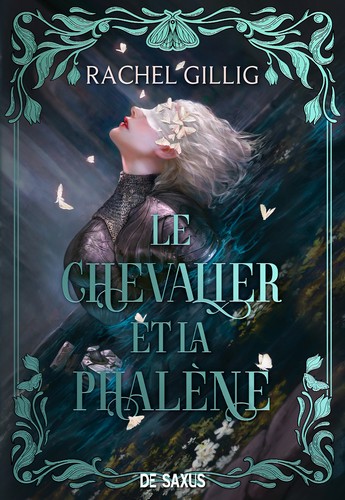
The Book in Brief
Six is the last of six Diviners who dream prophetic Omens in a flooded cathedral — until the other five vanish on the eve of their promised freedom. With the blasphemous knight Rory, King Benji, the bodyguard Maude and the gargoyle Bartholomew, she follows her final vision’s five objects across the kingdom and learns that no Diviner has ever been released: the spring’s water slowly turns the women to stone, and the cathedral’s gargoyles are her predecessors. Sybil — as she names herself — destroys Aisling and the cathedral, only for Benji to wound Rory and coerce her into becoming his queen and sole prophet.
Important Characters
Six / Sybil: The last active Diviner at the cathedral. Her quest transforms the question “What do the Omens mean?” into “Who benefits from controlling their meaning?”
Rodrick “Rory” Myndacious: A knight with an enchanted coin that changes into weapons. His mockery of sacred authority masks fierce loyalty and a fear of emotional dependence.
King Benedict “Benji”: Young monarch whose desire for stability becomes increasingly authoritarian. He treats prophecy as a political resource.
Maude: Benji’s formidable bodyguard. Her loyalty to the crown is tested by her affection for the people endangered by it.
Aisling: Abbess of the cathedral and architect of the Diviners’ exploitation. She sustains her authority through isolation, ritual, and false history.
Bartholomew: A gargoyle who accompanies the travelers. His forgotten identity connects the current Diviners to the cathedral’s first victim.
The Other Diviners: One through Five are Six’s found family. Their disappearance drives the investigation and reveals the repeating cycle of sacrifice.
The Heartsore Weaver: The fifth of Traum’s five Omens, whose loom stone closes the quest. The confrontation with the Weaver exposes the cathedral’s hidden machinery.
Prologue
A foundling is brought to the flooded cathedral and absorbed into an order that replaces names with numbers. The sacred setting promises purpose and protection, but its rules establish the loss of identity that will define Six’s life.
Chapter 1
Six describes the cathedral, the six Diviners, and the ritual by which spring water produces prophetic dreams. Twenty-three gargoyles watch over the institution. The women are approaching the end of their ten-year term and expect the release that Aisling has promised.
Chapter 2
King Benji requests an Omen. Six sees blood, drowning, and five disturbing images linked to a coin, an inkwell, an oar, a chime and a loom stone. The vision suggests that Benji’s reign and the kingdom face disaster.
Chapter 3
The royal party’s presence unsettles the cathedral’s routine. Six clashes with Rory, whose disrespect for the Diviners and their rituals feels both insulting and dangerously liberating. Aisling reinforces obedience while avoiding direct answers about the vision.
Chapter 4
As the Diviners prepare for their promised release, Six notices inconsistencies in Aisling’s assurances. The other five women disappear, and the cathedral offers no credible explanation. Six’s fear for them outweighs her fear of leaving the only home she knows.
Chapter 5
Six encounters Rory amid magical sprites and broken glass. Their hostility has an undercurrent of attraction, but neither trusts the other. The encounter establishes that the world outside the cathedral contains magic different from the controlled rituals Six understands.
Chapter 6
At Coulson Faire, a contest puts Six and Rory into direct physical conflict. Six throws the knight down, proving that she is not the fragile holy figure he expected. Their rivalry begins to turn into reluctant respect.
Chapter 7
Six secretly performs a divination for Rory. A moth introduces color into the vision, and the five Omens appear less like objects than people or roles. A sixth figure associated with the cathedral suggests that the quest begins and ends with Six’s own institution.
Chapter 8
Six wakes to the full reality of the other Diviners’ disappearance. She searches for evidence and finds that Rory and a gargoyle may be connected to the strange events. The official explanation becomes impossible to accept.
Chapter 9
Six leaves Aisling’s authority and joins Rory, Benji, Maude, and Bartholomew. The decision is both an investigation and an act of apostasy. For the first time, she must navigate the world without the cathedral interpreting it for her.
Chapter 10
The party crosses into the Seacht, the region where Sybil was found as a dying foundling. Details surrounding Rory’s enchanted coin make Six wonder whether the first Omen points to him rather than to an object that must simply be collected.
Chapter 11
A magical figure called the Harried Scribe tests the travelers’ knowledge and identities. Six cannot supply an ordinary name because the cathedral never gave her one. Rory uses the coin’s weapon form to defeat the threat, strengthening the link between him and the first Omen.
Chapter 12
Six searches foundling schools and records for women who previously served as Diviners. She finds no trace of anyone living after a completed term. The absence suggests that Aisling’s promised release has always been a lie.
Chapter 13
Rory explains more of the quest and the political history surrounding Benji’s family. The execution of the heretical Benedict I shows that challenges to the kingdom’s sacred story have long been suppressed.
Chapter 14
Maude commits herself to the dangerous search despite the strain between loyalty to Benji and concern for the others. The group turns toward the Fervent Peaks, where the next Omen appears to wait.
Chapter 15
A mountain sprite attacks, and Six saves Benji. Maude’s history and fierce protectiveness become clearer. Six begins to understand that devotion can be chosen, but it can also trap a person inside another’s needs.
Chapter 16
In a mountain village, the travelers learn the ritual surrounding the Oarsman. He takes the oar belonging to the Ardent Oarsman, the third Omen, and Six pursues him toward a waterfall where water, prophecy, and death converge.
Chapter 17
At the Oarsman’s castle, the party discovers that the challenge must be settled through combat. Six is selected, forcing her to act as more than a passive receiver of visions.
Chapter 18
Rory trains Six to use his coin and survive the coming fight. Their physical closeness almost becomes a kiss, but fear and uncertainty interrupt them. Trust is growing faster than either is willing to name.
Chapter 19
Six and Rory share an intimate moment at a hot spring. Six admits her terror of drowning and the vulnerability hidden beneath her ceremonial confidence. Their promises to one another give the approaching trial personal stakes.
Chapter 20
Six fights the Oarsman and claims the second Omen’s meaning at terrible cost. During the ordeal she drowns or passes through a vision of drowning. What she learns confirms that the former Diviners are dead and that her own fate has been deliberately concealed.
Chapter 21
Six recovers at Petula Hall and examines Benji’s notebook and the evidence gathered during the quest. She tells Rory that she has chosen the name Sybil. Naming herself transforms her rebellion from escape into self-creation.
Chapter 22
Sybil grieves the five women who raised and loved her. She stops hoping that Aisling can explain the deaths away and resolves to destroy the system that consumed them.
Chapter 23
In the Chiming Wood, the travelers enter another ceremonial test. The prophetic chime produces visions while a birke attacks. Sybil retrieves the chime, but Maude is injured, showing that each Omen exacts a human cost.
Chapter 24
Sybil receives recognition as a knight but refuses a demand for absolute fealty. Rory sees the change in her eyes, and their kiss confirms both their desire and the magical transformation spreading through her body.
Chapter 25
Sybil and Rory finally become lovers. Sybil looks in an ordinary mirror and sees stone spreading around her eyes, as it does on the Omens. The intimacy is shadowed by proof that she may be undergoing the same fate as the vanished Diviners.
Chapter 26
At the cliffs, Sybil discards her old shroud and claims a life beyond the cathedral’s rules. Her bond with Rory deepens, but the Heartsore Weaver begins to penetrate the group’s defenses.
Chapter 27
Benji’s growing coldness exposes his belief that Sybil’s power belongs to the crown. During another ceremony, she and Rory affirm their love even as political and supernatural pressures close around them.
Chapter 28
The party confronts the Heartsore Weaver. The encounter joins the fate of One, the first of Sybil’s vanished companions, to the last stage of the quest. Grief becomes the opening through which the truth finally emerges.
Chapter 29
The Weaver and One die, and Sybil learns the full history. Aisling created the false Omens, used the spring to alter foundlings, and turned each completed generation of Diviners into gargoyles. Bartholomew was the first child trapped by the system. The hammer and chisel are tools for breaking that transformation.
Chapter 30
Sybil and her allies return to the cathedral. They fight its gargoyle guardians, release or destroy the mechanisms that sustained the cycle, and confront Aisling. Sybil turns the symbolism of drowning back upon her abuser and helps bring down the cathedral.
Chapter 31
The victory is immediately appropriated by Benji. He stabs Rory and threatens the lives of Rory, Maude and Bartholomew, then threatens to accuse or execute Sybil’s companions unless she supports his version of events. To save them, Sybil agrees to become his queen and sole prophet. The book ends with her physically alive, publicly exalted, and politically imprisoned.
Ending Explained
The earlier Diviners were never freed: the sacred spring slowly petrifies each generation, and the gargoyles ringing the cathedral are its graduates — Bartholomew the first of them. The Omens were never gods at all; Aisling’s theology simply monopolized their interpretation, teaching the kingdom to see objects where the visions pointed at people and tools. Benji’s betrayal completes the pattern: with the cathedral destroyed, the crown needs a sacred woman it can control, so he stabs Rory and threatens everyone she loves and coerces Sybil into becoming queen and sole prophet. Rory is left gravely hurt but alive — his rescue, and Sybil’s escape from her new captivity, are the sequel’s unfinished business.
Themes and Analysis
Institutional Control and Manufactured Holiness. The cathedral turns deprivation into proof of sanctity. Aisling’s authority depends on making the Diviners interpret their suffering as purpose.
Names and Self-Definition. Numbers make the foundlings interchangeable. “Sybil” is the protagonist’s first durable claim to an identity created by choice.
Prophecy as Political Power. Visions do not arrive with neutral interpretations. Aisling and Benji both try to control what prophecy means because its meaning can organize a kingdom.
Love, Duty, and Possession. Rory, Maude, and Sybil all struggle to distinguish chosen loyalty from service demanded by an institution or ruler.
Replacing One Captor with Another. Destroying the cathedral does not destroy the political desire to use Sybil. The ending warns that liberation requires more than exposing one corrupt leader.
Content Notes
This book contains institutional and religious abuse, child abandonment and exploitation, body horror, drowning imagery, violence and death, grief, sexual content and coercive captivity.