The Book in Brief
Orphaned Jane Eyre grows up at Gateshead under the contempt of her aunt, Mrs. Reed, and is sent to Lowood School after resisting her abusive cousin. Lowood subjects her to hunger, cold, public humiliation, and the death of her friend Helen Burns, but it also gives her education and the example of Miss Temple.
As a young governess at Thornfield Hall, Jane teaches Adèle Varens and falls in love with the estate's master, Edward Rochester. Strange laughter, a bedroom fire, and a violent attack on Richard Mason hint at a secret that Rochester conceals. He proposes to Jane, but their wedding is stopped by the revelation that his wife, Bertha Mason, is alive and confined in the attic.
Jane refuses Rochester's proposal that they live together outside marriage and leaves Thornfield with almost nothing. The Rivers siblings shelter her; she becomes a village schoolmistress, discovers that they are her cousins, and inherits her uncle's fortune. St. John Rivers asks her to marry him and join his missionary work, but she rejects a loveless union after seeming to hear Rochester call her.
Jane returns to find Thornfield burned by Bertha, who died in the fire, and Rochester blinded and maimed after trying to save the household. At Ferndean, Jane and Rochester reunite on freer terms, marry, and build a family.
Important Characters
Jane Eyre: The orphaned narrator, whose hunger for love is governed by an equally strong need for dignity and moral freedom.
Edward Rochester: The master of Thornfield, charismatic and emotionally candid but capable of deception and coercive planning.
Bertha Mason: Rochester's living wife, confined at Thornfield and used by the novel as both a human tragedy and Gothic double.
St. John Rivers: Jane's austere cousin, whose missionary purpose offers usefulness without emotional companionship.
Helen Burns: Jane's Lowood friend, whose endurance and faith shape Jane even when Jane cannot share her passivity.
Mrs. Reed: Jane's resentful aunt, who denies both affection and information about Jane's paternal family.
Miss Temple: The humane Lowood superintendent who clears Jane's name and models principled authority.
Adèle Varens: Jane's lively pupil at Thornfield and Rochester's ward.
Diana and Mary Rivers: Jane's newly discovered cousins, who provide the reciprocal family love she has long lacked.
Chapter-by-Chapter Summary
The headings and sequence follow the complete 38-chapter Project Gutenberg edition.
Chapter I
John Reed bullies Jane at Gateshead, and Jane's resistance provokes Mrs. Reed to order her confinement in the red-room.
Chapter II
Locked in the room where her uncle died, Jane becomes terrified by the possibility of his ghost and loses consciousness after begging to be released.
Chapter III
Jane recovers under Bessie's care and tells the apothecary Mr. Lloyd about her misery; he suggests that school may offer an escape from Gateshead.
Chapter IV
Mr. Brocklehurst interviews Jane and accepts Mrs. Reed's claim that she is deceitful. Before leaving, Jane confronts her aunt and declares that she will tell the truth about her treatment.
Chapter V
Jane travels alone to Lowood, meets Miss Temple and Helen Burns, and begins life within the school's cold, hungry, highly regulated routine.
Chapter VI
Jane watches Helen accept Miss Scatcherd's punishments with a patience she cannot understand, and the girls debate resistance, forgiveness, and Christian endurance.
Chapter VII
Brocklehurst inspects Lowood, condemns ordinary comforts, and publicly brands Jane a liar after she accidentally drops her slate.
Chapter VIII
Helen and Miss Temple comfort Jane; Miss Temple investigates Mrs. Reed's accusation and publicly clears Jane, allowing her to work without the burden of disgrace.
Chapter IX
A typhus epidemic exposes Lowood's neglect and kills many pupils. Jane secretly visits the consumptive Helen, sleeps beside her, and wakes to learn that Helen has died.
Chapter X
Lowood is reformed after the epidemic; Jane spends six years as a pupil and two as a teacher, then advertises for a governess position when Miss Temple marries.
Chapter XI
Jane arrives at Thornfield, meets Mrs. Fairfax and her pupil Adèle, and begins exploring a household whose upper story contains an unsettling laugh.
Chapter XII
Restless with her narrow routine, Jane walks to Hay and helps an unknown horseman after his mount slips; he is later revealed as Edward Rochester.
Chapter XIII
Rochester questions Jane about her history, education, and drawings, while his abrupt manner establishes an unusual intellectual contest between employer and governess.
Chapter XIV
During an evening conversation, Rochester presses Jane to judge him and speaks of regret, temptation, and the possibility of moral renewal.
Chapter XV
Rochester explains Adèle's connection to the opera singer Céline Varens. That night Jane saves him from a bedroom fire and hears him blame Grace Poole.
Chapter XVI
Jane is baffled that Grace remains employed and recognizes her own attachment to Rochester when she hears he may return with the beautiful Blanche Ingram.
Chapter XVII
Rochester's fashionable guests fill Thornfield. Jane observes Blanche's contempt for governesses and her calculated courtship while trying to master her jealousy.
Chapter XVIII
The party performs charades that suggest Rochester and Blanche's marriage. A mysterious gypsy arrives and asks to read each unmarried woman's fortune.
Chapter XIX
Disguised as the gypsy, Rochester questions Jane about her feelings; after revealing himself, he is disturbed to learn that Richard Mason has arrived from the West Indies.
Chapter XX
A nighttime cry leads to the discovery that Mason has been attacked. Jane guards and assists the wounded man while Rochester prevents him from explaining what happened.
Chapter XXI
Summoned to Gateshead after John Reed's death and Mrs. Reed's stroke, Jane reconciles as far as she can, learns of a hidden letter from her uncle, and witnesses her aunt's death.
Chapter XXII
Jane returns to Thornfield and to Rochester's warm welcome, but she still believes his marriage to Blanche will soon end her place in the household.
Chapter XXIII
Rochester claims Jane must leave for Ireland, then admits that he loves her and proposes. A storm splits the chestnut tree after their engagement.
Chapter XXIV
Rochester tries to dress Jane in jewels and luxury; she resists becoming his ornament and insists on continuing to act as Adèle's governess until the wedding.
Chapter XXV
On the eve of the wedding, Jane recounts ominous dreams and a nighttime visitor who entered her room and tore her veil; Rochester again attributes the event to Grace Poole.
Chapter XXVI
Briggs and Mason stop the ceremony by proving Rochester is already married. At Thornfield, Rochester reveals the violent and mentally ill Bertha Mason confined upstairs.
Chapter XXVII
Rochester explains his disastrous marriage and begs Jane to live with him in France. Though she loves him, Jane refuses to violate her conscience and prepares to flee.
Chapter XXVIII
Jane leaves Thornfield, exhausts her money, and wanders destitute across the moors until the Rivers household finally gives her food and shelter.
Chapter XXIX
Recovering at Moor House, Jane calls herself Jane Elliott and grows close to Diana and Mary while their reserved brother St. John studies her story.
Chapter XXX
St. John secures Jane a position teaching poor girls at Morton. She accepts the modest independence even while mourning the emotional intensity of Thornfield.
Chapter XXXI
Jane opens the village school and meets the wealthy Rosamond Oliver, whose beauty and interest in St. John expose the feeling he is determined to suppress.
Chapter XXXII
The school improves, and Jane becomes useful and respected. She observes that St. John loves Rosamond but refuses her because she does not fit his missionary ideal.
Chapter XXXIII
St. John identifies Jane through a scrap of her real name and reveals that she inherited a fortune from her uncle; Diana, Mary, and St. John are also her cousins.
Chapter XXXIV
Jane divides the inheritance with her cousins and enjoys a family Christmas. St. John then asks her to marry him and accompany him to India as a missionary wife.
Chapter XXXV
St. John continues pressing Jane to accept a loveless marriage. As she nearly submits, she hears Rochester's voice calling her name and decides to seek him.
Chapter XXXVI
At Thornfield Jane finds ruins. An innkeeper explains that Bertha burned the house, died by jumping from the roof, and left Rochester blind and injured after his rescue efforts.
Chapter XXXVII
Jane finds Rochester living at Ferndean, reveals her independence, and reassures him of her love. They agree to marry as equals rather than master and dependent.
Chapter XXXVIII—Conclusion
Jane summarizes ten years of marriage, their son's birth, and Rochester's partial recovery of sight; she also records Diana and Mary's marriages and St. John's final missionary letter.
Ending Explained
Why can Jane return?: She is no longer economically dependent or socially isolated. Her inheritance and recovered family make the decision genuinely hers.
What changes between Jane and Rochester?: Rochester's physical losses end his position of effortless mastery, while Jane arrives with money, experience, and the power to leave.
What happens to Bertha?: She burns Thornfield and dies after jumping from the roof; Rochester is injured while attempting to save the people inside.
Why end with St. John?: His final letter supplies a counterpoint to domestic happiness: Jane chooses earthly companionship, while St. John pursues a solitary religious vocation toward death.
Themes and Motifs
Love and self-respect: Jane wants attachment without surrendering her moral identity.
Freedom and confinement: The red-room, Lowood, Thornfield's attic, and Jane's poverty create different forms of captivity.
Religion: Helen, Brocklehurst, and St. John embody sharply different uses of Christian belief.
Class and gender: Jane repeatedly confronts systems that ask poor women to be grateful, silent, or available.
The Gothic double: Bertha externalizes rage, secrecy, and female confinement that the controlled narrator also understands.
Content Notes
Includes child abuse, institutional neglect, infectious disease, death of a child, mental illness described in period language, confinement, attempted bigamy, fire, suicide, disability, and coercive religious pressure.
About the Book
Best for: readers who like first-person intensity, Gothic atmosphere, and heroines who refuse to trade conscience for love. Narrative shape: 38 chapters moving through five houses, each a distinct moral test. Central contrast: passionate attachment versus the self-respect Jane will not surrender to keep it. Overall assessment: 5/5 for voice, structure, and emotional force. Source-checked scope: 38 distinct reading units in Project Gutenberg eBook #1260; no front matter was counted as narrative content.
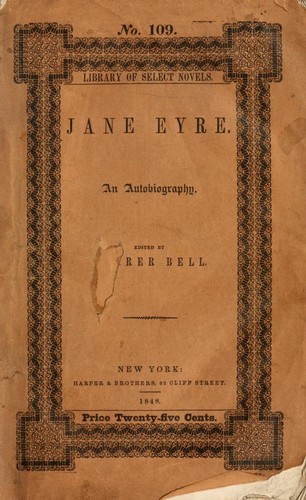
Primary text: Charlotte Brontë, Jane Eyre, Project Gutenberg eBook #1260. The complete text contains 38 chapters. The review, plot account, ending analysis, and every structural recap in this guide were checked against that edition.
Selection evidence: Project Gutenberg Top 100 EBooks in the last 30 days — rank #14 with 111,641 downloads in the August 3, 2026 snapshot. Books already completed in the preceding batches were excluded.