The Book in Brief
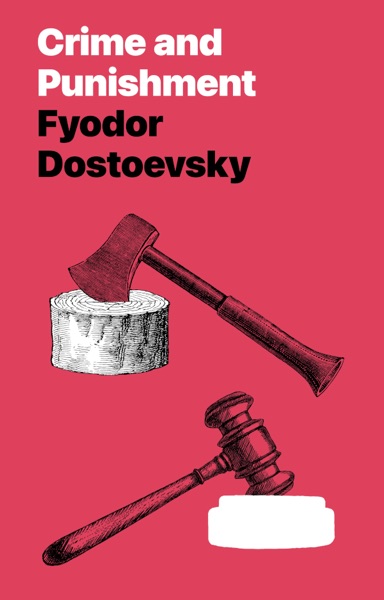
Impoverished former student Rodion Raskolnikov rehearses and then commits the axe murder of pawnbroker Alyona Ivanovna, believing that an exceptional person may cross moral boundaries for a higher purpose. Her sister Lizaveta arrives unexpectedly, and he kills her too. He escapes with small valuables he never uses, then falls into fever, paranoia, and contradictory impulses to hide and reveal himself.
Raskolnikov's family arrives in St. Petersburg because his sister Dunya plans to marry the controlling Luzhin. Raskolnikov rejects the match and becomes attached to Sonia, who supports her family through sex work. Investigator Porfiry Petrovich increasingly signals that he understands the crime, while the mysterious Svidrigailov—Dunya's former employer—overhears Raskolnikov confess to Sonia.
Porfiry privately names Raskolnikov as the murderer and urges voluntary confession. Svidrigailov tries to coerce Dunya, releases her when she refuses him, and kills himself. Sonia follows Raskolnikov as he bows at a crossroads and confesses at the police station. Sentenced to eight years in Siberia, he remains emotionally resistant until Sonia's faithful presence awakens love and the first possibility of repentance.
Important Characters
Rodion Romanovich Raskolnikov: An impoverished former student whose murder tests an idea of exceptional moral permission.
Sofya Semyonovna Marmeladova: Sonia, a young woman driven into sex work to support her family and the recipient of Raskolnikov's confession.
Porfiry Petrovich: The examining magistrate who uses conversation, timing, and psychological pressure rather than simple physical proof.
Dmitri Prokofych Razumikhin: Raskolnikov's loyal friend, practical caretaker, and eventual husband of Dunya.
Avdotya Romanovna Raskolnikova: Dunya, Raskolnikov's strong-willed sister, pursued by both Luzhin and Svidrigailov.
Pulcheria Alexandrovna: Raskolnikov and Dunya's devoted mother.
Arkady Ivanovich Svidrigailov: Dunya's former employer, a morally unbound double to Raskolnikov who learns his secret.
Pyotr Petrovich Luzhin: Dunya's calculating fiancé, who wants a dependent wife and later frames Sonia.
Semyon Zakharovich Marmeladov: Sonia's alcoholic father, whose suffering first draws Raskolnikov into the family's life.
Katerina Ivanovna: Marmeladov's proud, ill, desperate wife and mother of three children.
Alyona Ivanovna: The pawnbroker Raskolnikov chooses as his intended victim.
Lizaveta Ivanovna: Alyona's gentle half-sister, murdered only because she unexpectedly witnesses the crime.
Nikolai: A house painter whose false confession temporarily disrupts Porfiry's strategy.
Andrei Semyonovich Lebezyatnikov: Luzhin's roommate, whose eyewitness testimony exposes the attempt to frame Sonia.
Chapter-by-Chapter Summary
The guide follows all 39 numbered chapters and both epilogue sections in the Project Gutenberg text. Part and chapter numbers are retained because numbering restarts in every part.
Part I, Chapter 1
Raskolnikov leaves his garret and visits Alyona Ivanovna under the pretense of pawning a watch. He studies the room, keys, and timing as a rehearsal, then recoils from the ugliness of his plan.
Part I, Chapter 2
In a tavern Raskolnikov hears Marmeladov confess how alcoholism has ruined his family and driven Sonia into sex work. He escorts him home, witnesses Katerina's desperation, and leaves them his remaining money.
Part I, Chapter 3
Raskolnikov receives his mother's long letter explaining Dunya's ordeal with Svidrigailov and engagement to Luzhin. He understands the marriage as another self-sacrifice made to rescue him.
Part I, Chapter 4
Raskolnikov rages against Dunya's engagement and sees a drunken girl being pursued on the boulevard. He briefly seeks police help, then bitterly withdraws concern and drifts toward Razumikhin without visiting him.
Part I, Chapter 5
After dreaming that peasants beat a mare to death, Raskolnikov rejects the murder in horror. A chance overheard conversation reveals that Lizaveta will be away, leaving Alyona alone at a precise time.
Part I, Chapter 6
Raskolnikov recalls how a student's utilitarian argument first encouraged his idea. Feeling events have become inevitable, he prepares a false pledge and axe, goes to Alyona's flat, and gains entry.
Part I, Chapter 7
Raskolnikov kills Alyona, then murders Lizaveta when she unexpectedly returns. Visitors nearly trap him inside; he hides in an empty painted flat, escapes unnoticed, and returns home in mental chaos.
Part II, Chapter 1
Raskolnikov wakes terrified of evidence and receives a police summons that concerns an unpaid debt, not murder. He overhears officers discussing the case and faints, making himself conspicuous.
Part II, Chapter 2
Convinced a search is coming, he removes the stolen objects and hides them beneath a stone without inspecting them. He wanders to Razumikhin, rejects offered work, and collapses after returning home.
Part II, Chapter 3
Raskolnikov spends days feverish and intermittently conscious while Razumikhin and Nastasya care for him. On waking, he receives money from his mother, new clothes, and fragments of news about the murder inquiry.
Part II, Chapter 4
Zossimov and Razumikhin debate the pawnbroker case and the suspicion surrounding the painters. Raskolnikov listens too intently, while Razumikhin criticizes investigators for forcing facts into a premature theory.
Part II, Chapter 5
Luzhin visits and displays the vanity behind his progressive language. Raskolnikov accuses him of wanting a poor wife who will feel indebted, insults him, and drives everyone from the room.
Part II, Chapter 6
Raskolnikov slips out, needles clerk Zametov with a near-confession in a tavern, and watches a woman attempt suicide. He returns to the murder building, asks workers about the removed blood, and alarms them with his behavior.
Part II, Chapter 7
Marmeladov is fatally injured by a carriage. Raskolnikov carries him home, gives Katerina all his money, meets Sonia and the children, then returns to find his mother and Dunya waiting in his room.
Part III, Chapter 1
Raskolnikov demands that Dunya break with Luzhin and nearly collapses again. Razumikhin escorts the women to their lodging, becomes devoted to Dunya, and promises medical updates through the night.
Part III, Chapter 2
Ashamed of his drunken enthusiasm, Razumikhin returns soberly to Pulcheria and Dunya. He describes Raskolnikov's divided character and helps prepare them for a difficult visit.
Part III, Chapter 3
Mother and sister visit Raskolnikov, whose coldness and sudden tenderness keep the meeting unstable. Dunya refuses to obey his demand automatically and invites both him and Razumikhin to confront Luzhin that evening.
Part III, Chapter 4
Sonia timidly invites Raskolnikov to Marmeladov's funeral and is introduced to the family. After she leaves, Raskolnikov asks Razumikhin to take him to Porfiry concerning the objects he pawned.
Part III, Chapter 5
Porfiry questions Raskolnikov about his pawns and published theory that extraordinary people may transgress law. Their intellectual debate becomes an interrogation, ending with questions about his visit to Alyona's building.
Part III, Chapter 6
Raskolnikov and Razumikhin argue over whether Porfiry suspects him. A stranger calls him a murderer; later, in a nightmare, the old pawnbroker laughs as he tries and fails to kill her again, and Svidrigailov appears on waking.
Part IV, Chapter 1
Svidrigailov tells Raskolnikov about Marfa Petrovna's death and offers Dunya ten thousand roubles if she abandons Luzhin. He also reveals Marfa left Dunya money and requests a meeting with her.
Part IV, Chapter 2
At the family meeting, Luzhin tries to isolate Dunya from Raskolnikov and is exposed for misrepresenting the money given to Marmeladov's family. Dunya decisively ends the engagement and orders him out.
Part IV, Chapter 3
Luzhin leaves humiliated, still imagining he can regain Dunya. Razumikhin proposes a publishing venture, but Raskolnikov abruptly declares he must separate from everyone and silently signals Razumikhin to care for his family.
Part IV, Chapter 4
Raskolnikov visits Sonia, challenges her religious faith, and asks her to read the raising of Lazarus. He promises to tell her who killed Lizaveta; Svidrigailov secretly listens from the adjoining room.
Part IV, Chapter 5
Porfiry subjects Raskolnikov to a deliberately disorienting second interview and hints at a hidden surprise witness. Before the pressure resolves, painter Nikolai bursts in and falsely confesses to the murders.
Part IV, Chapter 6
The man who called Raskolnikov a murderer admits he was Porfiry's concealed witness and apologizes after Nikolai's confession. Raskolnikov leaves with renewed hope that the case has shifted away from him.
Part V, Chapter 1
Luzhin plans revenge while speaking condescendingly with Lebezyatnikov. He summons Sonia, gives her a small donation in view of a witness, and secretly slips a hundred-rouble note into her pocket.
Part V, Chapter 2
Katerina's memorial dinner becomes a chaotic contest of pride, insult, poverty, and drunkenness. Luzhin arrives at the height of the disorder and focuses the room on Sonia.
Part V, Chapter 3
Luzhin accuses Sonia of stealing his hundred roubles and the planted note is found. Lebezyatnikov testifies that he saw Luzhin place it in her pocket, exposing the frame and destroying Luzhin's moral pose.
Part V, Chapter 4
Raskolnikov tells Sonia that he murdered Alyona and Lizaveta. She responds with compassion, rejects his shifting theories of money and extraordinary men, offers him her cypress cross — which he puts off taking until he accepts his suffering — and urges public confession.
Part V, Chapter 5
Katerina, evicted and delirious, forces the children to perform in the street and collapses from hemorrhage. She dies in Sonia's room, where Svidrigailov offers to support the children and reveals that he overheard the confession.
Part VI, Chapter 1
Raskolnikov drifts through an isolated mental fog after Katerina's death. Razumikhin reports the family's distress and Porfiry's interest, while Raskolnikov waits for the investigator's next move.
Part VI, Chapter 2
Porfiry visits Raskolnikov privately, explains the strategy behind his earlier interviews, and states directly that Raskolnikov is the murderer. He urges confession, promising that suffering and honesty can still restore life.
Part VI, Chapter 3
Raskolnikov seeks Svidrigailov, fearing what he may do with the secret. Their conversation circles Dunya, appetite, morality, and the possibility that Svidrigailov will become either ally or threat.
Part VI, Chapter 4
Svidrigailov recounts episodes from his corrupt past and insists that his interest in Dunya contains genuine feeling. He separates from Raskolnikov while covertly preparing to meet her alone.
Part VI, Chapter 5
Svidrigailov lures Dunya to a locked room, reveals Raskolnikov's guilt, and offers rescue in exchange for her love. She fires Marfa Petrovna's revolver and grazes his head; the second shot misfires, and she flings the weapon away; recognizing she will never love him, he releases her.
Part VI, Chapter 6
Svidrigailov spends his last night settling money on Sonia, Dunya, and others, then wanders through disturbing dreams and visions. At dawn he shoots himself in front of a watchman.
Part VI, Chapter 7
Raskolnikov visits his mother for a painful farewell without confessing the crime to her. He returns to Dunya, acknowledges the approaching decision, and still struggles between pride, suicide, and surrender.
Part VI, Chapter 8
Sonia sends Raskolnikov to the crossroads, where he kneels and kisses the ground but cannot yet confess publicly. At the police station he learns of Svidrigailov's suicide, turns back from flight, and admits both murders.
Epilogue, Section 1
The court gives Raskolnikov eight years in Siberia, considering his confession, illness, poverty, and unused stolen goods. Sonia follows him; Dunya marries Razumikhin, Pulcheria dies, and Raskolnikov remains proud and emotionally remote.
Epilogue, Section 2
After illness and a symbolic dream of ideological plague, Raskolnikov meets Sonia by the river and suddenly recognizes his love for her. His old theory gives way to the beginning—not completion—of moral and spiritual renewal.
Ending Explained
Why does Raskolnikov confess?: Porfiry's certainty, Sonia's demand, Svidrigailov's death, love for his family, and the exhaustion of isolation converge. He still lacks full repentance when he enters the police station.
What is his sentence?: He receives eight years of penal servitude in Siberia, a comparatively merciful sentence shaped by mitigating evidence and his voluntary confession.
What changes in Siberia?: At first almost nothing inwardly: he resents failure more than murder. Sonia's illness and return awaken fear, love, and a new relation to life that his theory could not provide.
What does the final dream mean?: A plague of absolute individual certainty destroys social reality because everyone believes himself uniquely right. It enlarges Raskolnikov's theory into a vision of universal isolation.
Is redemption complete?: No. The narrator explicitly presents it as the subject of another possible story. The novel ends at the first conscious beginning of transformation.
Themes and Motifs
Ideas and responsibility: Abstract permission collapses when applied to actual bodies, relationships, fear, and guilt.
Isolation: Raskolnikov's intellectual pride depends on separation; recovery begins through relation and confession.
Poverty and humiliation: Economic desperation shapes choices without making every poor character morally identical.
Suffering: The novel questions whether suffering punishes, purifies, degrades, or merely exposes what a person loves.
Doubling: Sonia, Svidrigailov, Luzhin, Porfiry, and Razumikhin each illuminate a possible path or distorted reflection of Raskolnikov.
Content Notes
Contains graphic axe murders, suicide, attempted suicide, domestic abuse, sexual exploitation, child suffering, alcoholism, poverty, fatal illness, coercion, religious themes, and psychologically intense interrogation.
About the Book
Best for: readers who like psychological crime fiction, moral argument, unreliable self-explanation, intense dialogue, and urban social pressure. Narrative shape: 39 numbered chapters across six parts, followed by a two-section epilogue. Translation note: this guide follows Constance Garnett's public-domain English translation. Overall assessment: 5/5 for psychological intensity, characterization, and moral complexity. Source-checked scope: 41 distinct reading units in Constance Garnett translation, Project Gutenberg eBook #2554; no front matter was counted as narrative content.
Primary text: Fyodor Dostoyevsky, Crime and Punishment, Constance Garnett translation, Project Gutenberg eBook #2554. The complete text contains 39 numbered chapters plus two epilogue sections. The review, plot account, ending analysis, and every structural recap in this guide were checked against that edition.
Selection evidence: Project Gutenberg Top 100 EBooks in the last 30 days — rank #6 with 126,752 downloads in the August 2, 2026 snapshot. Books already completed in the preceding batch were excluded.